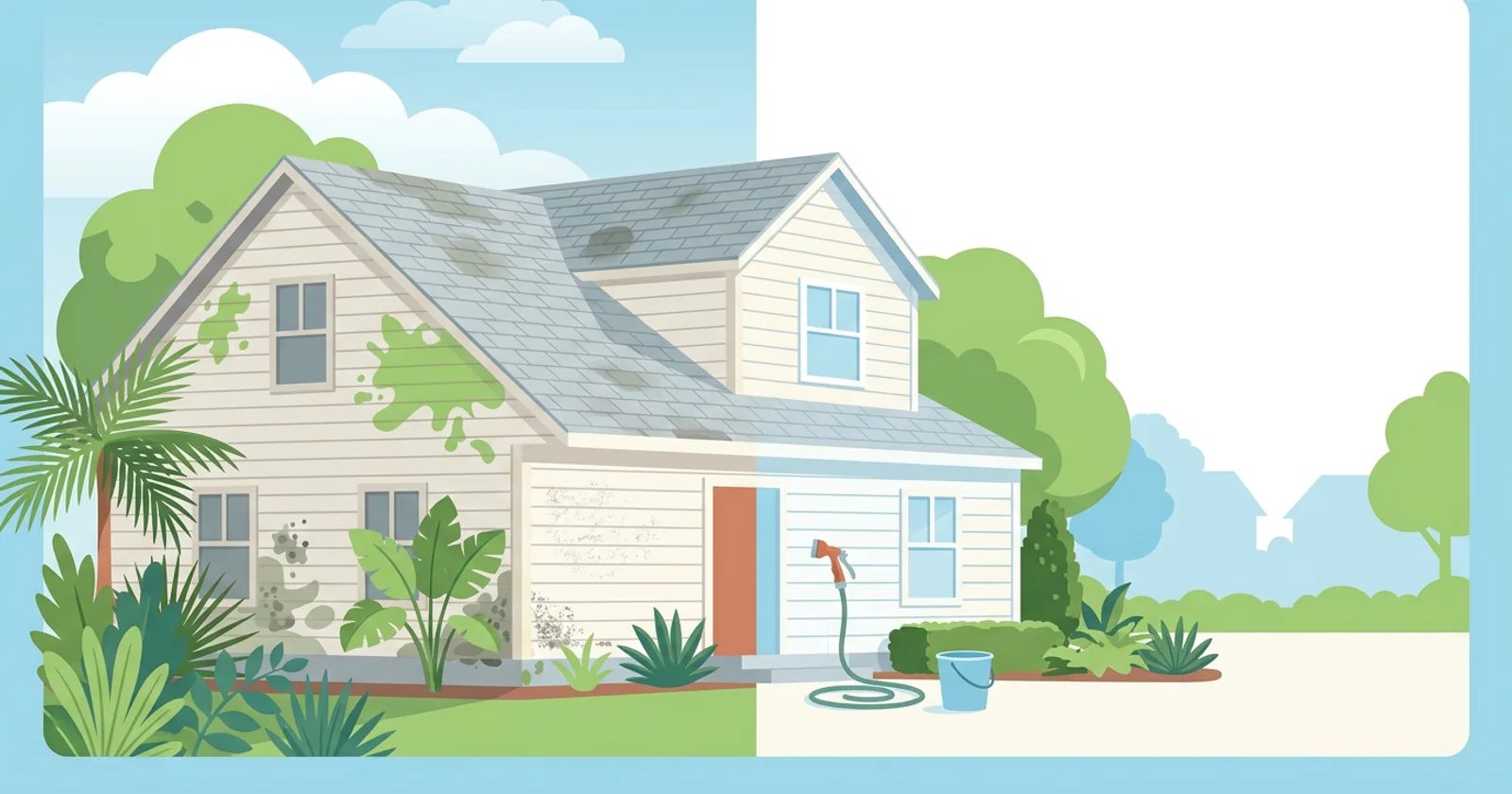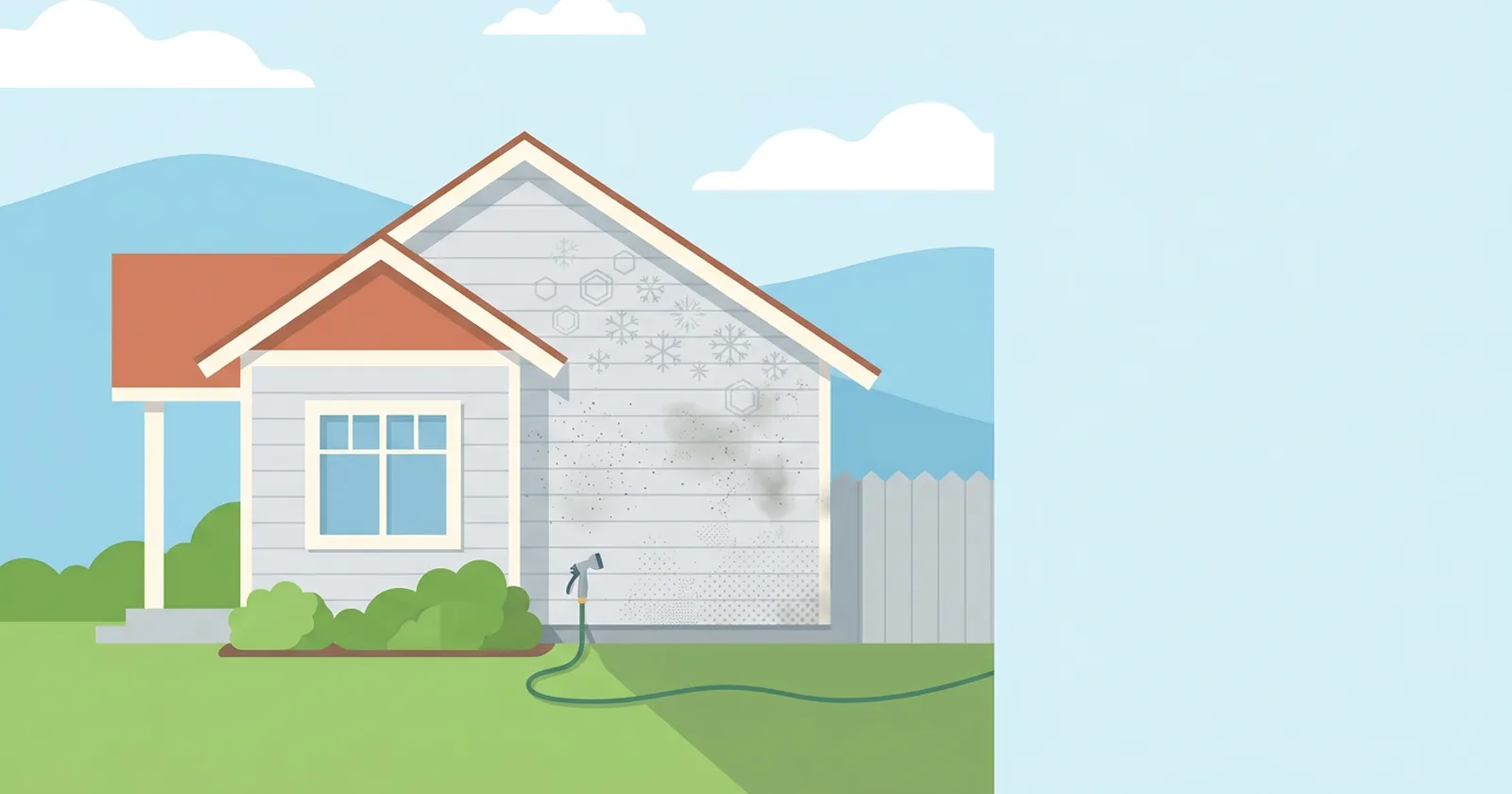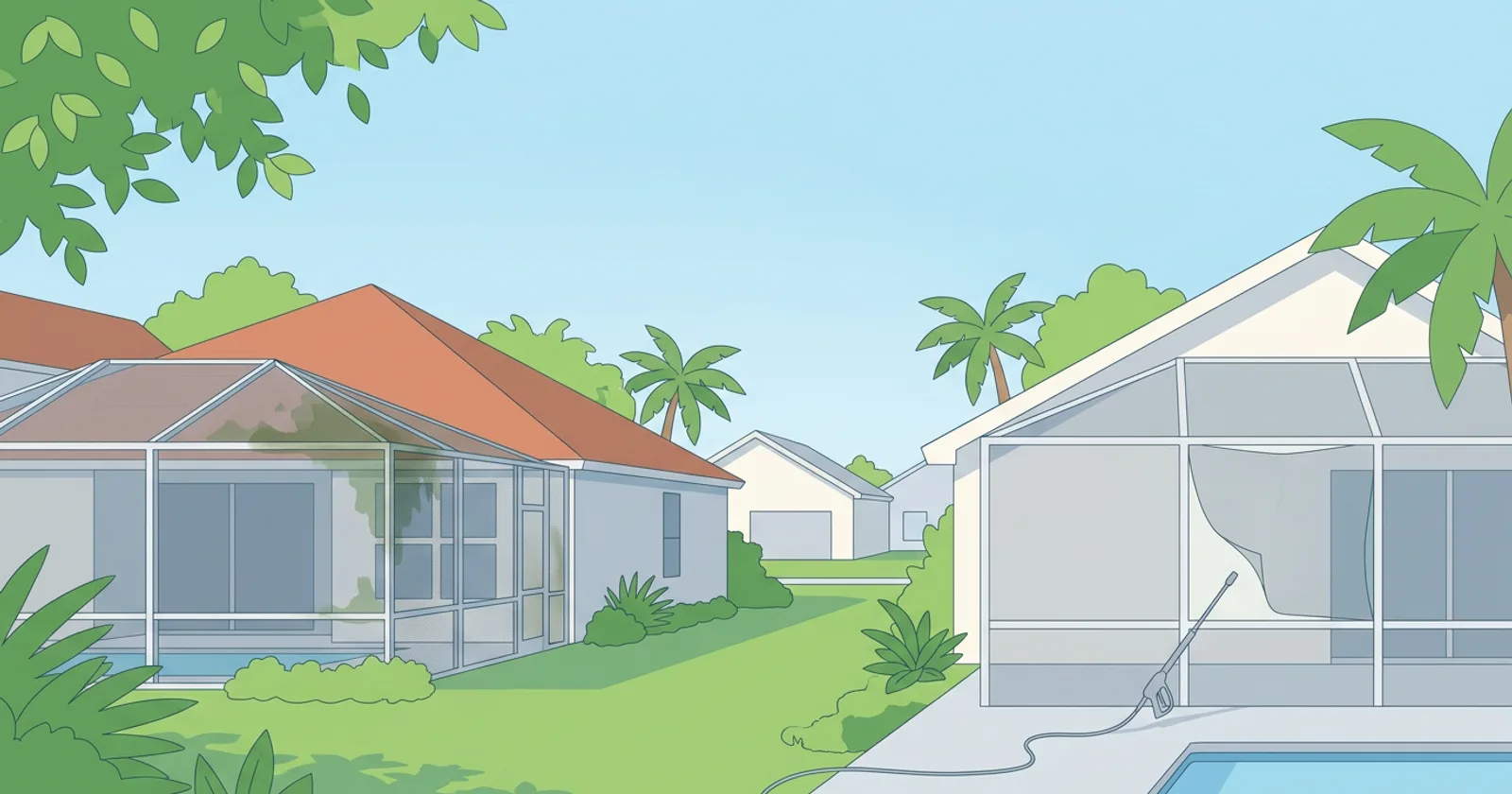
You notice it from the kitchen window first. The cage that looked bright when you bought the house now has a gray-green haze, black specks along the bottom rail and a film on the screens that dims the whole view. Here’s why that happens so fast in Florida, how often to clean, and how to avoid paying for a re-screen afterward.
Why Florida cages turn green so fast
A University of Florida IFAS extension course on mildew puts it simply: in Florida, conditions are right for mildew to grow almost all of the time outdoors. The same course says mildew will grow on any material with even a slight film of organic matter, such as the oil hands leave behind. A Tampa Bay cleaning company lists pollen, algae, mildew and spider webs as what builds up on cages.
The weather keeps that going for months. In Tampa, NOAA’s 1991–2020 normals show the average daily low stays at or above 70°F from May through September. The UF course gives about 70°F and 60 percent relative humidity as the lower limits for controlling mildew. Tampa also gets about 49.5 inches of rain in a normal year, and roughly 30 inches of that, around 61 percent, falls from June through September.
Two details from the UF course explain why one side of your cage looks worse than the other. Mildew is common in shady areas and under dead leaves, and the ultraviolet light in sunshine can kill it. That helps explain why shaded sides and low rails often turn first, while panels in full sun stay cleaner longer.
How often to clean
Go by how your cage looks. Florida companies that publish advice mostly land on once a year:
- One company near Tampa says most enclosures benefit from annual cleaning, and a cage in full sun all day may go closer to two years.
- Another Tampa Bay company says most cages benefit from cleaning once or twice a year, more often near vegetation.
- A Northeast Florida company suggests an annual soft wash, plus a lighter rinse every six months under heavy oak canopy or near a marsh.
On a pressure washing forum, a Space Coast homeowner with a new pool asked the same question. One reply said most screen rooms in Florida get cleaned every 12 to 24 months. Treat that as one person’s experience, not a rule.
What tears screens
One Northeast Florida company says the standard mesh on a Florida pool cage is 18x14 fiberglass coated with PVC. A screen maker’s FAQ lists fiberglass among its best picks for coastal and high-humidity climates. It also says to clean vinyl products with a mild soapy solution and to avoid hard scrubbing.
The problem is age. A window screen maker says intense UV is the main enemy of fiberglass mesh. Sun breaks down the vinyl coating, and once it goes, the glass fibers become brittle and break easily. The same maker says salt, moisture and UV together can cut fiberglass life to 8 to 12 years. In moderate climates, it says standard fiberglass typically lasts 10 to 15 years.
Pressure makes a weak screen fail. That screen maker tells you never to use pressure washers on screens and says the high-pressure stream tears mesh and can bend aluminum frames. On a pressure washing subreddit, one poster described a lanai screen near the roof that was torn after a crew washed a relative’s Florida roof, and the company’s owner denied causing it. If that happens to you, our guide to telling wash damage from damage that was already there explains what to photograph. If your roof is due too, read whether roof cleaning is worth it first.
Before any cleaning, press a few low panels gently with a finger. If the mesh feels stiff, crackles or splits, plan on re-screening those panels, not on scrubbing them. Droppings on the frame or deck are covered in cleaning bird droppings safely.
What Florida companies publish for cage cleaning
| Company (area) | Published price | Notes on their page |
|---|---|---|
| Cool Breeze Premier Pressure Washing (Pinellas County) | Small and medium lanais from $135; large from $250; extra large from $350 | Multi-level lanais quoted individually |
| Amerivet Pressure Washing (Tampa Bay) | Most pool cages $150 to $400 | Depends on size, height and buildup |
| Riverview Pressure Cleaning (Riverview, Apollo Beach, Valrico) | Small about $200; medium $250 to $300; large, extra tall or two-story $400+ | Small cage about 1.5 hours |
These are starting prices or ranges from the companies’ own pages, not quotes. Size, height, how long since the last cleaning and how much algae has built up all move the number. For whole-house prices, see our house washing cost guide.
Before you hire
Ask how they clean the screens, not just the frame. You want a soap or soft wash solution applied at low pressure and a gentle rinse. Ask how they protect the pool water and your plants, and whether they’ll note torn or brittle panels before they start, so nobody argues later. Our list of questions to ask a house washing company covers insurance and written quotes. If the pool deck is pavers, see paver clean, sand and seal cost.
How we gather and check figures is on our methodology page.
Sources
Checked on 2026-10-09:
- NOAA NCEI, U.S. Climate Normals 1991–2020, Tampa International Airport (USW00012842), monthly and annual files: ncei.noaa.gov/data/normals-monthly/1991-2020/access/USW00012842.csv and ncei.noaa.gov/data/normals-annualseasonal/1991-2020/access/USW00012842.csv
- University of Florida IFAS Extension, Say Goodbye to Mildew and Save Energy, Part I: What is Mildew? (FCS3211, archival copy): journals.flvc.org/edis/article/download/108192/103483/149849
- Phifer, Insect Screening FAQ: phifer.com/screening/faq
- RiteScreen, How Long Do Window Screen Materials Last: ritescreen.com/blog/post/window-screen-material-lifespan.html
- RiteScreen, How to Clean Window Screens: ritescreen.com/blog/post/how-to-clean-window-screens.html
- Cool Breeze Premier Pressure Washing, Pricing: coolbreezepw.com/pricing
- Amerivet Pressure Washing, Pool Cage Cleaning: amerivetclean.com/pool-cage-cleaning
- Riverview Pressure Cleaning, How Much Does Pool Cage Cleaning Cost (2026 guide): riverviewpressurecleaning.com/how-much-does-pool-cage-cleaning-cost-in-riverview-apollo-beach-and-valrico-2026-guide
- First Coast Property Experts, Pool Cage Cleaning: firstcoastpropertyexperts.com/exterior/pool-cage-cleaning
- Community discussion, pressure washing forum (new pool owner, 2018): pressurewashingresource.com/community/t/new-pool-owner/14315
- Community discussion, r/pressurewashing (torn lanai screen after a roof wash, 2026): reddit.com/r/pressurewashing/comments/1rfmncv