That’s what published prices and owners’ own accounts suggest. Your numbers depend on your rig, your crew and your market, so this guide gives you published prices to start from and a way to test them on your own jobs.
What one company charges for each service
One Kansas City company publishes a per-square-foot rate for every service. Here’s what those rates come to at standard sizes:
| Service | Published rate | At a standard size | What else the page says |
|---|---|---|---|
| House wash (soft wash) | $0.20 per sq ft | $400 for a 2,000 sq ft home | 2-year guarantee |
| Roof soft wash | $0.25–$0.30 per sq ft | $500–$600 for a 2,000 sq ft roof | 3-year guarantee |
| Driveway and concrete | $0.25 per sq ft | $150 for a 2-car (600 sq ft) driveway | $300 minimum per visit |
| Wood deck cleaning | $1.50 per sq ft | $450 for a 300 sq ft deck | 3-step wood process |
A Charlotte company’s page tells a similar story. Its house washes typically run $350 to $500. Its roof cleaning starts at $599, and most roofs fall between $600 and $1,000.
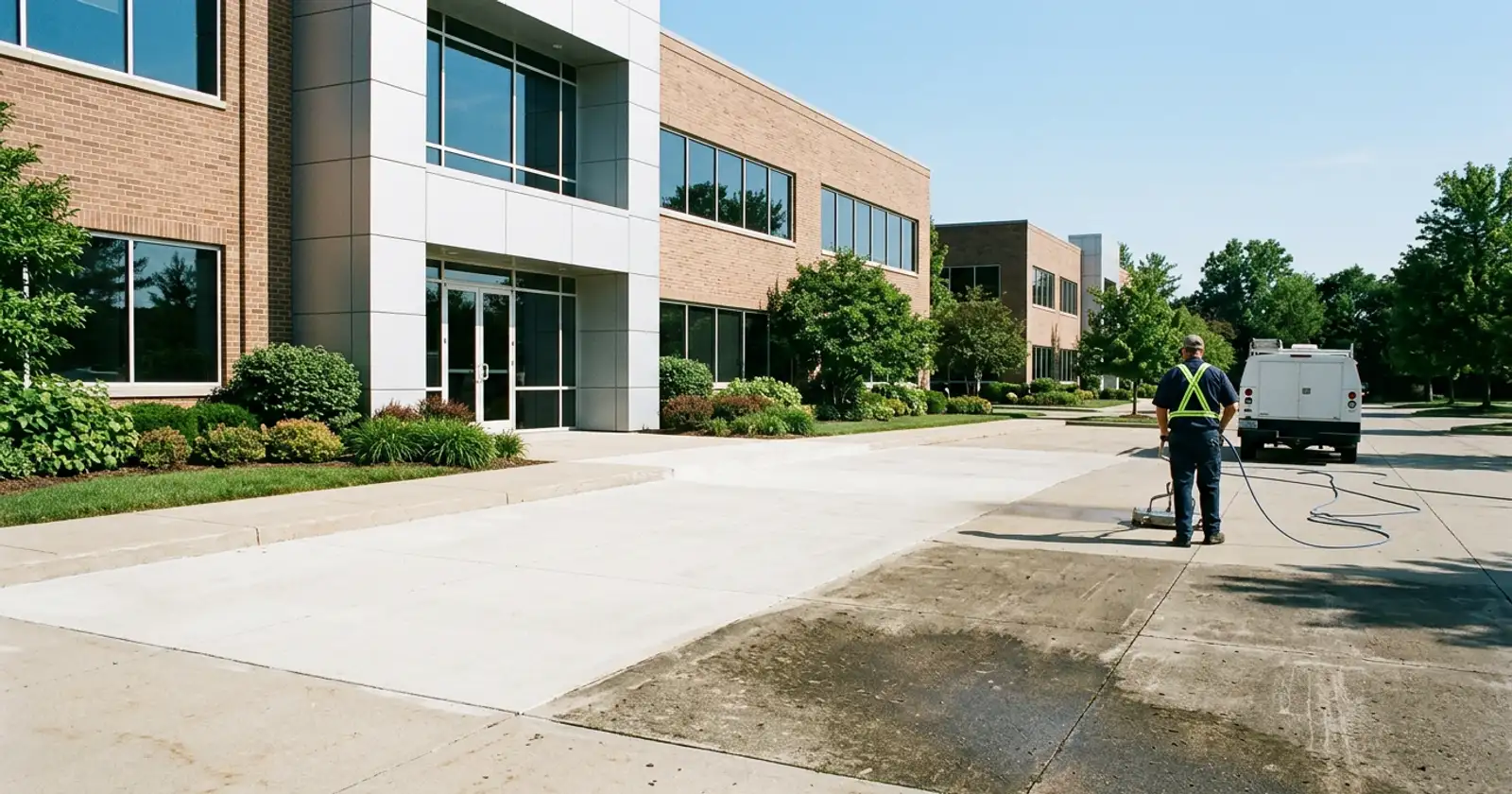
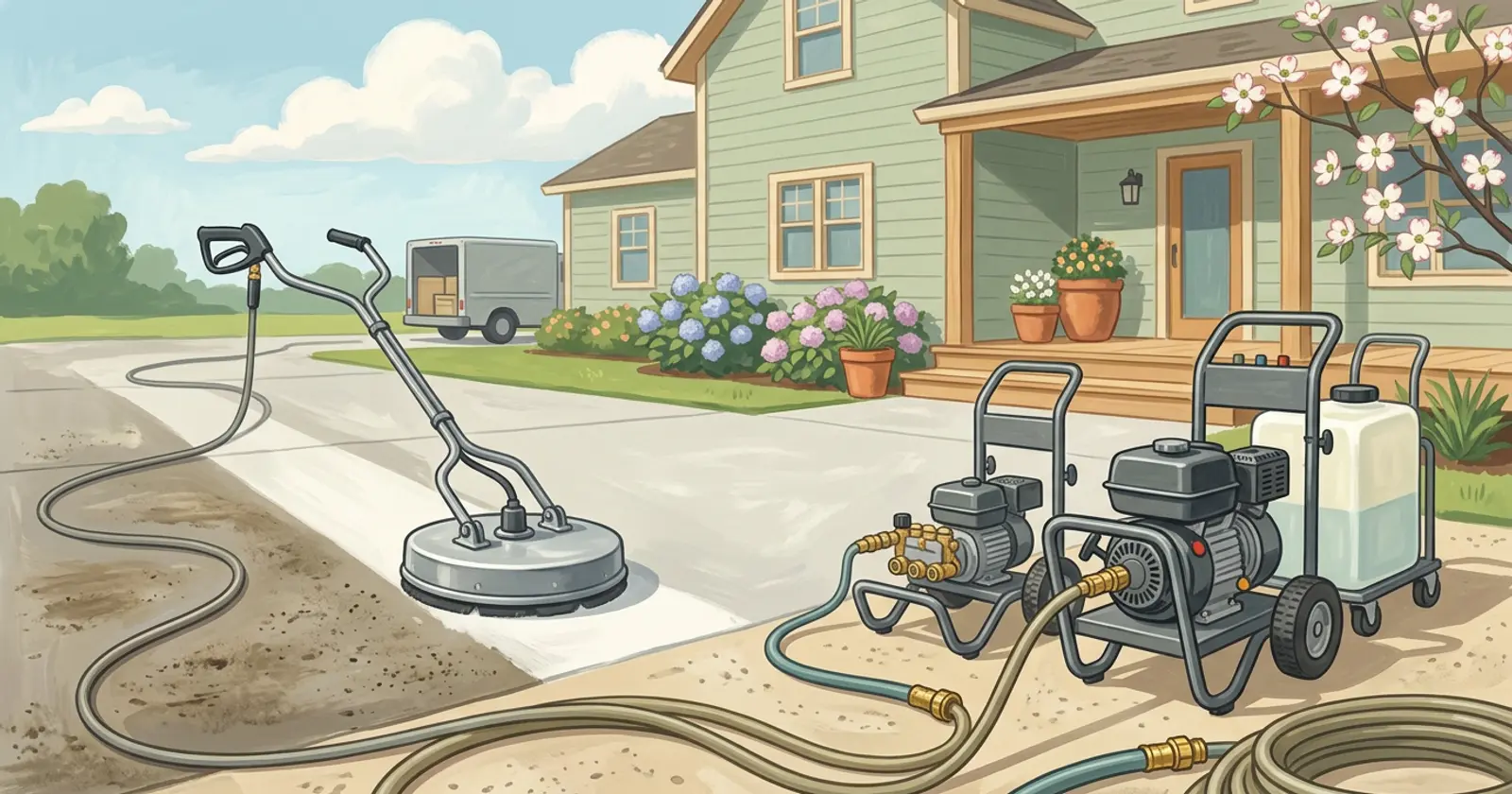
Notice the driveway. On its own, it doesn’t reach that company’s $300 visit minimum. Flatwork pays best as an add-on to a house wash, or with a job minimum that covers your setup.
Turn tickets into dollars per hour
A ticket only means something next to the hours it takes. A few companies publish their times:
- House washes. The Charlotte company says a single-story home at the low end of its range takes about an hour. A Midwest company says standard two-story homes there run $450 to $750 and an average house takes two to four hours. That works out to about $112 to $375 per hour on site.
- Roofs. The roof-focused owner on a trade forum this July said his roofs are usually done in under 2 hours. If a $600 to $1,000 roof takes you 2 hours, that’s $300 to $500 an hour. That’s an illustration, not a promise: steep pitches and heavy growth add time.
- Decks. Owners on the forum split here. One said over half his jobs are large-ticket items such as deck refinishing. Another said he has been moving away from wood because jobs almost always take longer and are messier than expected.
Then run your own numbers. For five or so jobs of each service, log:
- The ticket.
- Chemicals and fuel for that job.
- Every hour: setup, cleanup and the drive, not just time on the wand.
Dollars per hour = (ticket − chemicals and fuel) ÷ total hours. The service that wins is the one to push. For pricing basics, start with how much to charge.
Don’t forget repeat business
Dollars per hour isn’t the whole story. A third-year owner whose work was mostly roofs posted end-of-season numbers in 2024: a high average ticket, with generating leads as the thing to work on. A veteran replying pointed out that roof customers only come back every 5 to 7 years. He advised selling the house wash on the next visit, and noted that commercial work is much more repeatable.
A forum reply in July put it plainly: house washing will be the bread and butter, and a solo owner could earn a decent income without ever cleaning a roof.
Where roofs are a bigger line
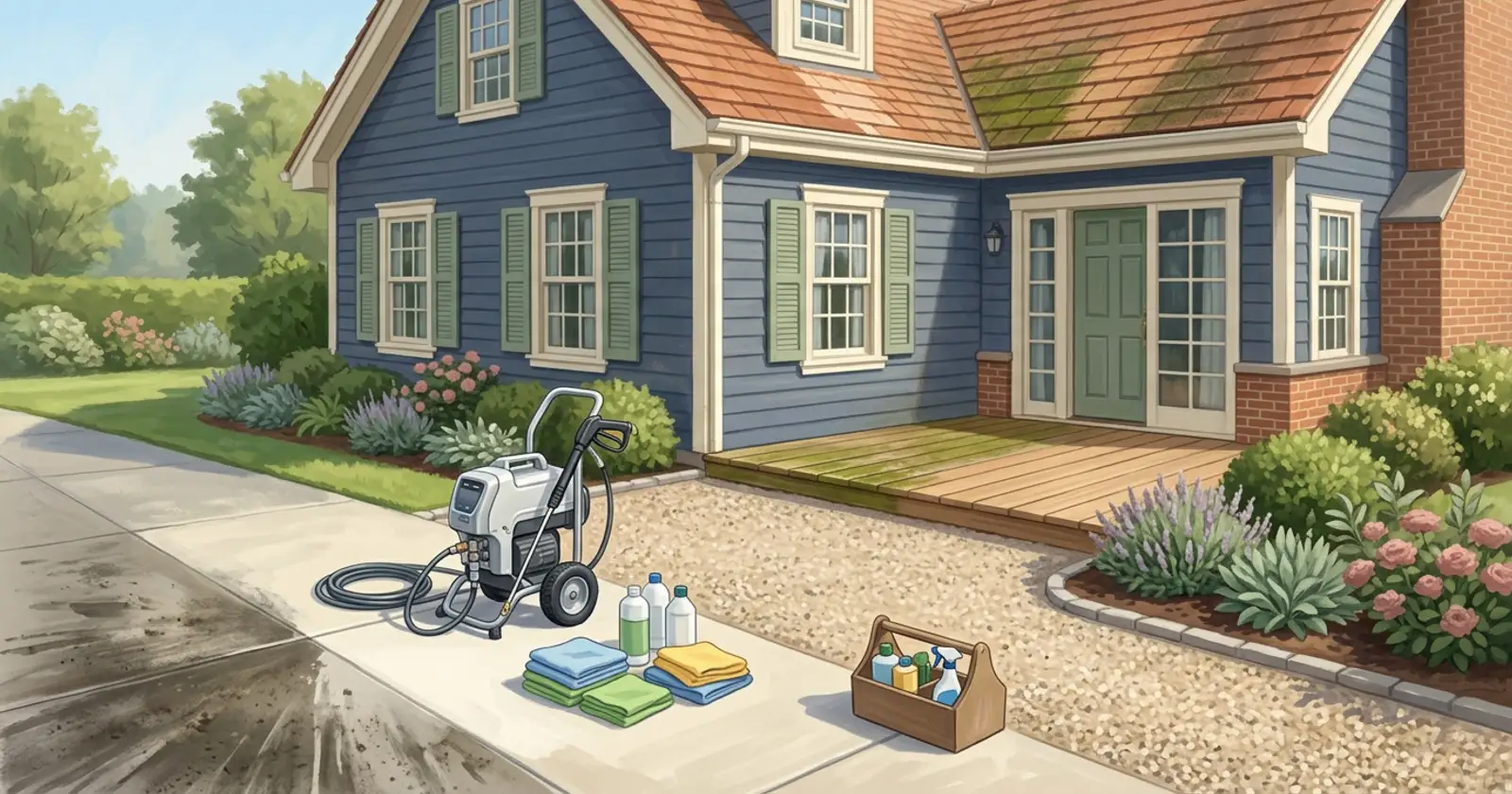
Location changes the mix. The roofing industry’s trade group says algae discoloration on roofs is most widespread in the Gulf States and along the Northwest and Eastern Seaboards. If you work anywhere along the Gulf, roofs can be a bigger part of the menu than they would be in a dry climate. Before you sell roof work, read what shingle makers say.
How to shift without losing the base
- Price the small jobs properly first. One owner on the forum said he was tired of $200 houses. A reply warned against underquoting $500 jobs at $200. If you’re booked out, see when to raise prices.
- Sell up on site. Offer the roof or gutters while you’re washing the house. A gutter cleaning add-on fits the same visit.
- Drop what loses money, not what’s merely small. A quick driveway on a house-wash day may beat its own dollars per hour.
- Check slow-season fillers the same way. Run the same math on window cleaning before you add it.
Prices here come from companies’ own published pages. Forum figures are owners’ own accounts. How we check numbers.
Sources
Based on 6 sources · How we price
- KC Splash, residential pressure washing pricing (Kansas City): kc-splash.com/residential-pressure-washing-pricing
- Gleaming Gutters, pressure washing Charlotte: gleaminggutters.com/pressure-washing-charlotte
- Right Way Power Washing, house wash pricing: rightwaypowerwashing.com/house-wash-pricing
- Asphalt Roofing Manufacturers Association, algae discoloration: asphaltroofing.org/algae-discoloration
- Community discussion, if you could start over (PressureWashingResource, 2026): pressurewashingresource.com/community/t/if-you-could-start-over-what-would-you-do-differently/40939
- Community discussion, time to modernize (PressureWashingResource, 2025–2026): pressurewashingresource.com/community/t/time-to-modernize/40627