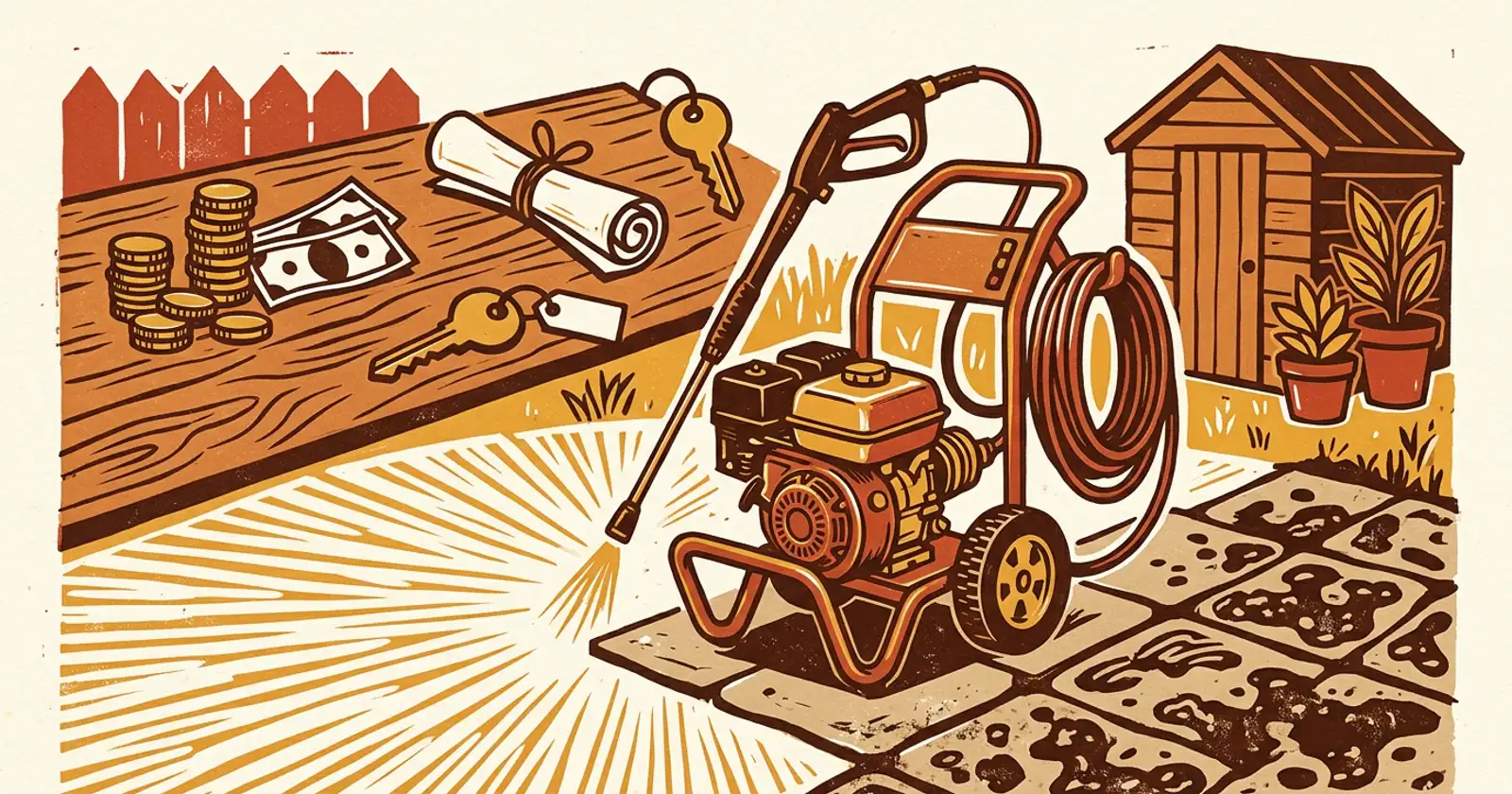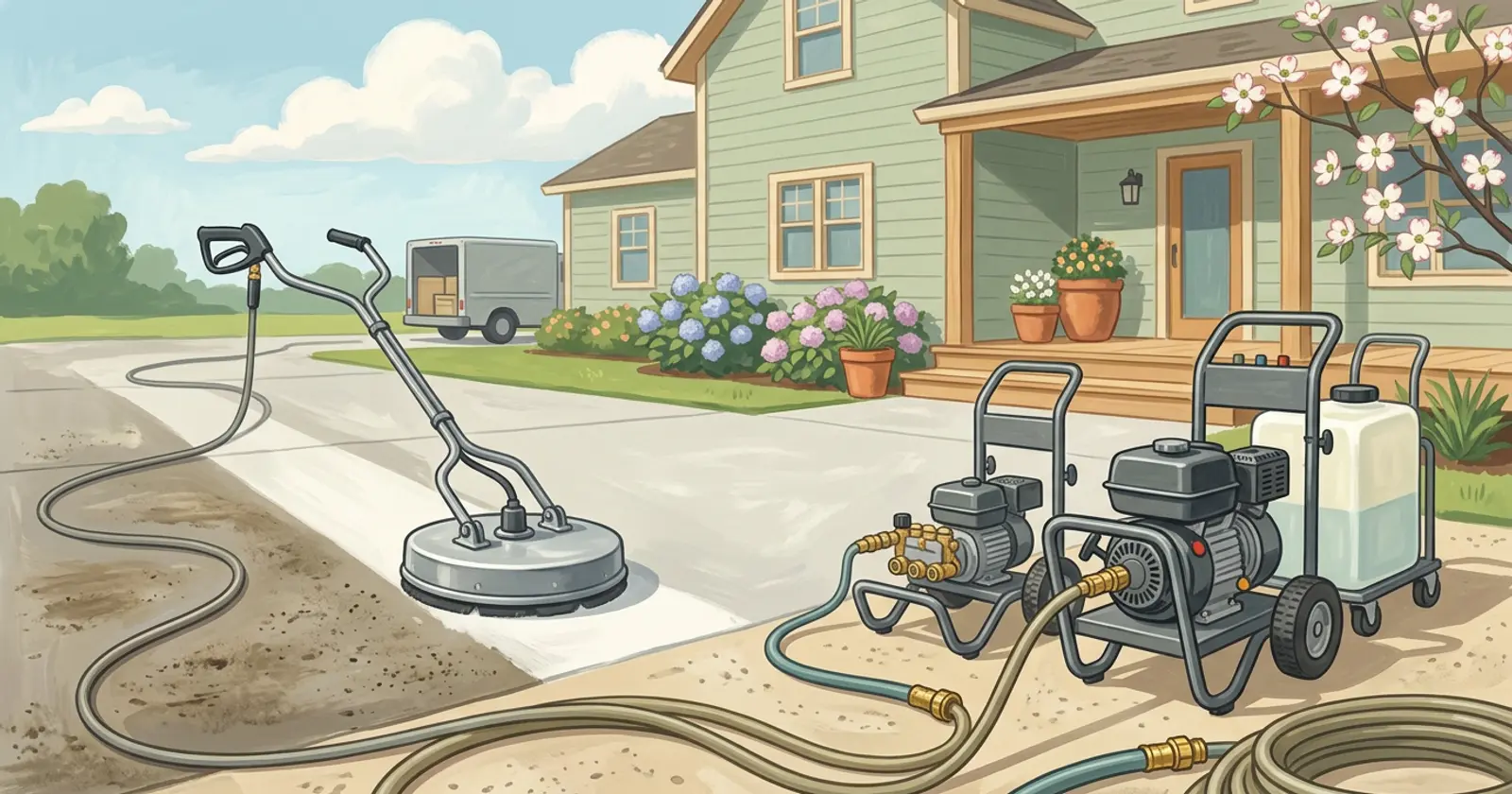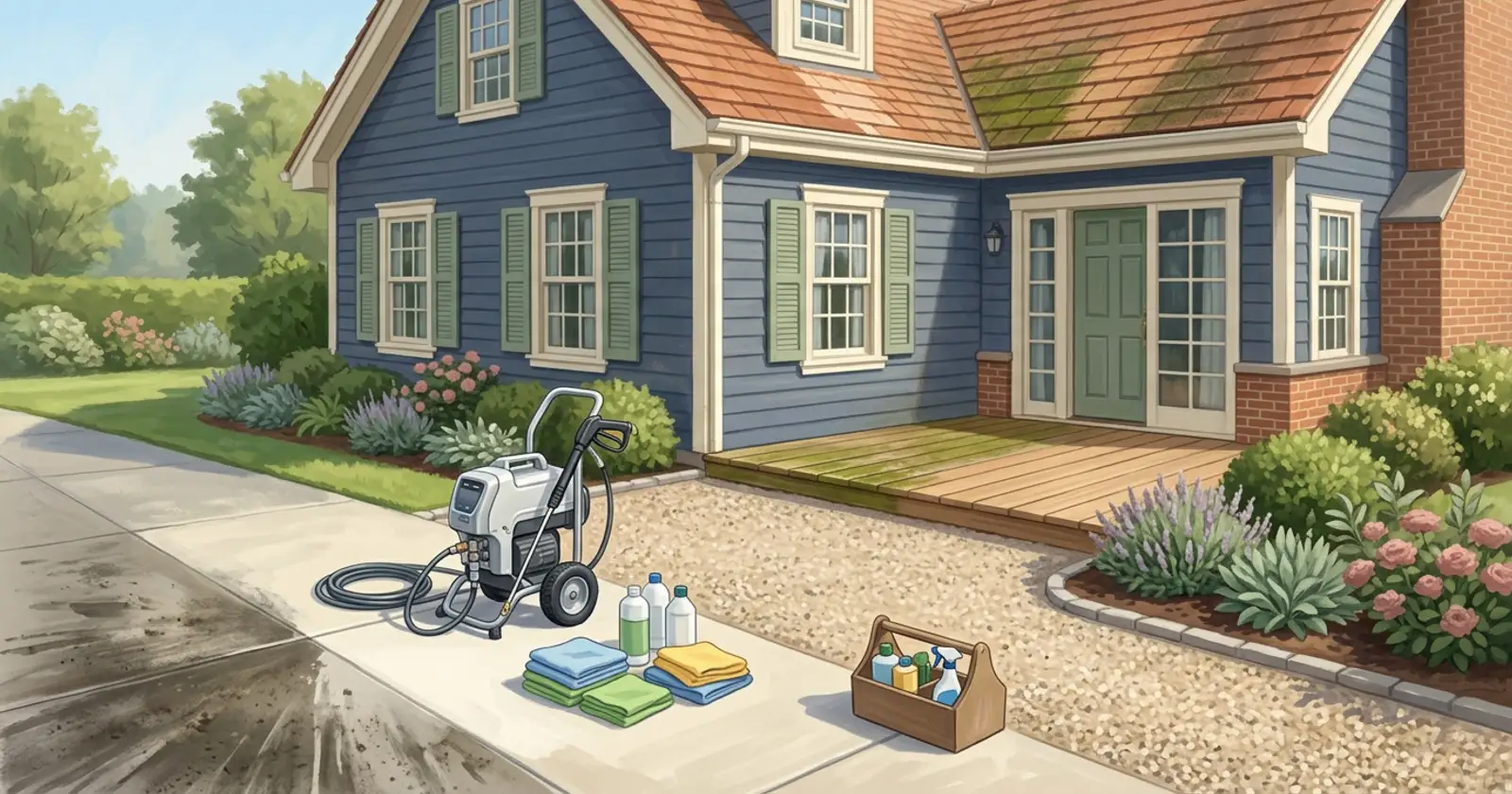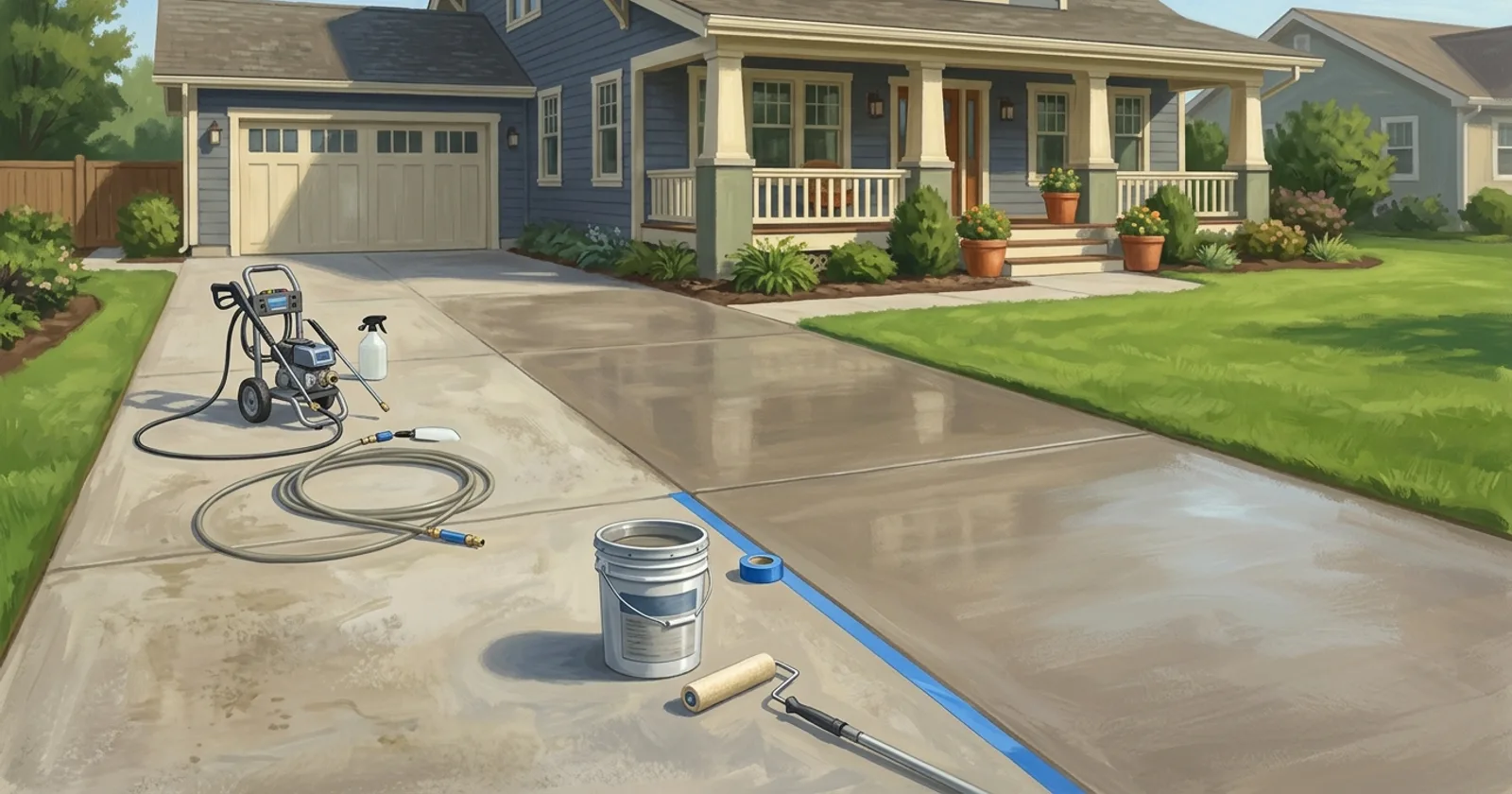
Two forum threads show both sides. A poster in upstate New York said the crew charges 80 cents a square foot in labor to wash and seal, plus the sealer, which came to about $1,500, or 93 cents a foot, on a 1,600 sq ft driveway (forum thread). He said selling it had been easy so far; a reply told him to sell the benefits. In another thread, an owner asked whether sealing is worth two weather-dependent days (forum thread). One reply had done one sealing job and sold another he never followed up on, and said his product just needed temperatures above about 50°F and no rain for a day afterward.
Build the price from three lines
Using the upstate New York numbers as a worked example:
- Material. He said a 5-gallon pail costs $180 and covers about 300 square feet a gallon. That’s about 12 cents a foot, or roughly 5.3 gallons and $192 for 1,600 sq ft. Check your own product’s label; one solvent sealer for exposed aggregate covers only 100 square feet a gallon for its two coats.
- Labor. His 80 cents a foot covers the wash and the sealing visit, or $1,280 on that driveway.
- Rounding up. He adds the gallons needed and “a touch over to be safe,” which lands him at $1,500.
That’s one operator’s formula, not a market rate. Our suggestion: put the gallon count and the labor line on the quote separately, so the customer can see what each part pays for. For the published side, one concrete company prices sealing alone at 40 to 90 cents a square foot and puts washing plus sealing at about a dollar a foot. Our exposed aggregate cost guide compares several companies’ published sealing prices and coverage on rough concrete. Our figures were checked in October 2026; our sourcing rules are on the methodology page.
The second trip is the real cost
Sealing turns one visit into two, and the second one depends on the weather:
- Set a floor. The same concrete company estimates a sealing minimum of $300 to $400, possibly lower when cleaning is bundled in. A small patio still costs you a drive.
- Let it dry. One sealer’s label asks for 24 hours of drying after the rinse, with air and surface temperatures warmer than 50°F and cooler than 90°F. Our suggestion: book the sealing day as “the next suitable day,” not a fixed date, and say so on the quote, so a rain delay doesn’t feel like a missed appointment.
- Charge for prep. The same label calls for degreasing oil spots and etching slick, unsealed concrete before sealing. Heavy prep is extra work; quote it as a line.
Plan for callbacks
Sealing brings complaints washing never does. One sealer’s label warns that applying it to a hot surface can cause bubbles or streaking. Our guides to cloudy or striped sealer on pavers and white haze on brick, pavers and stone cover what customers may call about.
Where sealing sells
Freeze-and-salt markets give you a reason to offer it. In Syracuse, New York, the overnight low is at or below freezing on about 132 days a year and snowfall averages about 128 inches, per NOAA’s 1991–2020 normals. Our homeowner piece on sealing a driveway before salt season is worth sending customers. And because that solvent sealer says to reseal no more often than every two years, every sealing job gives you a rebooking date.
Sources
Based on 5 sources · How we price
- Forum thread, r/pressurewashing, concrete sealing pricing in upstate New York (May 2026): reddit.com/r/pressurewashing/comments/1tdu9td
- Forum thread, r/pressurewashing, offering sealing as an upsell (Jan 2026): reddit.com/r/pressurewashing/comments/1qn4wbe
- Eagle Premium Coat sealer label and data (PDF): images.thdstatic.com/catalog/pdfImages/6b/6b21638f-e816-4e60-815f-0f07d31f75eb.pdf
- A-1 Concrete Leveling, sealing cost guide: a1concrete.com/concrete-repair-learning-center/concrete-sealing-cost
- NOAA NCEI, 1991–2020 annual normals, Syracuse Hancock International Airport: ncei.noaa.gov/access/services/data/v1?dataset=normals-annualseasonal-1991-2020&stations=USW00014771&format=csv&dataTypes=ANN-TMIN-AVGNDS-LSTH032,ANN-TMAX-AVGNDS-LSTH032,ANN-SNOW-NORMAL&includeStationName=true