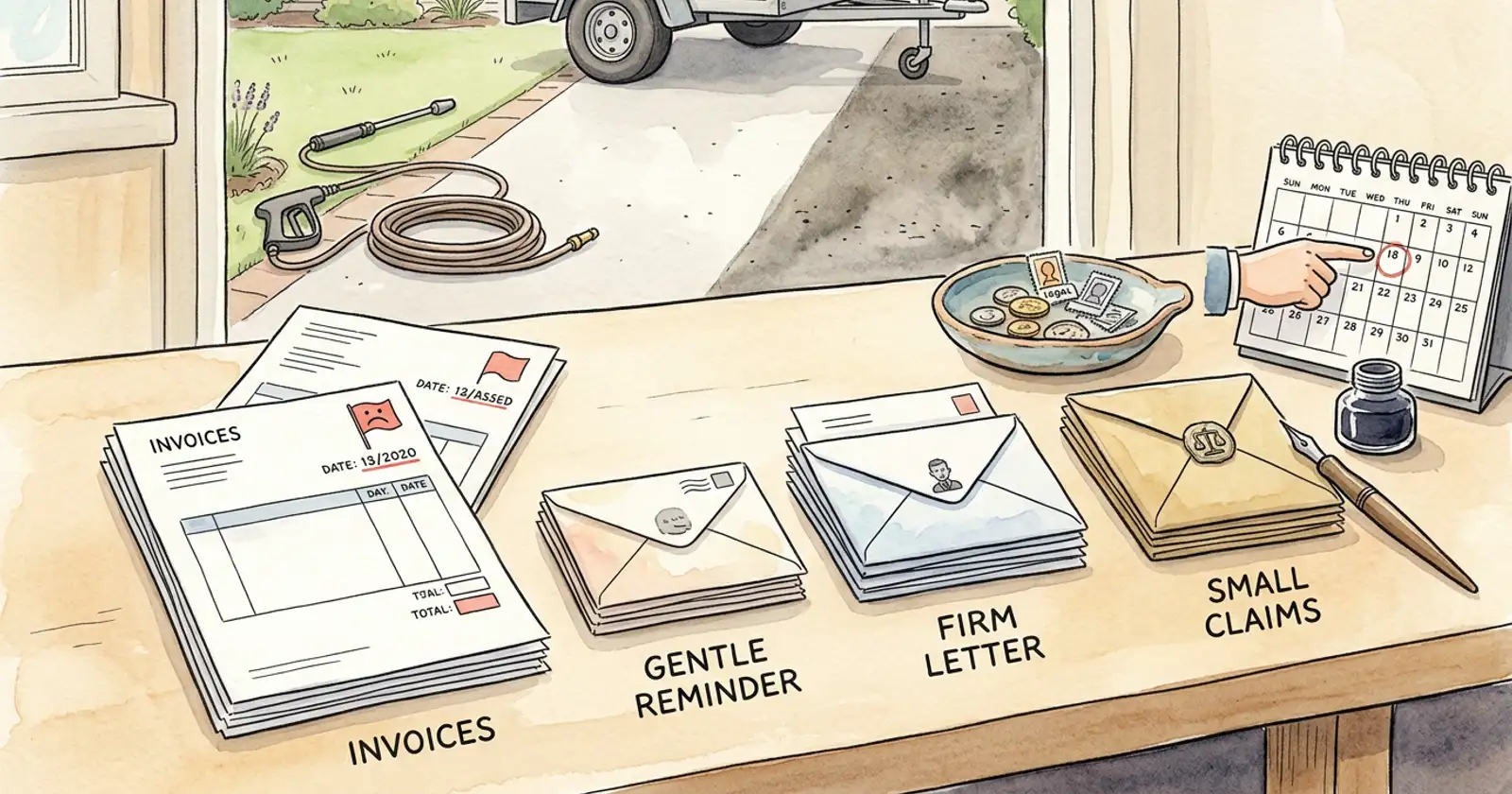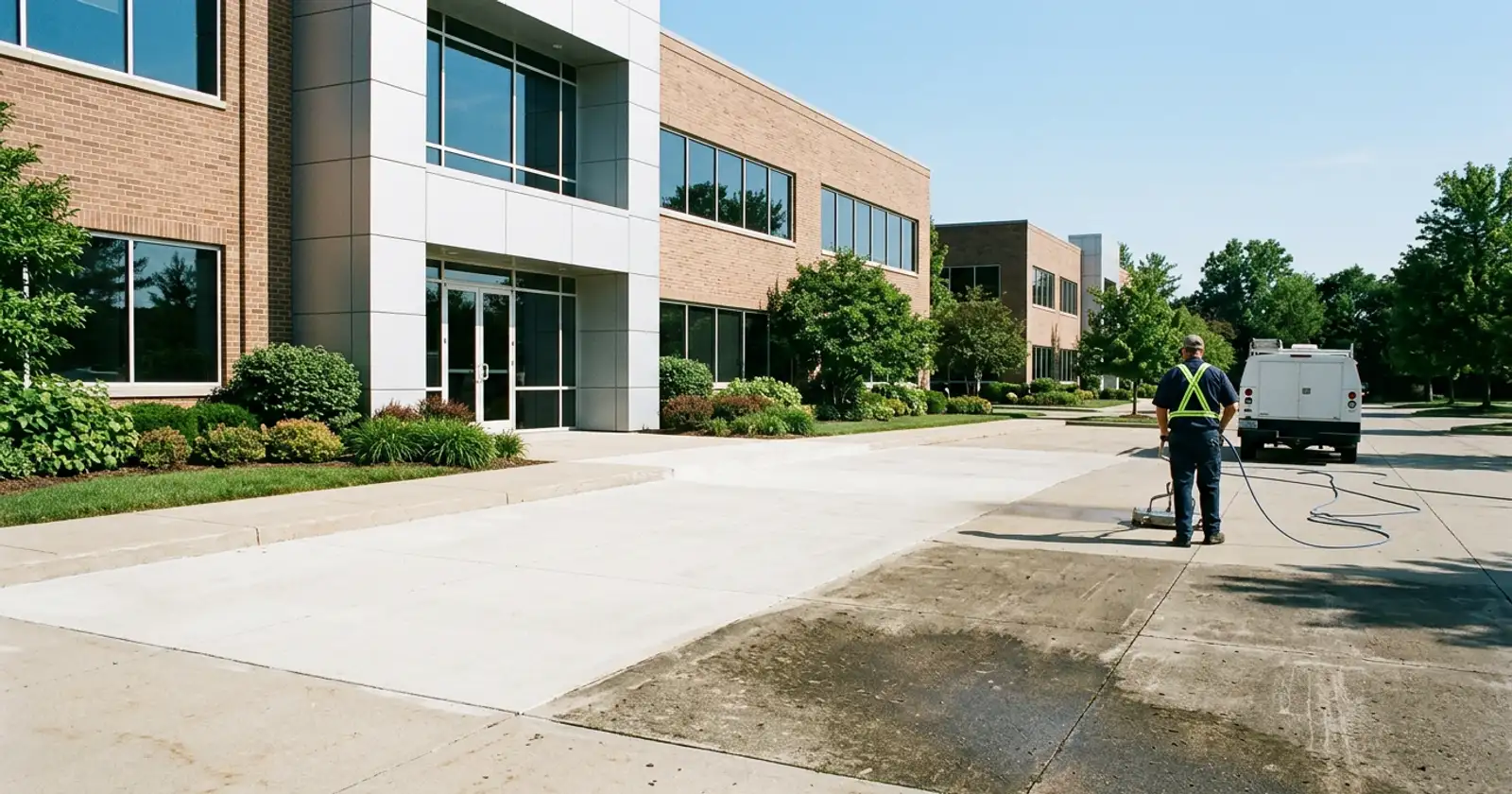
A washer on a trade forum faced the other version of this. He had washed a senior living center before. Then new management took over and added walkways, gutters, moss treatment and, at first, the parking lot. He priced the bigger scope at about $5,050, low on purpose to win the new managers over. Several replies said it looked low for that scope. One predicted that next year the manager would ask why the price doubled.
Step 1: Measure and time it yourself
Don’t trust the old scope. Walk the site, measure every surface and time one full visit, including setup, water hookups and moving around parked cars.
A washer in another forum thread shows why this matters. He bids by the square foot when his company works alone, and by the hour when the work depends on the contractor. He keeps cleaning times “down to the minute,” and his target is $125 an hour, or $1,000 for an eight-hour day.
On a 1.6-million-square-foot parking garage, the two methods split wide apart. Timed, it came to 40 to 45 working days, or $40,000 to $45,000. At $0.10 a square foot, it came to $160,000. The client also wouldn’t close any sections, and replies said to walk away or insist on closed levels. When your two methods disagree that much, the job has a problem your old price doesn’t show.
Step 2: Compare with published commercial rates
Here’s what three commercial washers publish:
| Washer (area) | Service | Published rate |
|---|---|---|
| Southern Pro Exteriors (Nashville) | Commercial flatwork | $0.14–$0.18 / sq ft, $350 minimum |
| Valley Pro Power Wash (Phoenix) | Parking lots | $0.10–$0.25 / sq ft, volume pricing on large lots |
| My Guy Services (Indianapolis) | Parking lots | $8–$20+ per parking space |
For 17,000 square feet of lot or deck, about a single-level garage, $0.10 to $0.25 a square foot comes to $1,700 to $4,250 a visit. The Nashville rate comes to $2,380 to $3,060. If an inherited quarterly price sits far below that range, you’ve found the gap.
The Phoenix company also notes that recurring contracts get lower per-visit rates than one-time cleanings. A quarterly account can fairly sit lower in the range, but it still has to cover your hours.
Step 3: Show what changed since the old price
Two things usually changed: the scope and your costs.
Costs. The Consumer Price Index for all urban consumers rose from 273.567 in August 2021 to 334.980 in August 2026, according to the Bureau of Labor Statistics. That’s about 22%. A $2,000 visit priced in 2021 would need to be about $2,449 just to keep pace, before any new work.
Scope. List what the old price covered and what it didn’t. That includes surfaces, frequency, gum or oil treatment, after-hours work and who closes off sections. New managers often add work without realizing the old number didn’t include it.
Step 4: Put the new bid in writing
A short scope letter does the selling for you:
- What’s included: each area by square footage, how often, and the hours you’ll work
- What’s excluded: stains, gum or areas that need extra trips, priced separately
- The wash water: how you’ll handle runoff. In Virginia, state law requires towns and cities to run programs to cut pollutants in their waters. One Virginia town’s ordinance bans discharging anything but stormwater and listed exceptions into storm drains. Its car-washing exemption covers only individual residential washing, not commercial activity.
- The price change: the new price, the date it starts and one line on why, such as scope, measured time and costs
If the jump is large, consider phasing it over two or three visits. Losing an underpriced account isn’t always a loss. One reply in the senior-living thread said commercial work can be a race to the bottom, and another said to bid where you make money.
For the first-bid basics, see bidding your first commercial job. For residential price signals, see when to raise your prices. If the bigger scope is beyond your equipment, see when a job is too big for your rig. Garages have their own pricing in parking garage cleaning cost. For how we check every number here, see our methodology.
Sources
Based on 6 sources · How we price
- U.S. Bureau of Labor Statistics, CPI-U, All items, U.S. city average (CUUR0000SA0), 2021–2026: data.bls.gov/timeseries/CUUR0000SA0?years_option=specific_years&from_year=2021&to_year=2026
- Southern Pro Exteriors (Nashville), pricing: southernproexteriors.com
- Valley Pro Power Wash, Pressure Washing Prices Phoenix AZ 2026: valleypropowerwash.com/pressure-washing-prices-phoenix-az-2026
- My Guy Services, Commercial Pressure Washing Prices (Indianapolis): myguyservicesllc.com/commercial-pressure-washing-prices
- Town of Vinton, Virginia, Illicit Discharge Facts (PDF): vintonva.gov/DocumentCenter/View/859
- Community discussion, how to bid a 1,600,000 sq ft parking garage: pressurewashingresource.com/community/t/how-to-bid-1-600-000-sq-ft-parking-garage/40392