Many homeowners expect the washer to “just knock the nest down.” For most birds in the US, an active nest is protected by federal law. Here’s how to clean up the mess safely, and what to do about the nest.
Why you wet droppings before you touch them
The CDC explains that the fungus behind histoplasmosis lives in soil, particularly soil with large amounts of bird or bat droppings, and people can breathe in its spores. In the US, it mainly lives in the central and eastern states.
The CDC’s guidance is written for workers. Its main cleanup points:
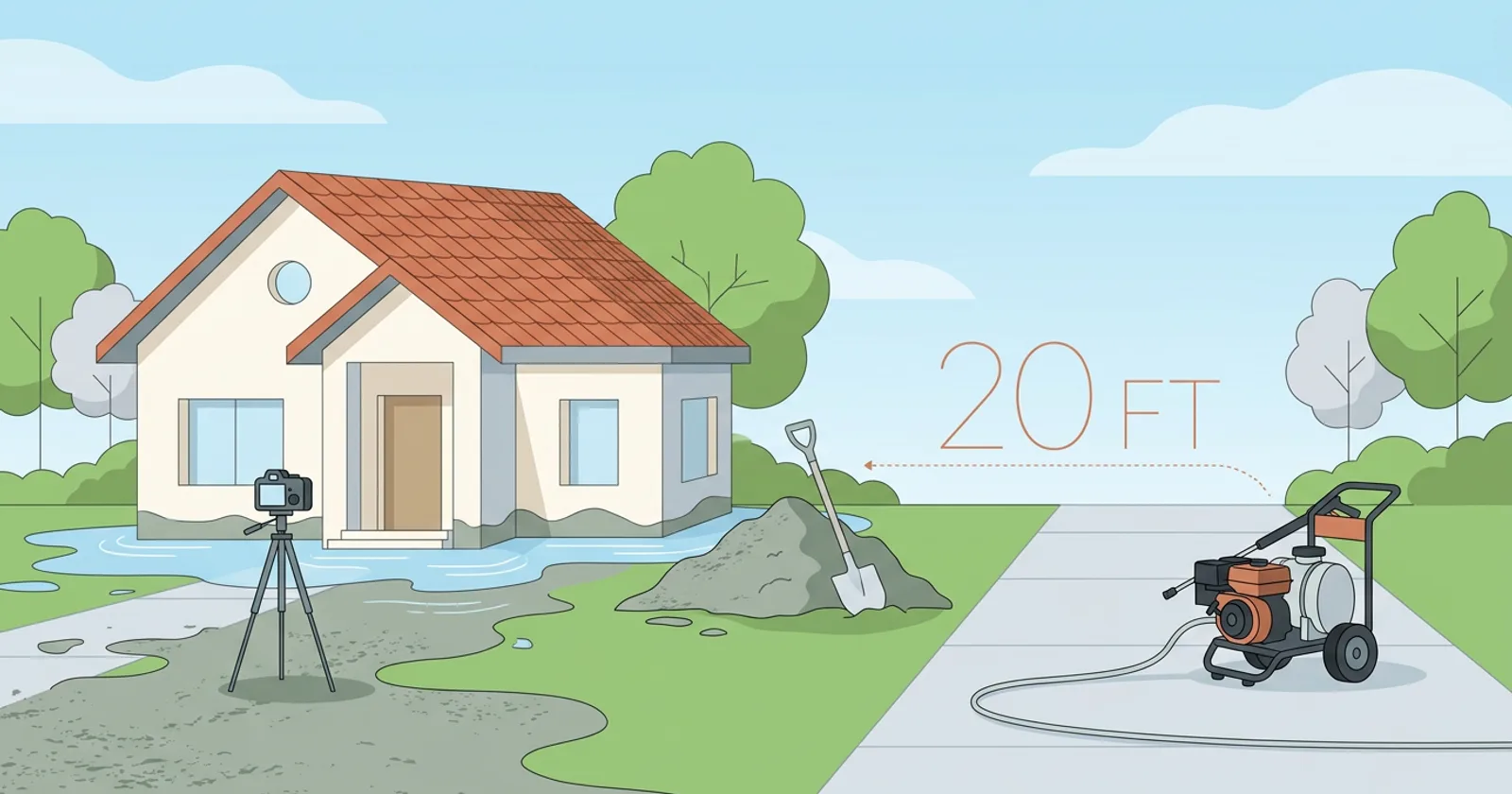
- Don’t sweep or shovel it dry. The guidance says to avoid shoveling or sweeping dry, dusty material and to spray it with water first.
- Big piles are a different job. It says large amounts of bird or bat droppings should, in some cases, be cleaned up by a company that handles hazardous waste.
- Sometimes the answer is to leave it. If people are unlikely to be around the spot, the CDC notes that leaving the material alone may be the best course.
- Protective gear on its list for workers includes respiratory and eye protection, gloves and disposable clothing.
If you have health questions about exposure, ask a healthcare provider. We only pass on what the guidance says about cleanup.
Cleaning by surface
Start the same way everywhere: wet it, let it soften, then work up from the gentlest method.
| Surface | Start with | Watch out for |
|---|---|---|
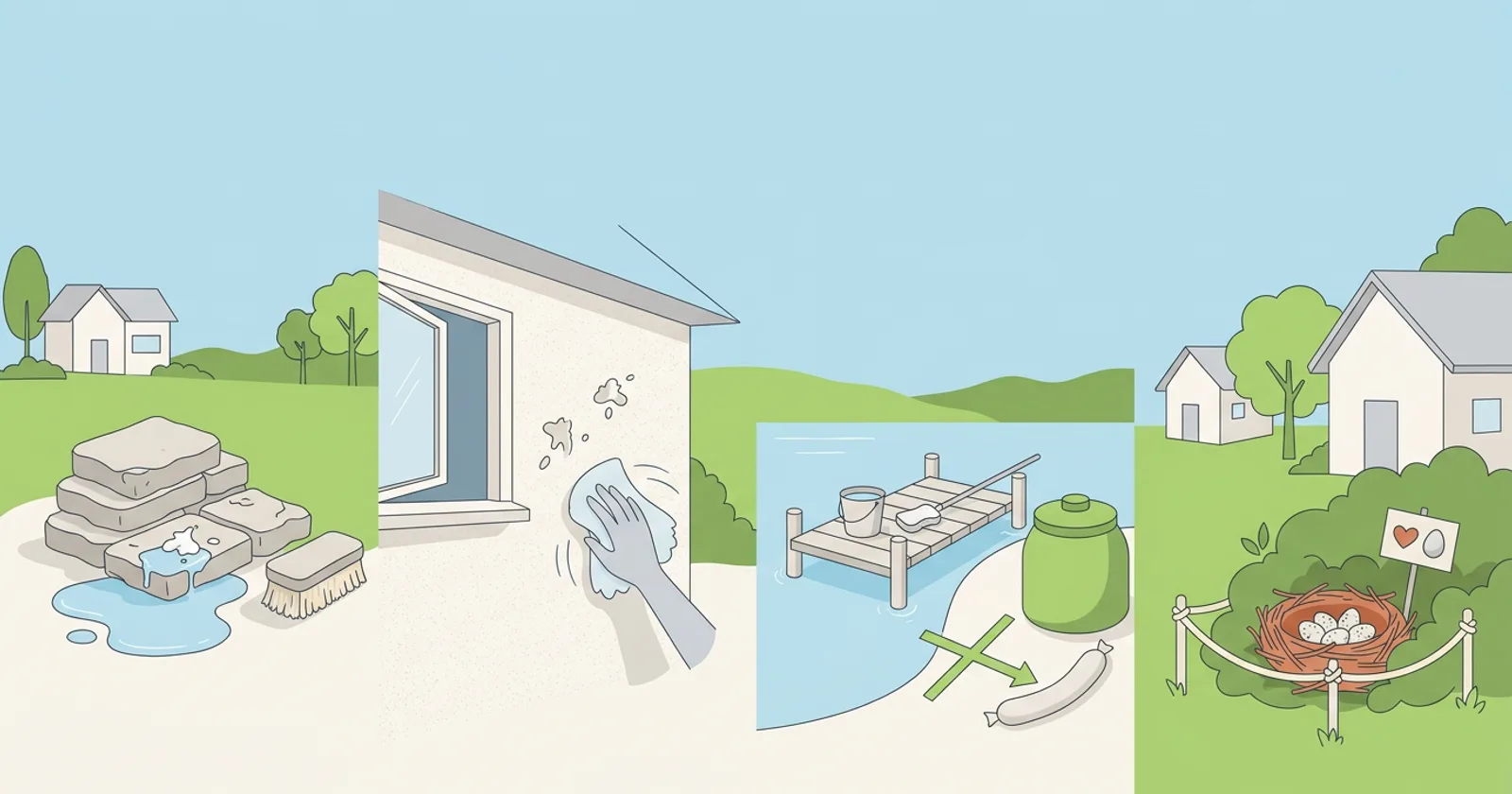
| Concrete and pavers | Soak, let it dwell, then a fan tip | Sealed pavers: follow the sealer maker’s cleaning directions |
| Natural stone (limestone, marble) | Water and a soft brush; test a hidden spot | Acid cleaners, including vinegar, can etch it |
| Stucco | Soft to medium brush on spots; under 500 psi if a washer is used | High pressure can damage the finish |
| Dock over water | Brush and plain water | Cleaner runoff straight into the lake |
Concrete and pavers. In one community thread, a washer said pressure alone is sometimes enough, but when it isn’t, spraying undiluted vinegar and letting it sit before washing helps. Treat that as trade talk, not a rule. If the pavers are sealed, see our guide to paver cleaning, sanding and sealing before trying anything strong.
Natural stone. The National Park Service warns that acidic cleaners can etch and dissolve acid-sensitive stones like marble and limestone, and it recommends testing a cleaner on an inconspicuous spot first. If a white or dull patch appears afterward, our white haze guide helps sort out what happened.
Stucco. One crew asked a forum how to handle droppings on an apartment building’s stucco before a soft wash. Replies said the soft wash alone didn’t always finish the job, and a brush or rinse was still needed. A stucco maker’s maintenance guide agrees on going gentle. It suggests hand cleaning isolated spots with a soft to medium bristle brush, and it warns against going over 500 psi. If stucco also shows orange streaks, those are a different problem; see rust stains on stucco and brick.
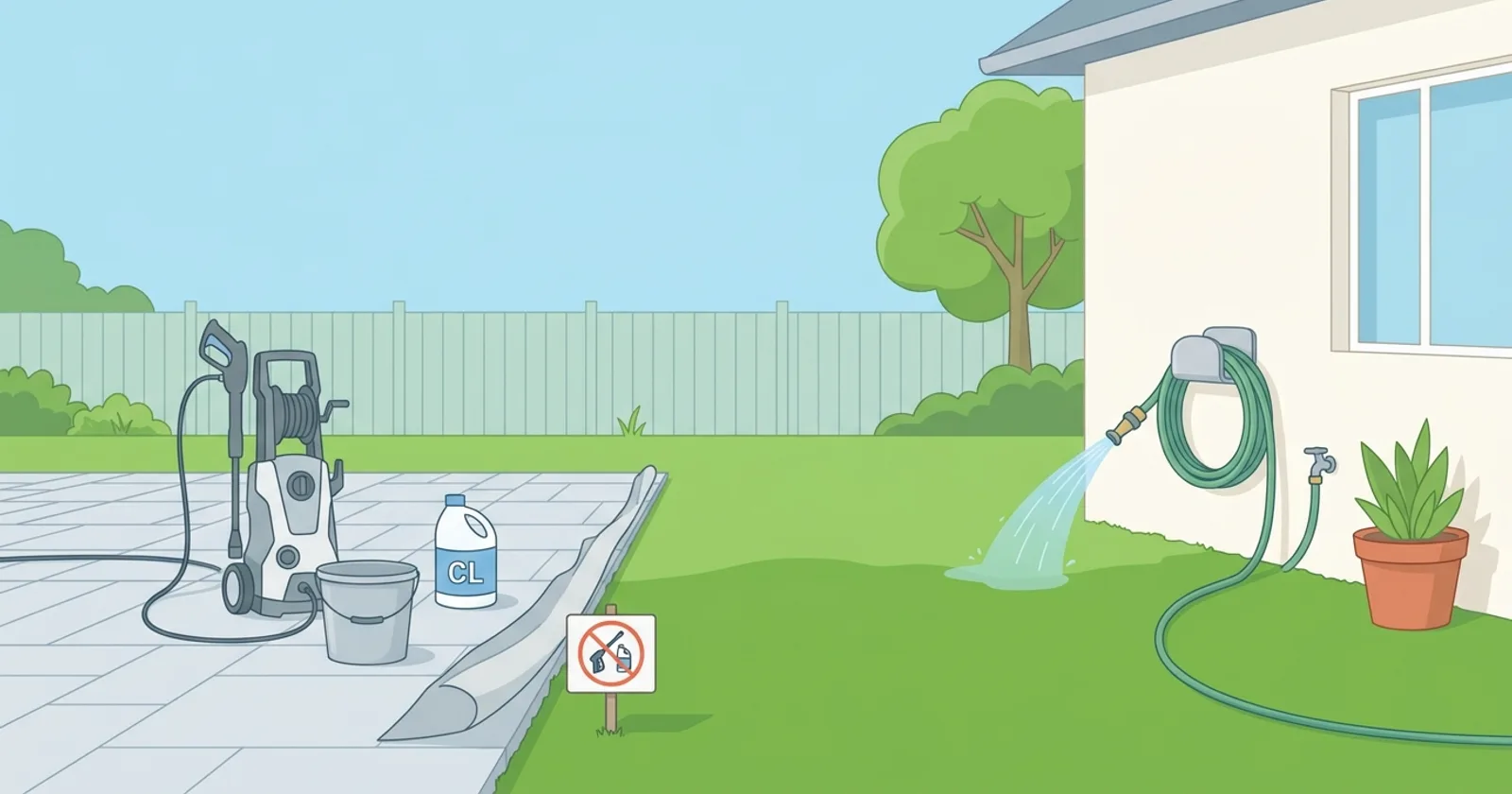
Docks. Geese favor lawns that run down to the water. The National Park Service describes Canada geese as common throughout the Twin Cities area, and notes that many now stay year-round in northern cities. Whatever you spray on a dock ends up in the lake. One bleach-based mildew cleaner’s label says it is toxic to fish and tells you not to let it run off into surface waters. Start with a brush and plain water. For plastic decking, check the maker’s pressure limits in our composite deck guide.
The nest you can’t remove
Under the Migratory Bird Treaty Act, the US Fish and Wildlife Service says it is illegal to destroy a nest that has eggs or chicks in it, or young birds that still depend on it. The agency says permits to remove active nests are usually issued only for a human health or safety concern, or when the birds are in immediate danger. Usually, you’re expected to wait until the nest is inactive.
An empty nest is different. The agency says the act doesn’t prohibit destroying a nest alone, with no eggs or birds in it, as long as nobody keeps it. Some introduced species, such as the rock pigeon, aren’t covered by the act at all, though the agency notes that states and communities may protect them. Canada geese have their own registration process for nest and egg control.
This is general information, not legal advice. Before anyone removes a nest, check with USFWS or your state wildlife agency. Other eave nests, such as mud daubers, are covered in spider webs and mud dauber nests on siding.
What to tell your washer
One owner posted that a customer asked him to remove a gutter nest with chicks in it. He refused, washed the rest of the house, and was paid $125 less. Other washers replied that he did the right thing, and some said they skip that section and come back after the young leave.
Avoid that standoff by raising it at the quote:
- Point out any nests, and ask the crew to work around active ones.
- Agree in writing to skip that spot and return later, and what that costs.
- Ask how they’ll handle heavy droppings: wetting first, brushes, and where the runoff goes.
Our questions to ask a house washing company cover the rest of the call, including insurance. Here’s how we check every claim: our methodology.
Sources
- CDC, About Histoplasmosis: cdc.gov/histoplasmosis/about/index.html
- CDC (NIOSH), Histoplasmosis and Work: cdc.gov/niosh/histoplasmosis/about/index.html
- CDC (NIOSH), Preventing Histoplasma Exposures at Work: cdc.gov/niosh/histoplasmosis/prevention/index.html
- CDC (NIOSH), Elimination and Engineering Controls: cdc.gov/niosh/histoplasmosis/prevention/elimination-and-engineering-controls.html
- US Fish and Wildlife Service, Bird nests: fws.gov/story/bird-nests
- US Fish and Wildlife Service, Service Publishes Final List of Non-Native Bird Species: fws.gov/story/2005-03/service-publishes-final-list-non-native-bird-species
- US Fish and Wildlife Service, Resident Canada Goose Nest and Egg Registration FAQ: apps.fws.gov/rcgr/resources/faq
- National Park Service, Mississippi National River and Recreation Area, Canada Goose: nps.gov/miss/learn/nature/cangoose2.htm
- National Park Service, Preservation Brief 1, Cleaning and Water-Repellent Treatments for Historic Masonry Buildings: nps.gov/orgs/1739/upload/preservation-brief-01-cleaning-masonry.pdf
- Sto Corp., Stucco Repair and Maintenance Guide: stocorp.com/wp-content/content/Systems_TechService/reStore/Installation%20and%20Repair/IG_Stucco_Repair_and_Maintenance_Guide_EN.pdf
- Mold Armor (W.M. Barr), product label, EPA Reg. No. 4091-19: moldarmor.com/wp-content/uploads/2022/06/Product-Label-8.pdf
- Community discussion, r/pressurewashing, droppings on apartment stucco (2024): reddit.com/r/pressurewashing/comments/1h4vynd
- Community discussion, r/pressurewashing, droppings on concrete (2025): reddit.com/r/pressurewashing/comments/1nnpzpj