Here’s why the smell keeps coming back, what each surface can take, and where your money does the most good.
Why the smell comes back
Concrete, pavers and wood are all porous. One enzyme cleaner maker says dog urine soaks several centimeters below the surface of concrete, where uric acid crystallizes in the pores. It says the crystals reactivate with every rain and heat cycle, which is why the smell can return.
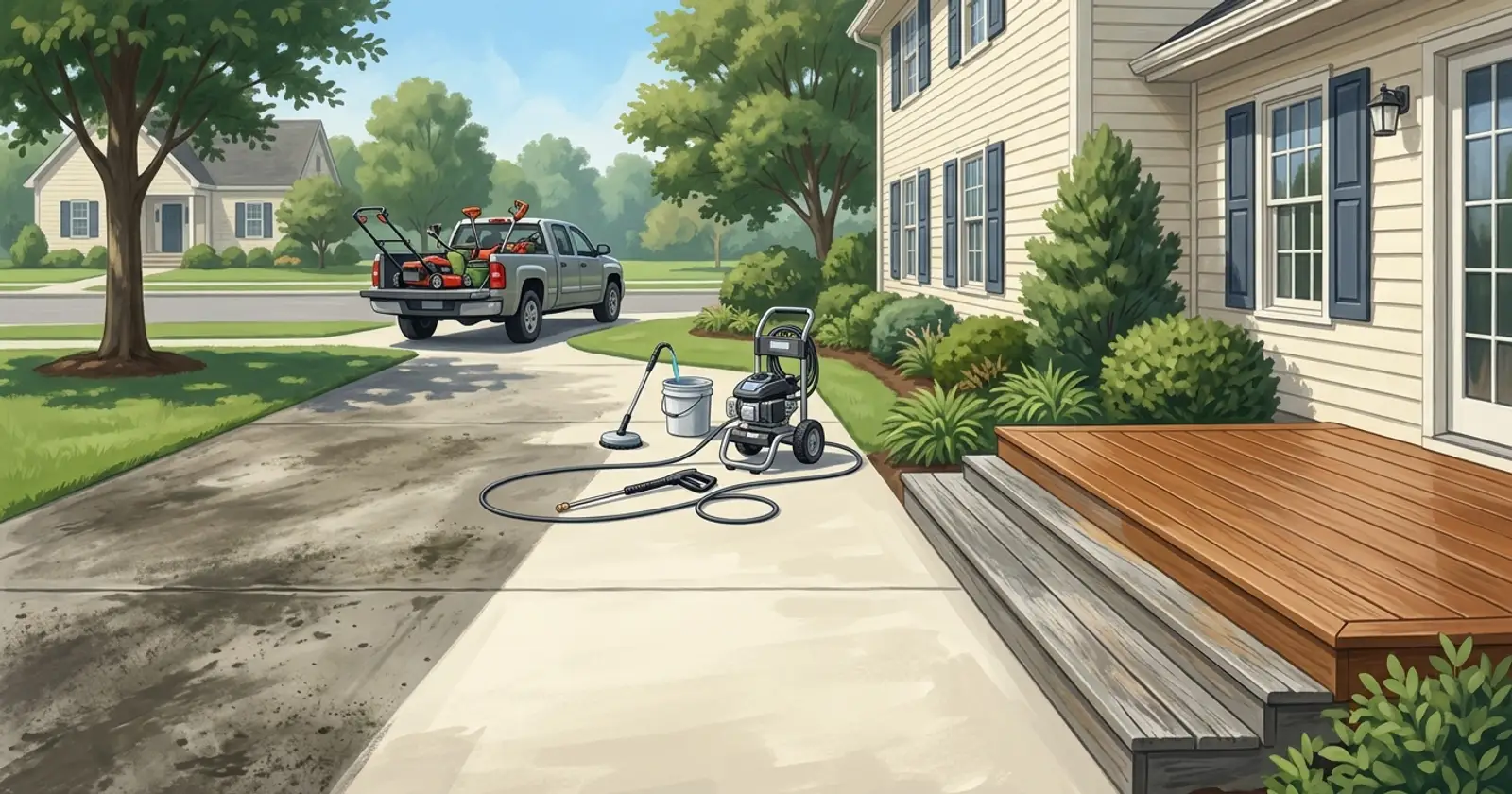
That’s also why a power washer disappoints. The same maker says rinsing and pressure washing push the problem deeper instead of removing it. You get a clean-looking slab and the same smell a few days later.
Dry weather doesn’t make it go away. Even Phoenix, which averages about 7 inches of rain a year on about 33 days, has the heat cycles the maker names as the other trigger.
What each surface can take
| Surface | Cleaning limits | Odor approach |
|---|---|---|
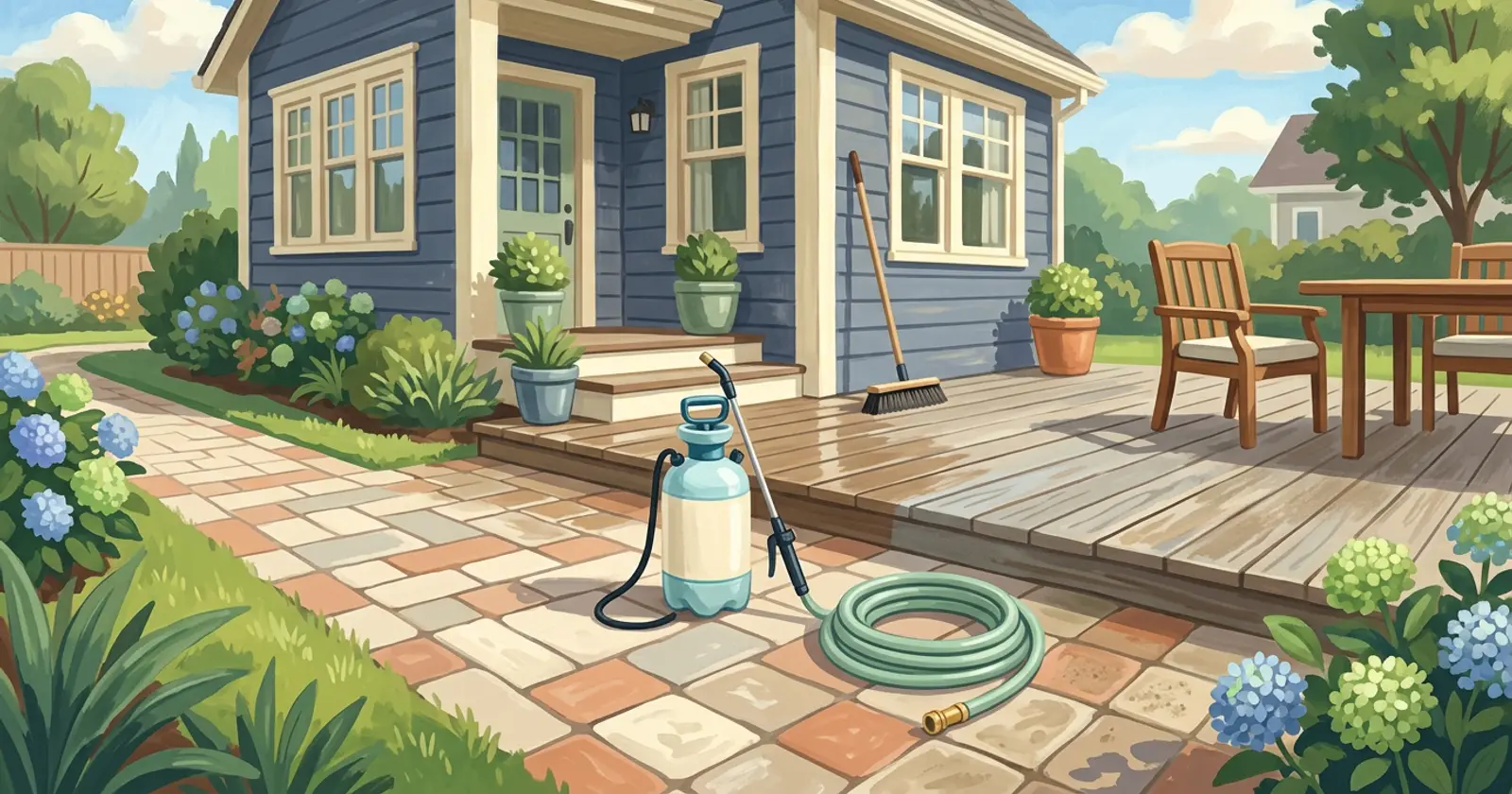
| Unsealed concrete and pavers | Holds up to pressure, but pressure doesn’t remove crystals in the pores | Pre-wet, soak with an odor treatment, don’t rinse, repeat for old spots |
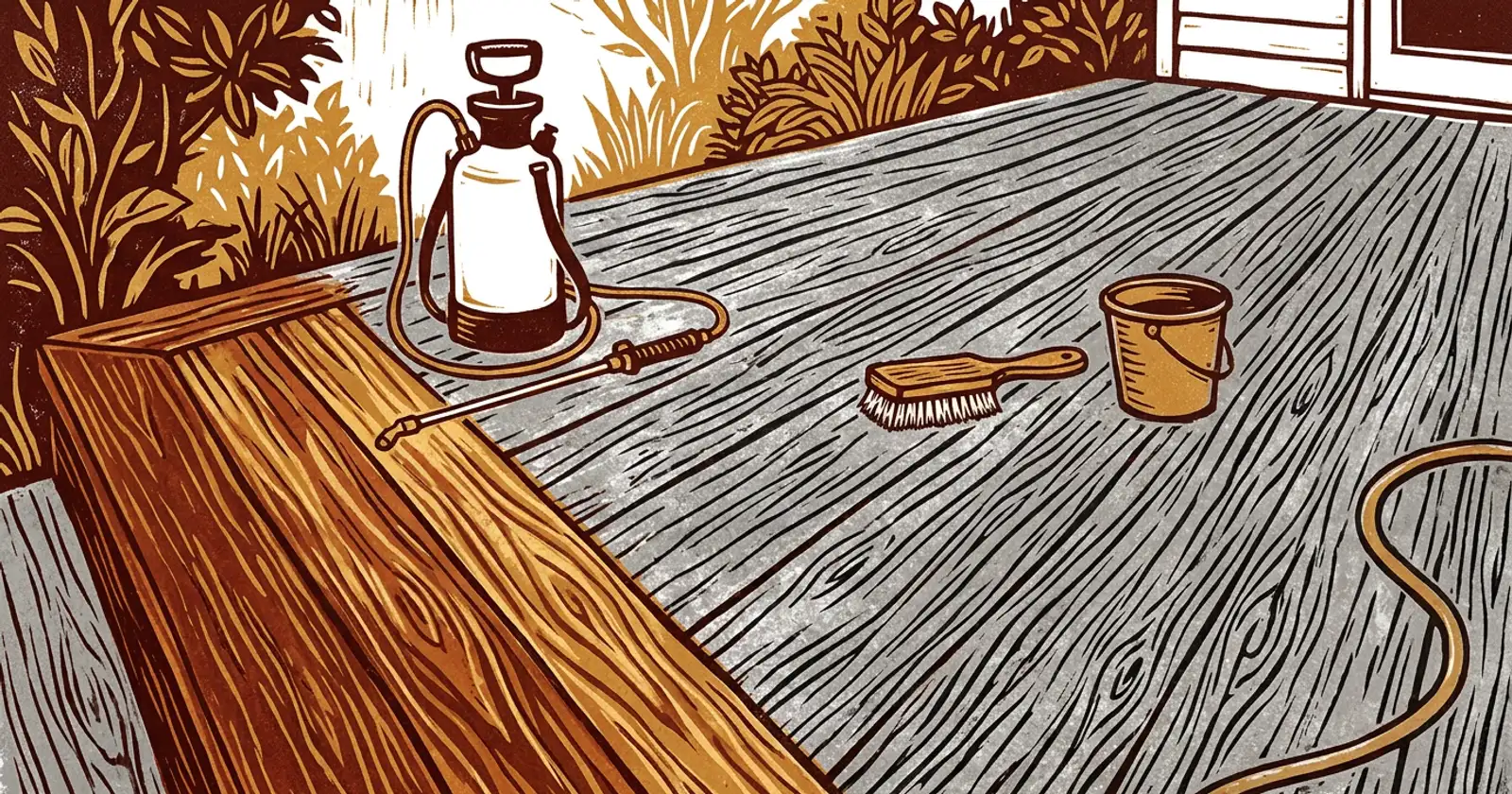
| Wood deck | High-pressure water erodes the softer wood and leaves it rough | Hose rinse plus an odor treatment; keep pressure for occasional cleaning |
| Composite deck | One maker says power washers are for rinsing only, at 1,500 psi max; another says soap, water and a soft brush | Soap and water first; check the maker’s guide before any cleaner |
For composite decks in general, see our composite deck cleaning guide. If you have turf next to your patio, our artificial turf guide covers what turf makers allow for pet odors.
How to use an odor treatment
Follow your product’s label. As one enzyme cleaner maker describes it for concrete:
- Pre-wet the area with plain water so the cleaner can soak in.
- Apply generously over the whole spot and a margin around it.
- Let it dwell 10 to 15 minutes for fresh spots. Don’t rinse it off.
- Let it air dry. The maker says the process keeps working as it dries.
- Repeat for old buildup. It says old deposits need two applications 24 hours apart.
Another maker of an outdoor odor eliminator says to keep the treated area wet as long as possible. It says odor relief lasts anywhere from 5 days to 3 weeks, depending on how many animals use the area. So expect to retreat a favorite spot, not fix it once.
What it costs
One outdoor odor eliminator sells in a 5-gallon pail for $233.86, or about $47 a gallon. Its maker says one gallon treats up to 2,000 square feet.
For a 400 sq ft patio, that’s about a fifth of a gallon, or roughly $9 per full treatment. Treat only the dog’s usual spots and it costs less. Compare that with paying for a full patio wash every time the smell returns.
When to wash, and when to seal
A wash still has a place for general surface dirt. On wood, though, the USDA Forest Products Laboratory says high-pressure water erodes the softer earlywood faster, leaving an uneven, rough surface. Our guide to deck prep before staining explains gentler ways to clean wood.
Sealing is the longer-term fix for concrete. One enzyme cleaner maker suggests sealing unsealed concrete after the odor is gone, to keep urine from soaking in. For what sealing costs, see sealing a concrete driveway or our paver clean, sand and seal guide.
Our methodology page explains how we check these numbers.
Sources
Based on 6 sources · How we price
- Nature’s Freedom, How to Get Dog Urine Smell Out of Concrete: naturesfreedom.com/blogs/news/how-to-get-dog-urine-smell-out-of-concrete
- Pasteur Pharmacy, EcoStrong Outdoor Odor Eliminator, 5 Gallon Pail: pasteurpharmacy.com/products/outdoor-odor-eliminator-5-gallon-pail
- Trex, Care and Cleaning: trex.com/care
- TimberTech, Care and Cleaning Guide: assets.timbertech.com/content/dam/wp-content/TimberTech-Care-and-Cleaning-Guide.pdf
- USDA Forest Products Laboratory, Finishing Wood Exteriors (Agriculture Handbook 647): fpl.fs.usda.gov/documnts/usda/ah647.pdf
- NOAA NCEI, 1991-2020 Annual Normals, Phoenix Sky Harbor International Airport: ncei.noaa.gov/data/normals-annualseasonal/1991-2020/access/USW00023183.csv