You walk outside after a wash and see stones showing in the driveway, fuzzy deck boards or a fogged window. The crew says it was already like that. To get it right in the first place, see our guide to what to do before, during and after a pressure wash.
Start with the pattern
Ask two questions first.
When did it appear? Damage you saw within hours of the wash is a stronger case than something you noticed a month later.
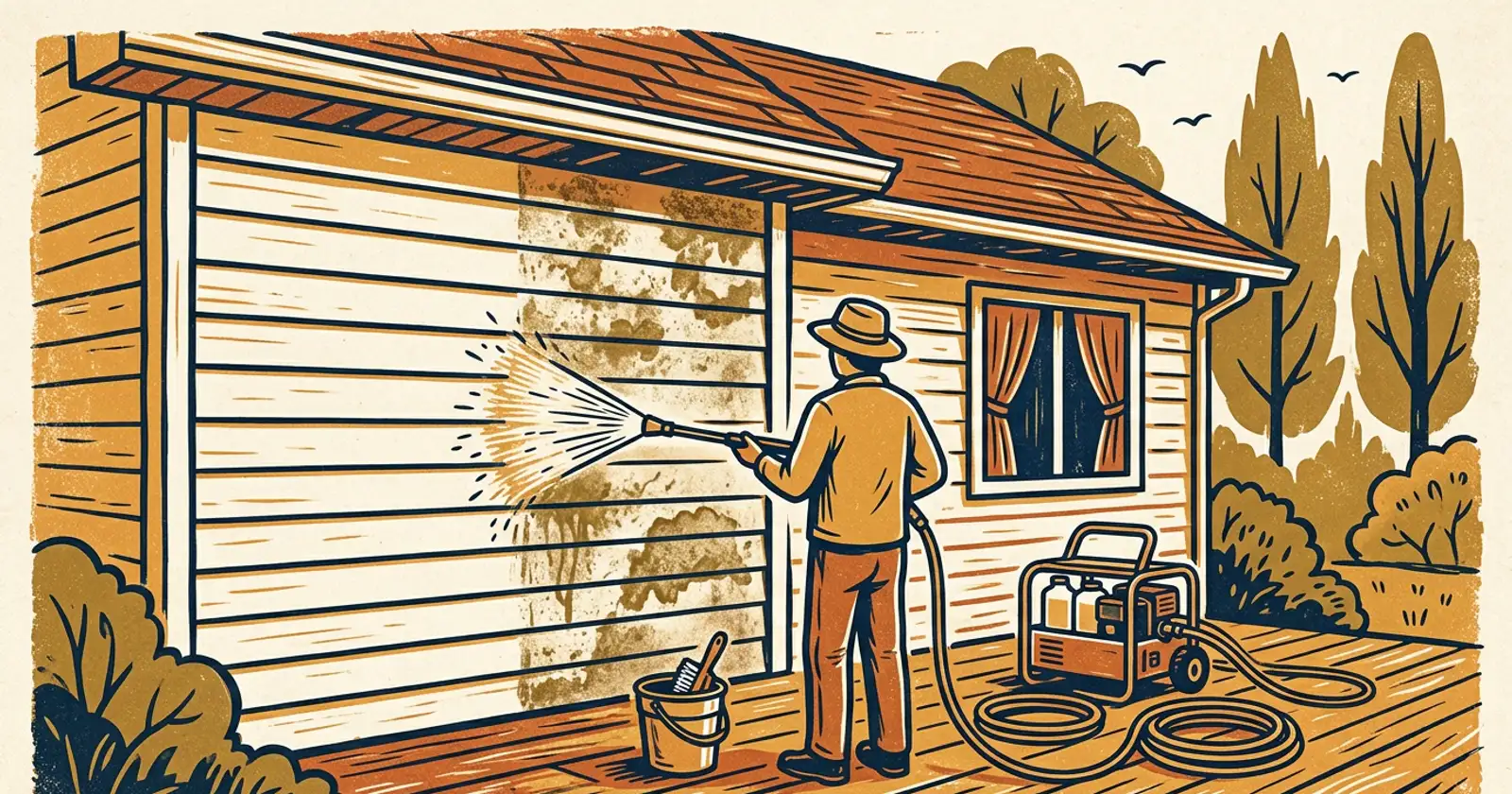
What shape is it? A wand moves in strokes, so check whether the damage lines up with them. Look for stripes, arcs or a patch where someone may have lingered. In one community thread about a torn screen panel, the homeowner pointed to a back-and-forth pattern in the tear as the giveaway.
Older damage tends to be:
- even across a whole surface
- worst on the sunniest or wettest side
- present where the crew never sprayed
Oxidized, chalky vinyl is a common case. See what chalky vinyl reveals after a wash and how to even it out. Orange sprinkler staining on walls is another old mark, covered under sprinkler rust stains.
A quick guide by surface
| What you see | Could point to the wash | Could have been there already | Who says so |
|---|---|---|---|
| Driveway stones showing | Lines or patches matching the spray | Scaling from salt and de-icers; some finishes expose stones on purpose | Tarion construction guide |
| Fuzzy, splintered or etched deck wood | Narrow tip or too much pressure | Older, softer wood damages more easily | Treatedwood.com (Deck Medic); Sherwin-Williams; Simpson |
| Blotchy, chalky vinyl siding | Chalk washed off unevenly | Chalking and oxidation from normal weathering | CertainTeed warranty and care text |
| Peeling paint | Spray knocked off weak paint | Moisture under the paint loosened it first | Sherwin-Williams |
| Fog between window panes | Not among that maker’s listed causes | Seal failure from age, wear and temperature swings | Centra Windows |
| New water stains inside a wall | Spray aimed up behind siding | An older leak, if stains predate the wash | Ply Gem care guide |
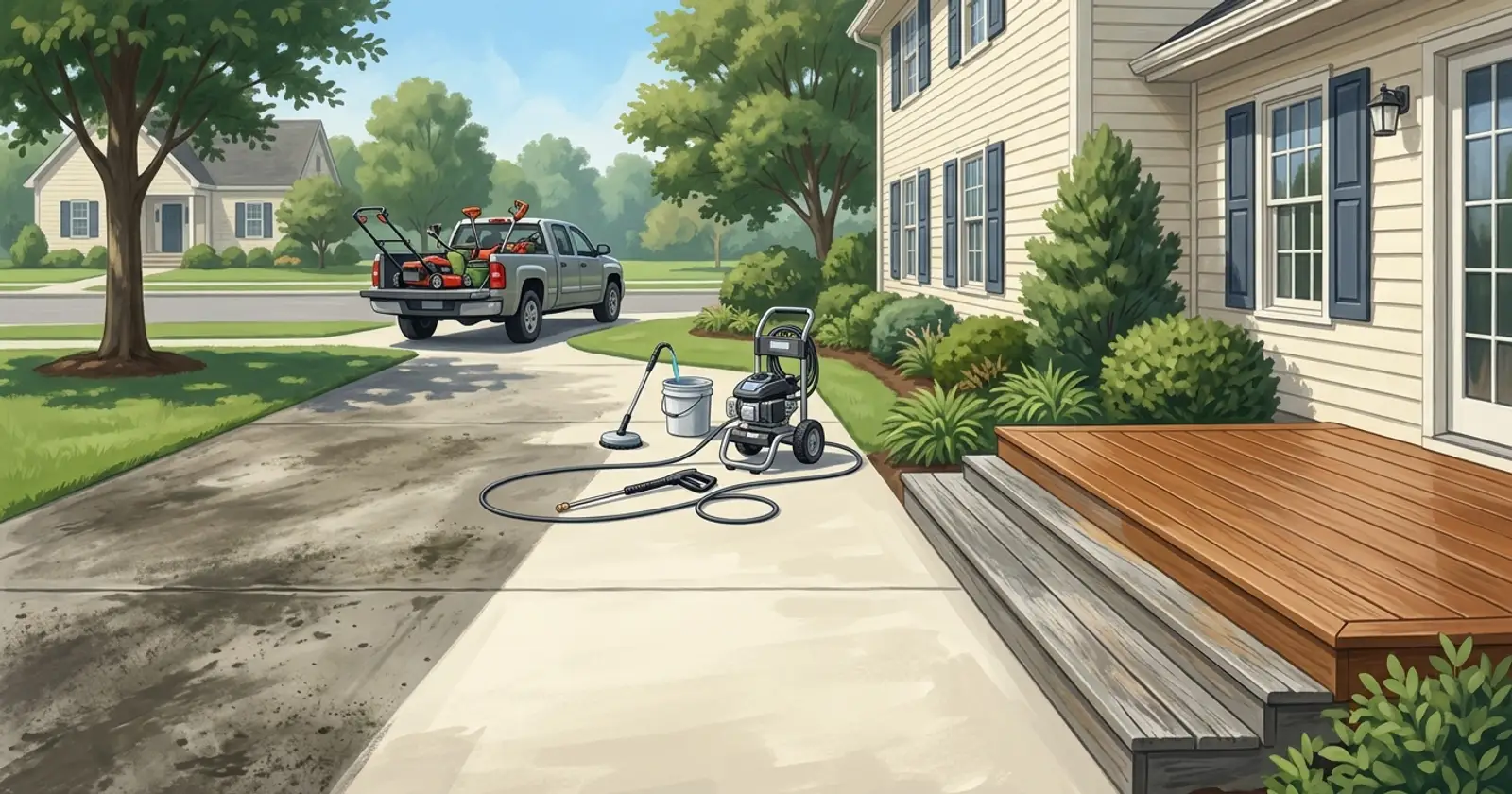
Concrete. A new-home warranty program’s construction guide says scaling of outdoor concrete most often comes from salts and de-icers. It also notes that some finishes expose the stones on purpose. That’s not damage at all. In one community thread, a homeowner asked whether a professional wash stripped the top layer of a driveway. Or was the surface poor from the start? If the wear is the same at the edges, age and weather are the likelier story.
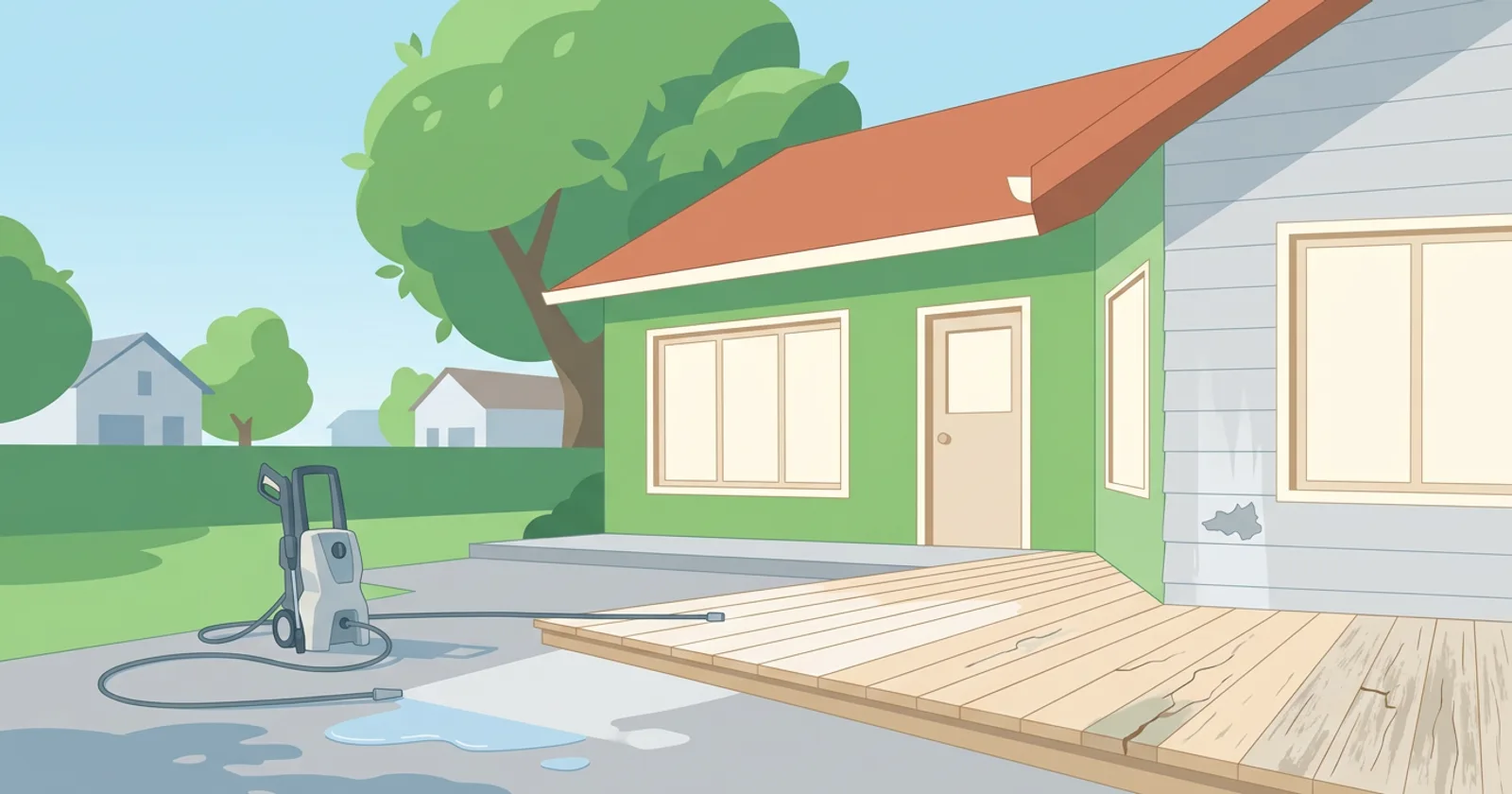
Wood decks. A deck professional’s guidance warns that too much pressure can cause etching, splintering and fuzzing. It suggests fan tips of at least 30 degrees and no more than 800 psi. A deck stain maker gives 1,200 to 1,400 psi with a 45-degree tip, sprayed with the grain. A pressure washer maker describes an older deck as much softer. It says older wood needs a wider nozzle. So on an old deck, the answer is often a bit of both.
Vinyl siding. One vinyl siding maker’s warranty excludes “normal weathering, fading, chalking or oxidation”. Its care text says chalk comes off with a garden hose and soapy water. That’s why a wash can make chalky siding look worse. It removes chalk unevenly and reveals the faded color underneath. For more on chalky paint, see our guide to Louisiana heat and humidity and house exteriors.
Paint. A paint maker explains how peeling happens. A wet surface swells, and the paint film loosens and cracks. Worn caulk and clogged gutters are common ways water gets in. If paint came off only in bands where the wand passed, the wash played a part. If the bare spots sit near joints, gutters or other wet areas, the paint was likely already failing.
Windows and water inside. A window maker says moisture between the panes typically means the seal has failed. It lists age, wear and temperature swings among the causes. A siding maker warns that aiming a washer upward can push water behind the siding. That can cause leaks, streaks and decay.
Photos to take before any wash
Before photos settle most of these arguments. Take them before the crew arrives:
- Each side of the house, close enough to see the surface.
- The driveway, deck boards and any painted trim, including problem spots.
- Every window, plus screens and outdoor lights.
- Inside walls under windows on the sides being washed.
Our list of questions to ask a house washing company covers what to settle before the job starts.
How to raise it fairly
Start with the company. The FTC says to try to resolve a home improvement problem with the contractor first. Follow phone calls with a letter sent by certified mail, and keep notes and copies. Send your photos and ask the company to look in person.
If that doesn’t work, the FTC lists other places to turn. They include your state attorney general, a local consumer protection office and dispute resolution programs. In Arizona, for example, the attorney general’s complaint unit offers an informal process to help consumers and businesses resolve disputes. Did you pay by credit card? The FTC explains that you may be able to take a quality problem to your card issuer. One condition is that you tried to settle it with the seller first. Rights can differ by state. For anything beyond that, talk to a qualified professional about your state’s rules.
For what a fair job should cost, see our house washing cost guide. For how we check our facts, see our methodology. Leftover paint, epoxy or mortar from another trade is a separate problem. It’s covered in cleaning up after other contractors.
Sources
Based on 13 sources · How we price
- Tarion Home Explorer, CE 1.7: Concrete Surface Scaling: home-explorer.tarion.com/node/569
- Treatedwood.com (article by Deck Medic Lake Norman), Is pressure washing bad for my deck?: treatedwood.com/news/is-pressure-washing-bad-for-my-deck
- Sherwin-Williams, How to Prepare a Deck for Staining: sherwin-williams.com/en-us/project-center/stain/how-to-prepare-deck-stain
- Simpson, How to Pressure Wash Your Deck: old.simpsoncleaning.com/tips/2016/how-to-pressure-wash-your-deck
- CertainTeed, Vinyl Siding Limited Warranty: res.cloudinary.com/amerhart/image/upload/Documents/Product/Certainteed%20Vinyl%20Siding%20(Warranty).pdf
- Sherwin-Williams, Peeling - Due to Moisture (Outside): sherwin-williams.com/architects-specifiers-designers/pressure-washers/resources/SW-ARTICLE-PRO-EXTPEELDUEMOI
- Centra Windows, Condensation Between Window Panes: centrawindows.com/blog/condensation-between-window-panes
- Ply Gem, Siding Care & Maintenance: plygem.com/siding/support/care-maintenance
- FTC, How To Avoid a Home Improvement Scam (archived copy): web.archive.org/web/20260111223941/https://consumer.ftc.gov/articles/how-avoid-home-improvement-scam
- FTC, Using Credit Cards and Disputing Charges (archived copy): web.archive.org/web/20251219031221/https://consumer.ftc.gov/articles/using-credit-cards-and-disputing-charges
- Arizona Attorney General, Consumer Protection: azag.gov/consumer
- Community discussion, driveway after a professional wash: reddit.com/r/pressurewashing/comments/1snab1w
- Community discussion, torn screen after a roof wash: reddit.com/r/pressurewashing/comments/1rfmncv