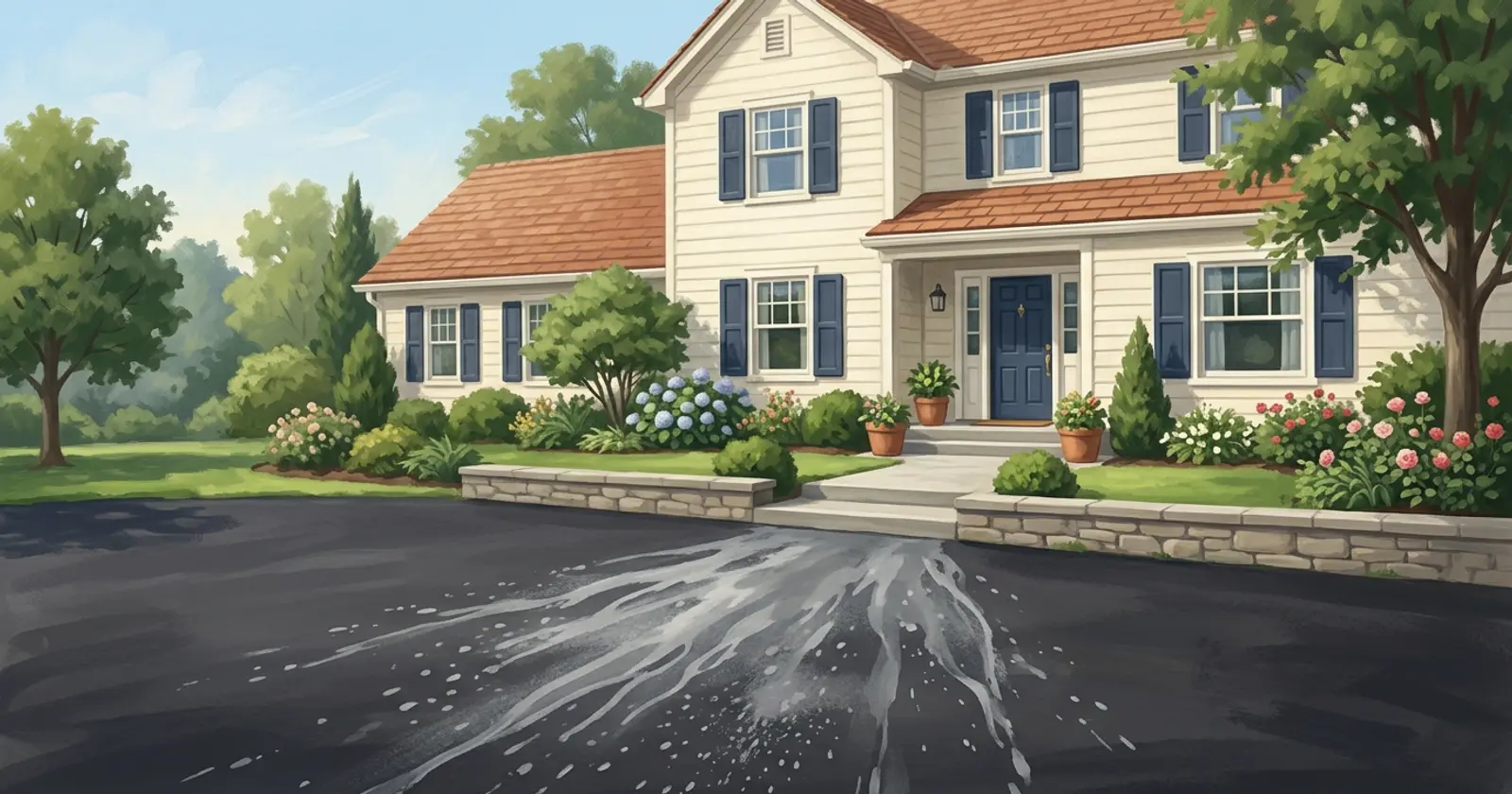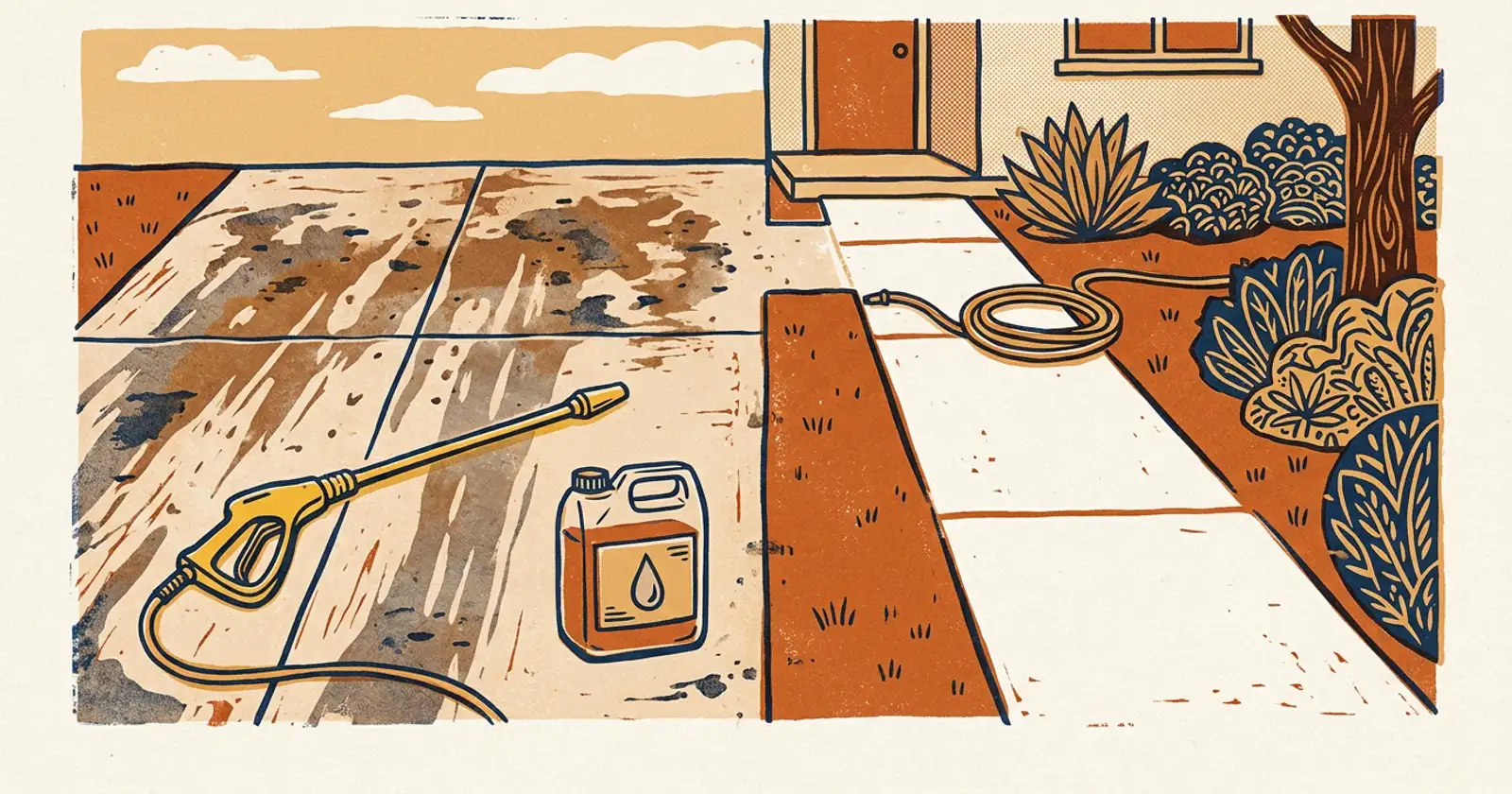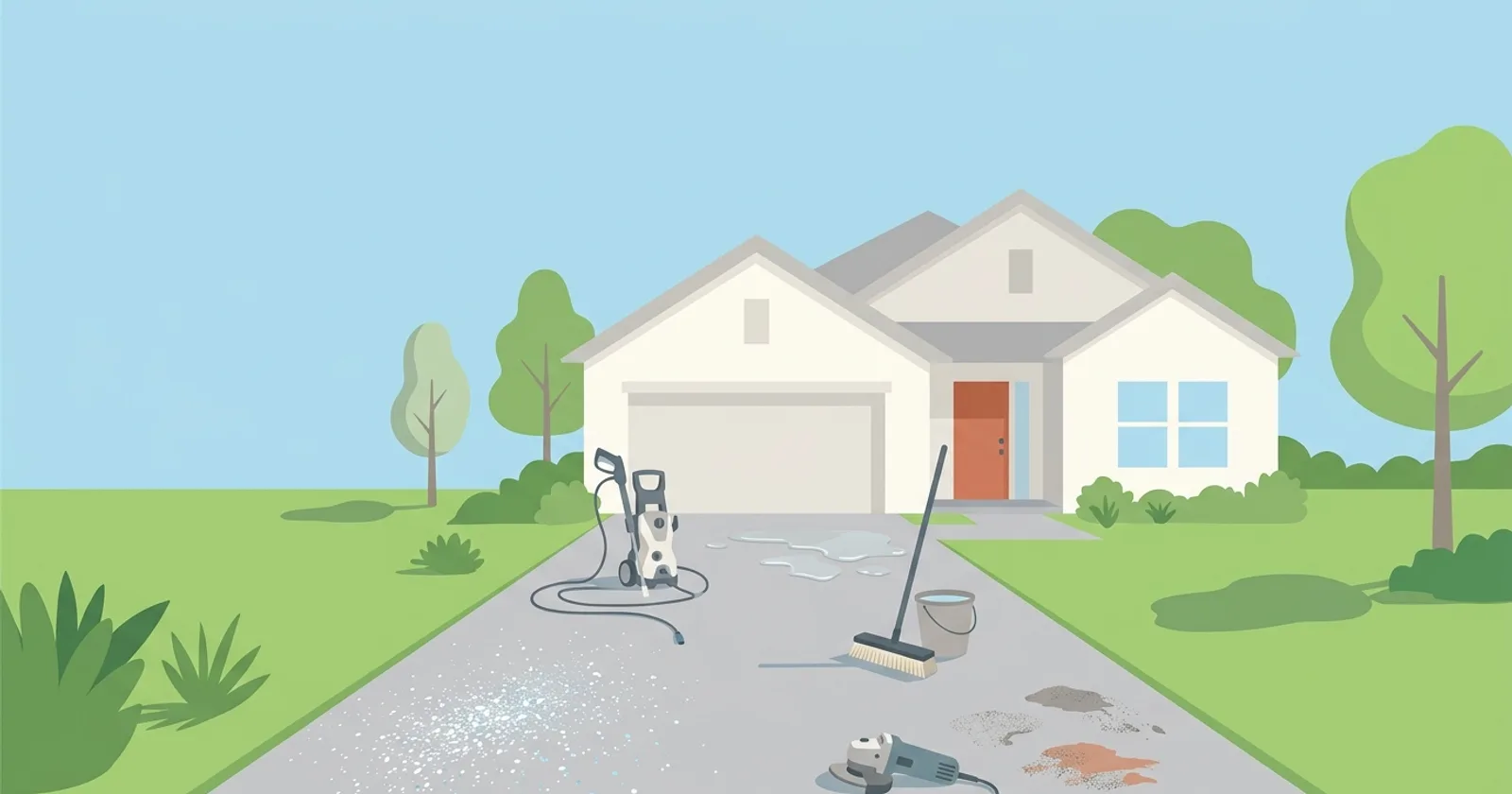
On a pressure washing forum, a homeowner said a painter hired by the HOA oversprayed the whole length of the patio pavers. On a trade forum, a washer asked how to get polyaspartic off a driveway. A garage-floor crew had skipped the drop cloths. Another got a call about water-based stain spilled on six-month-old concrete. The questions are the same: can it come off, and who pays? Community-wide jobs are covered in when the HOA hires the washer.
First, photos and a written message
Before anyone scrubs, take photos. Get wide shots that show where the job was. Add close-ups of the drips, with a coin or tape measure for scale. Then message the contractor in writing. Cleanup by someone else can blur what was there before. Our guide to telling wash damage from damage that was already there is worth a look. Pavers that look dull afterward may just be faded pavers.
Some states make that conversation easier. Idaho’s contractor registration law requires general liability insurance of at least $300,000, including completed operations. The insurer’s name and policy number go to people who state they have a claim against the contractor. That’s worth knowing in a building market like the Boise metro. Census permit data show 7,947 single-family homes permitted there in 2025.
This is not legal advice. Your contract and your state’s contractor board are the places to start.
What comes off and what it takes
| Mess | While fresh | Once hardened | Source |
|---|---|---|---|
| Paint overspray or drips | Paint remover or solvent, then scrape, scrub, rinse | Very old paint may need abrasive scrubbing; risky on old homes | BIA TN 20 |
| Mortar or stucco splatter | Sweep fresh mortar off pavers with damp sand; let clumps firm, knock off with wooden paddle | Much harder after about a month | BIA TN 20 |
| Epoxy floor coating | Wipe up at once; makers clean tools with xylene-type solvent | “Only be removed by mechanical means” | Sikafloor-200 instructions |
| Polyaspartic coating | One data sheet: 7 to 9 hours of cure at 75°F before traffic | Likely scraping or grinding, as with epoxy | Terroxy Polyaspartic PDS |
Paint overspray
The brick industry’s cleaning guide says commercial paint removers and organic solvents work best at softening paint. Then it can be scraped and scrubbed off or rinsed away. Solvents may not work on very old, dried paint. Abrasive scrubbing with a nonmetallic pad may be needed instead. The guide says to try nonabrasive methods first. On brick pavers, it suggests scraping off hard residue. Then scrub with a stiff brush and scouring powder.
A pressure washer comes after those steps, not before. Our piece on driveway stripes after pressure washing shows how uneven wand work looks.
One warning for older homes. The EPA says homes built before 1978 are more likely to have lead-based paint. The overspray may have come from scraping or repainting an older house. If so, the brick guide says scraping and abrasive blasting aren’t recommended without lead-abatement precautions.
Mortar and stucco splatter
Mortar is easiest in a narrow window. The brick guide says mortar should be hard before cleaning. Cleaning generally works best at least seven days after the brickwork is finished. After one month, smears and splatters get much harder to remove. Let large clumps firm up. Then knock them off with wooden paddles or nonmetallic tools. Metal tools can leave bits that rust.
On pavers, the same guide says you can sweep fresh mortar off with clean, slightly damp sand before it sets. A grayish haze may be left once the splatter is gone. Our guide to white haze on brick, pavers and stone helps you tell efflorescence from leftover cement. Did the mason’s work also leave dark streaks on the walls? See black streaks under windows on a brick house.
Epoxy and polyaspartic drips
This is the one that surprises people. One garage-kit maker’s instructions say to clean tools with a xylene-type product. They say that once the coating hardens, it can only be removed by mechanical means. The same sheet says the product starts to harden after 45 minutes.
Polyaspartic is a similar problem. One maker’s data sheet says to let it cure 7 to 9 hours at 75°F before opening it to traffic. By the time you notice drips on the driveway, they’ve often cured. A washer can test whether a solvent softens them, but expect scraping or grinding. In the trade-forum thread, the first step was to ask the coating company for its safety data sheet. That shows what the product is made of. You can ask for it too.
Who should pay
The trade that made the mess is the natural first call. They may use their own insurer. On the forum thread about the oversprayed patio, washers pointed out that the HOA hired the painter. So the HOA was the place to start. Ask the contractor to fix it or to pay a specialist you both agree on. For paint someone else put on a wall, see graffiti on brick, fences or concrete.
If a washer quotes the job, ask what they’ll test first. Ask what they’ll do if it doesn’t move. Our questions to ask a house washing company cover the rest. For how we check every number, see our methodology.
Sources
Based on 8 sources · How we price
- Brick Industry Association, Technical Note 20, Cleaning Brickwork: gobrick.com/media/file/20-cleaning-brickwork.pdf
- Sika, Sikafloor-200 garage kit instruction sheet: can.sika.com/dam/dms/ca01/9/Garage-kit_SIKA_Guide-installation_EN.pdf
- Terroxy, Polyaspartic Clear and Pigmented Product Data Sheet: tmsupply.com/downloads/Terroxy%20Polyaspartic%20-%20PDS.pdf
- U.S. EPA, Protect Your Family from Sources of Lead: epa.gov/lead/protect-your-family-sources-lead
- Idaho Code 54-5210, Contractor registration application: legislature.idaho.gov/statutesrules/idstat/Title54/T54CH52/SECT54-5210
- U.S. Census Bureau, Building Permits Survey, CBSA annual file 2025: www2.census.gov/econ/bps/CBSA%20(beginning%20Jan%202024)/cbsa2512y.txt
- Community discussion, PressureWashingResource, “Polyaspartic drips on driveway” (Jun 2026): pressurewashingresource.com/community/t/polyaspartic-drips-on-driveway/40875
- Community discussion, PressureWashingResource, water-based stain spilled on new concrete (Aug 2026): pressurewashingresource.com/community/t/minwax-water-based-stain-spilled-on-concrete/41083