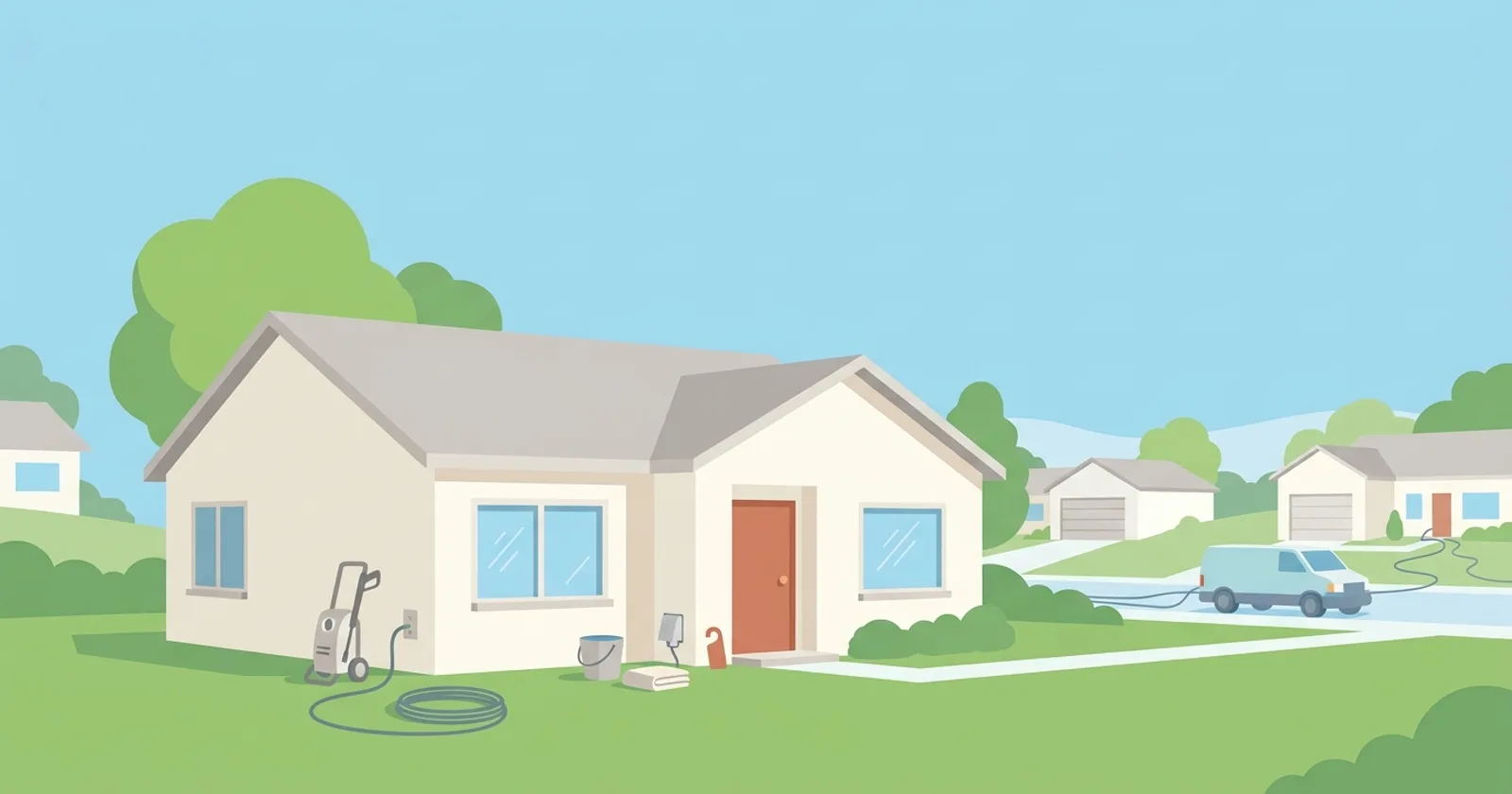
You’re not the customer. But your windows, plants and patio are still in the spray zone.
That’s a big shift from hiring your own crew. Here’s what to check before the trucks roll in, and what to do if something goes wrong.
The HOA is the customer
Community-wide washes are big jobs. On one washers’ forum, someone bidding in August 2025 described a condo community with 126 driveways, walkways and sidewalks. In September 2026, a new business owner asked how to price a 100-unit townhome community. Jobs that size get bid, signed and scheduled by the board or the property manager.
That matches how state agencies describe boards. Nevada’s Real Estate Division lists a board’s powers. They include hiring “independent contractors,” making contracts and regulating the maintenance of common elements. So the crew answers to the association. Your questions go to the manager or board. Their answers come from the contract and your governing documents.
Did you get a letter telling you to clean your house? That’s a different situation. See our guide to an HOA notice to clean your house. Renters in the community can see who pays, landlord or tenant. A notice that a complex will be power washed and painted is covered in what the notice means for tenants.
Who pays for the wash
Colorado’s HOA Information and Resource Center explains that there are two types of assessments: regular dues and special assessments. Dues cover routine operating costs such as maintenance and landscaping. Special assessments are for a specific purpose, like repair or replacement of a common element. Your declaration (the CC&Rs) sets the formula for splitting costs among units.
Nevada’s guidance adds two useful details. A common expense that benefits only some units may be assessed only against those units. And reserve funds are meant for major components, not daily maintenance. So a routine wash usually comes out of the operating budget. A wash tied to a big repaint might be planned differently.
To see what you’re paying for, ask for:
| What to ask for | Where it usually lives | Why it matters |
|---|---|---|
| Maintenance chart or “who maintains what” section | Declaration (CC&Rs) or rules | Whether walls, driveways and roofs are common elements or yours |
| The cost-sharing formula | Declaration | Equal shares, by square footage or another method |
| The budget line or special assessment notice | Budget, board minutes | Shows whether the wash comes from dues or a new charge |
| Your account ledger | Manager | Colorado owners can get a ledger within seven business days of asking |
| The vendor’s scope and schedule | Board minutes or the manager | Shows which surfaces get washed, with what, and when |
Before the crew comes
You can’t pick the crew, but you can protect your own stuff.
- Read the schedule notice closely. Note your building’s date and any rain date. If no notice came, ask the manager when your unit is up.
- Close windows and doors tight. Water drives through gaps fast. Our guide to spots on your windows after a house wash explains what to watch for afterward.
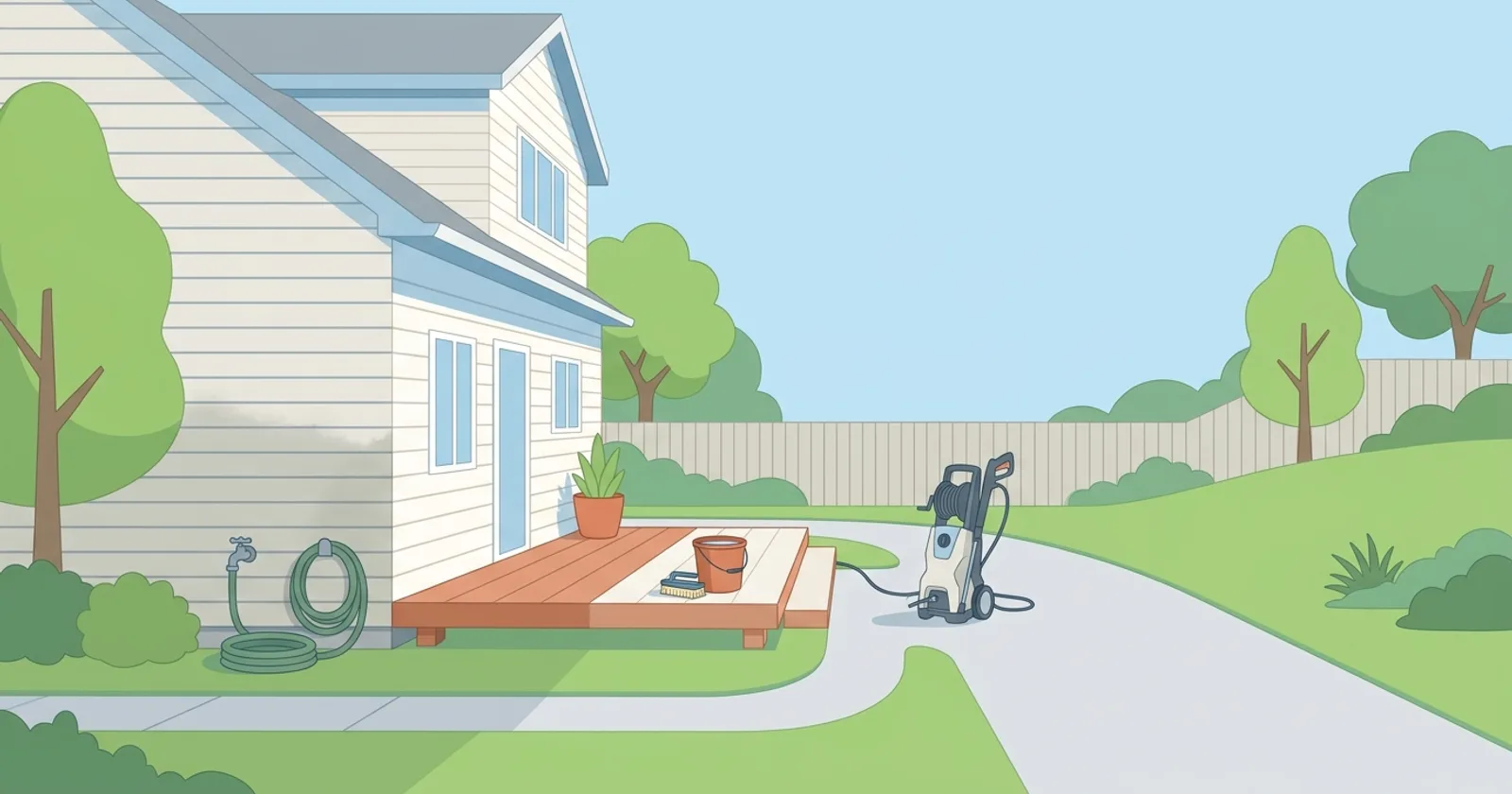
- Move what’s yours. Patio furniture, grills, planters, doormats and cushions. Cover or unplug outdoor electronics. Our list of what to cover around cameras, outlets and AC units helps here.
- Take dated “before” photos. Shoot every side of your unit. Get close-ups of cracks, loose trim, chipped paint and old stains. It takes ten minutes and settles a lot of arguments later.
- Flag soft spots in writing. Is your exterior EIFS? Is there rotting trim or a cracked window seal? Tell the manager before the wash. Our piece on whether your stucco is actually EIFS explains why that matters.
If the crew damages your unit
In October 2024, a condo owner in Pennsylvania asked an HOA forum for help. A vendor’s power washing had damaged the facade. The owner said the association had known since April 2022. Commenters suggested three steps: gather repair estimates for the board, keep it in writing, and check who owns that wall.
That lines up with what state offices say:
- Sort damage from old wear. Compare your “before” photos to the damage. Our guide to wash damage vs damage that was already there walks through it.
- Report it to the manager in writing. Include photos and the date of the wash. Ask whether the vendor has been told and who will inspect.
- Check who owns the damaged part. If it’s a common element, the association usually handles the repair. Nevada’s guidance says the board is responsible for maintaining common elements.
- Keep copies of everything. Colorado’s center advises putting demands in writing and keeping copies of correspondence with the manager and association.
- Talk to neighbors. If the crew damaged one unit, it may have damaged others. Colorado’s center calls this “strength in numbers.”
If it stalls, the agencies can point the way, but they won’t fight for you. Nevada’s ombudsman runs a formal complaint process. It starts with written notice to the other side. Colorado’s center records complaints. It says it has no investigative or enforcement power and doesn’t give legal advice. This article isn’t legal advice either. A lawyer can tell you what your documents mean.
On the operator side, our article on bidding commercial pressure washing jobs shows what associations ask washers for, including proof of insurance. How we check facts is on our methodology page. Shared courts are common-area jobs too. See cleaning HOA tennis, pickleball and basketball courts.
Sources
Based on 6 sources · How we price
- Nevada Real Estate Division, Common-Interest Communities: An Educational Manual (PDF): red.nv.gov/uploadedFiles/rednvgov/Content/CIC/Manual/CIC_Manual.pdf
- Colorado Division of Real Estate, HOA Information and Resource Center: dre.colorado.gov/hoa-center
- Colorado Division of Real Estate, HOA Information About Assessments/Delinquency: dre.colorado.gov/hoa-information-about-assessments/delinquency
- Colorado Division of Real Estate, Living in an HOA (Dealing With Disputes): dre.colorado.gov/living-hoa
- Colorado Division of Real Estate, File an HOA Complaint: dre.colorado.gov/filing-hoa-complaint
- Community discussion, condo facade damaged by the association’s washing vendor (October 2024): reddit.com/r/HOA/comments/1g18lil