It also helps to know which notice rules protect you. Here’s how to read the notice, what to move, and what to do if something gets damaged. This isn’t legal advice, and tenant laws vary by state.
A typical notice
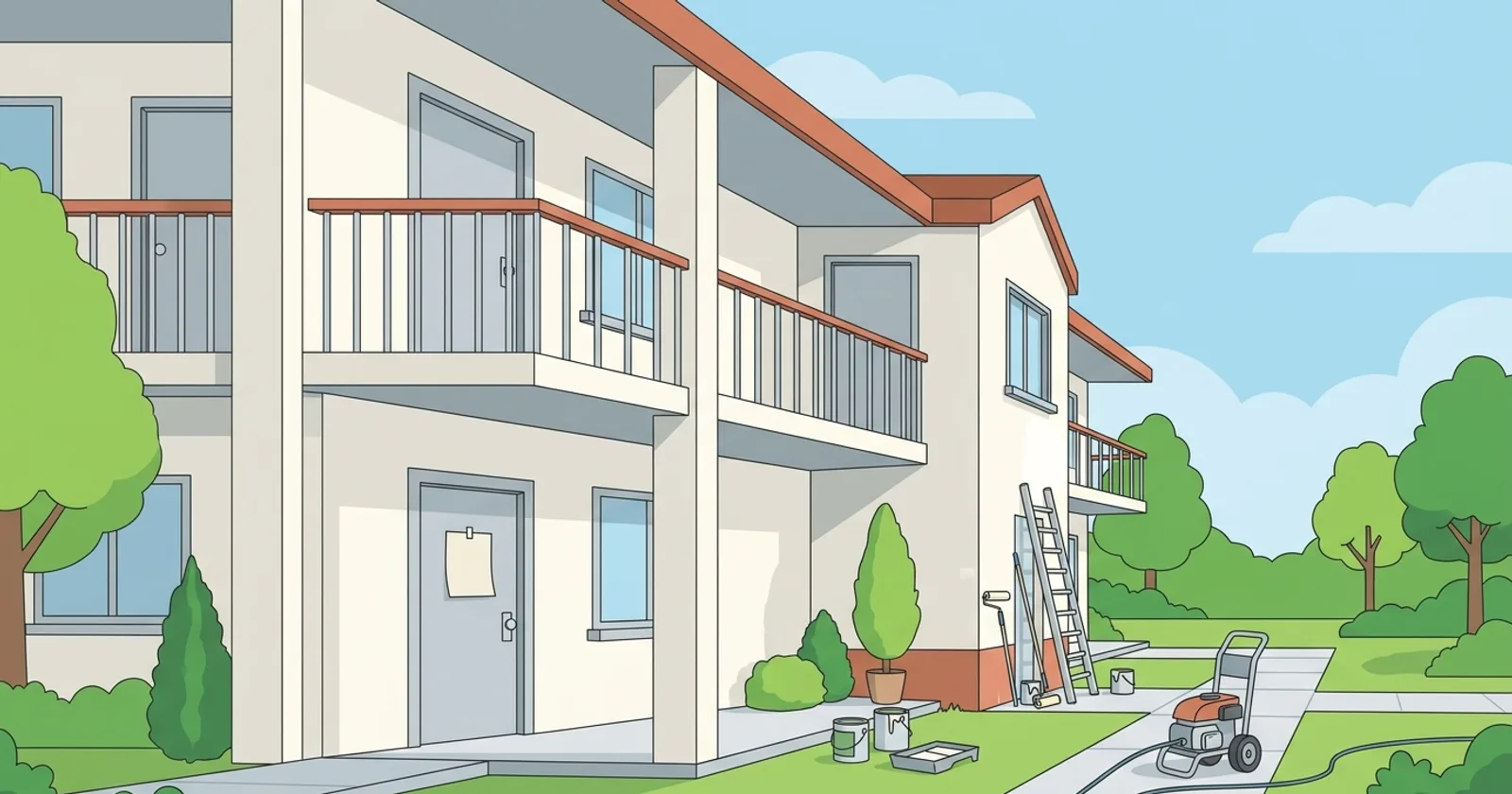
In October 2025, a California tenant shared their complex’s notice on a landlord forum. Power washing would run four weekdays, and painting would follow right after. The tenant counted at least 18 days in all, weather permitting. Work ran 8 a.m. to 5 p.m. on weekdays. Residents had to:
- Keep windows closed.
- Move cars from in front of the buildings by 7 a.m. for a crane.
- Remove everything from balconies, including plants, until all work was done.
Hallways were offered for storage.
The tenant asked for a unit-by-unit schedule so the plants could stay out longer. The office said it only had a whole-building schedule. Commenters weren’t sympathetic. One pointed out that a crew washing a whole building from the ground sprays cleaner everywhere. A paint sprayer can also drift onto anything left out.
That’s the practical answer. If you leave items out after a written warning, a damage claim gets much harder.
Your rights when workers come
California’s Department of Real Estate publishes a free landlord-tenant guide. It says a landlord can enter a rental only for listed reasons. One of them is making repairs, decorations, alterations or improvements.
Before entering, the landlord must give reasonable written notice. It must state the date, approximate time and purpose. The guide says 24 hours’ written notice is presumed reasonable in most situations. Entry should be during normal business hours, generally 8 a.m. to 5 p.m. The landlord also can’t use the right of access to harass you.
In the forum notice, workers would be on patios but wouldn’t enter units. The guide doesn’t say whether a crew on your balcony counts as entering your rental. It does list inspecting elevated balconies or decks as one reason a landlord may enter. If you’re unsure, ask in writing for your building’s dates.
What about losing your balcony for weeks? The guide defines quiet enjoyment as your right to full use of the rental. That means use “free from substantial interference from the landlord.” It doesn’t say whether a temporary closure for maintenance crosses that line. A tenant attorney or legal aid office can tell you whether you have a case. Other states have their own guides. Renters in Texas and Minnesota can see our piece on who pays to wash a rental.
Buildings built before 1978
Repainting an older complex can mean sanding old paint. EPA notes the federal government banned the sale of lead-based paint for homes in 1978. Its renovation rule covers paid work that disturbs paint in pre-1978 housing. Its pamphlet says the notice rules apply to exterior jobs disturbing more than 20 square feet of paint.
For renters, EPA says:
- The firm must give you its Renovate Right pamphlet no more than 60 days before work begins.
- For work in common areas, the firm must hand out notices or post signs. They must describe the work, where it is, expected start and end dates, and how to get the pamphlet free.
- Property managers who do this work in-house must be certified, or hire a certified firm.
EPA’s pamphlet says exterior work should cover the ground and sometimes add vertical containment. Stay out of the work area and keep pets away. You can check a firm’s certification at epa.gov/getleadsafe or by calling 1-800-424-LEAD.
Your prep list
| What | What to do | Why |
|---|---|---|
| Balcony items and plants | Move inside or to offered storage before the start date | Spray and paint drift reach anything left out |
| Windows and wall AC units | Keep shut during work hours; ask about window units | The forum notice asked for closed windows |
| Car | Note the move-by time and park away from the building | Keeps it clear of lifts, spray and paint |
| Pets | Keep them inside, away from open doors | EPA says pets can track lead dust indoors |
| Photos | Photograph balcony, windows and car before work starts | Proof if something is damaged |
| Questions | Email the manager; ask for your building’s dates | Gets answers in writing |
For covering outdoor gear, see what to protect around cameras, outlets and AC units. For cushions and umbrellas, see outdoor fabrics, bleach and pressure. If you own your unit and the HOA hired the crew, read when the HOA hires the washer instead. Shared courts on the property are a separate job, covered in cleaning tennis, pickleball and basketball courts.
If something gets damaged
- Photograph it right away, with the date, and compare it with your “before” photos. Our guide to wash damage vs damage that was already there helps.
- Report it to the manager in writing. Ask whether the vendor has been told and who will fix it.
- Paint specks on your car or windows? See cleaning up paint overspray and spots on windows after a wash for what works.
- Check your renter’s insurance. California’s guide says it covers personal property against losses from fire or theft. Ask your insurer whether paint or wash damage counts.
- If it stalls, the guide suggests talking to the landlord, then mediation, or small claims court. A legal aid office can advise on your situation.
How we check facts is on our methodology page.
Sources
Based on 6 sources · How we price
- California Department of Real Estate, California Tenants: A Guide to Residential Tenants’ and Landlords’ Rights and Responsibilities (2026 edition, PDF): dre.ca.gov/publications/ResourceGuidebook/2026_Landlord_Tenant_Guide.pdf
- U.S. EPA, Renovation, Repair and Painting Program: epa.gov/lead/renovation-repair-and-painting-program
- U.S. EPA, Renovation, Repair and Painting Program: Renters: epa.gov/lead/renovation-repair-and-painting-program-renters
- U.S. EPA, Renovation, Repair and Painting Program: Property Managers: epa.gov/lead/renovation-repair-and-painting-program-property-managers
- U.S. EPA, Lead-Safe Certified Guide to Renovate Right (PDF): epa.gov/system/files/documents/2026-02/renovateright_sept2011_b-w_portrait.pdf
- Community discussion (October 2025), California tenant asked to clear a balcony for an 18-day wash and repaint: reddit.com/r/Landlord/comments/1ojlrv7