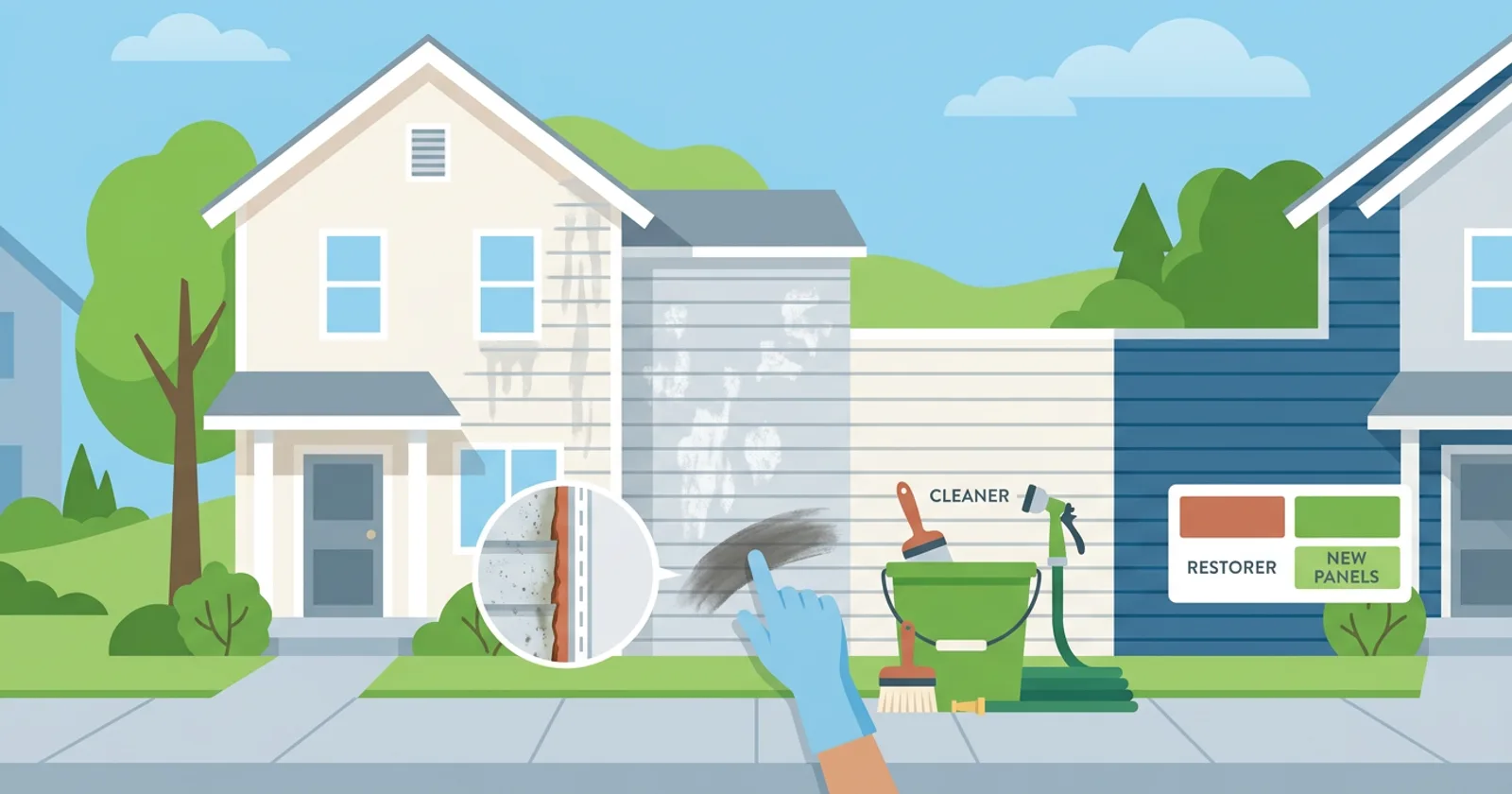
You open the mailbox and there it is: a letter from the HOA asking you to clean the outside of your house by a certain date. Your stomach drops a little. I get it.
Think of it like a check-engine light: a signal to look under the hood and pick the smartest fix.
1. Read the notice like a recipe
Put the letter on the counter and read every sentence. Look for four things:
- What surface is cited? The whole house, one side of the siding, the driveway, the gutters?
- What’s the complaint? Words like “organic growth,” “mildew,” “staining” or “discoloration” are clues.
- What’s the cure deadline? That’s the date you need it fixed by. Circle it.
- Is there a photo? Some include one, or at least say when the inspection happened.
If something is fuzzy, pull out your governing documents: the covenants (CC&Rs), bylaws and any rules or maintenance policy. Those pages, not the letter alone, say what your community expects. This isn’t legal advice. It’s reading the rulebook you already have.
2. Find the photo, or take a fresh one
The inspector saw your house on one particular day. You need to see what they saw. If no photo came with the letter, ask the manager or board for one in writing. In one homeowner forum thread about a stack of violation letters, a common piece of advice was simply to ask for photos of each violation.
Then take your own photo of the same spot. Put the two side by side. The “stain” may have faded after a week of rain, or turned out to be a shadow.
3. Play “stain, mildew, or just wet?”
- Just wet: In one homeowners’ thread, an owner got a notice about “discolored” brick that was only soaked by sprinklers hitting the corner. Commenters suggested fixing the sprinklers and photographing the brick dry. Look again once the wall has dried.
- Dirt or pollen: Yellow-green dust that wipes off easily. A gentle rinse with a garden hose may be all it needs.
- Mildew: One paint maker describes mildew as black, gray, green or brown spots, forming where surfaces stay damp or get little direct sunlight. Its test: put a few drops of household bleach on the spot. If it bleaches away, it’s probably mildew; if not, it’s probably dirt. Try it somewhere hidden first.
- A true stain: Rust drips from a metal fixture, red clay splatter, or marks from wet mulch against siding. These won’t wipe off and need a targeted cleaner.
Knowing which one you have tells you whether you need a hose, a cleaner or a pro.
4. Circle the deadline, then count backward
The cure date is usually when the HOA may look again. Your governing documents say what can happen if it isn’t fixed by then, so don’t guess.
Mark it on the family calendar and work backward. If you’re hiring, call early and ask how far out companies are booking. If you’re doing it yourself, pick a weekend well before the deadline, with a spare one in case of rain.
5. DIY or hire? Ask the ladder question
Most people can rinse light dirt from the ground. Once you need to reach a second story, run a pressure washer or mix cleaners, be honest with yourself. If you don’t own a sturdy ladder or have never worked safely on one, hiring is worth it. Too much pressure can also damage siding; our list of pressure washing mistakes homeowners make shows how. The right machine depends on stories, surfaces and spigot.
If you hire, get two or three written quotes, ask how they’ll clean your siding type, and ask for proof of insurance. Our questions to ask a house washing company give you a ready-made script, and our house washing cost guide shows what providers publish so you can tell whether a quote is fair.
6. Ask the neighbors before you book
If your house got a notice, others on your street may have too. Talk to two or three neighbors. If several of you need a wash, ask a company whether it offers a price for doing a few houses on the same day. Less driving and setup can mean a better rate, but ask rather than assume.
Also check who pays. Sometimes the association itself hires one washer for the whole community. On one trade forum, a washer asked how to price 89 three-story townhomes where the HOA was paying for the wash. Another washer was asked to bid on dozens of roofs and wasn’t sure whether owners or the association would pay. Your governing documents and your manager can tell you which applies to you.
If you disagree with the notice
Maybe the photo is old, or your house was washed two months ago and you have the receipt. Gather your evidence, then send a short, calm email to the manager or board. Stick to the facts, attach a current photo and ask whether a reinspection is possible.
If the board stands by the notice, your governing documents describe any appeal or hearing process. State offices can help you find the map. In Virginia, every association must have a complaint procedure, and the state’s Common Interest Community Ombudsman helps owners understand their rights. It also says it cannot provide legal advice, and that no state agency there can interpret or enforce your governing documents. For a question about what your documents mean, a lawyer is the right call.
An HOA notice feels personal, but it rarely is. Work the checklist and keep things friendly. For how we check the facts in our guides, see our methodology.
Sources
- Office of the Common Interest Community Ombudsman, Virginia DPOR: dpor.virginia.gov/CIC-Ombudsman
- Virginia DPOR, Filing a Complaint Against Your Association (PDF): dpor.virginia.gov/sites/default/files/CIC_Ombudsman/Filing%20a%20Complaint.pdf
- Sherwin-Williams, Problem Solver: Mildew: sherwin-williams.com/homeowners/how-to/problem-solver/dirt-stain-discoloration/mildew
- Community discussion, notice about “discolored” brick: reddit.com/r/homeowners/comments/1o2crs0
- Community discussion, who pays for washing in an HOA: reddit.com/r/pressurewashing/comments/1ffhexc
- Community discussion, soft washing a townhome community: pressurewashingresource.com/community/t/softwashing-townhome-community/40801