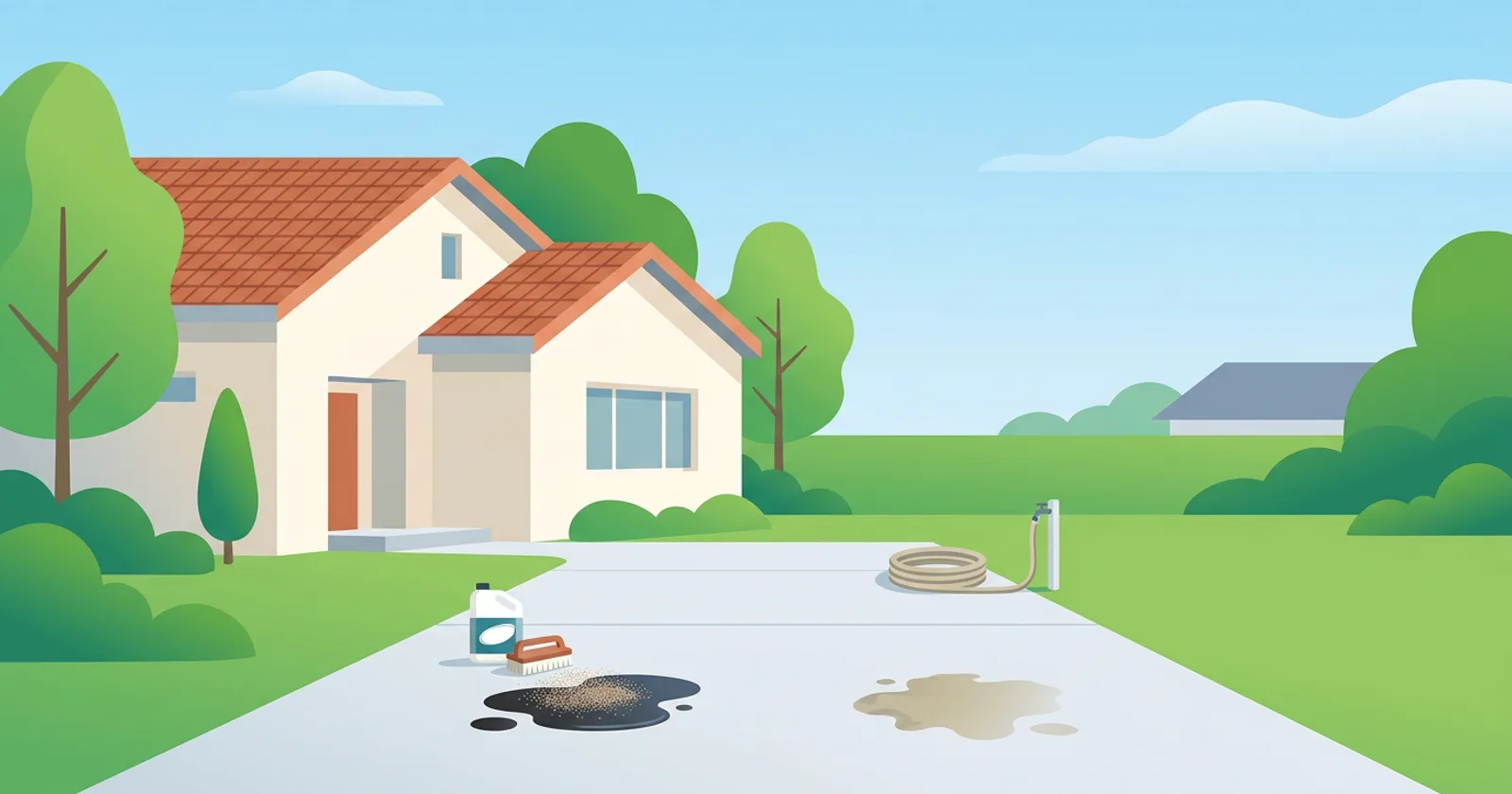
You know the spot: a dark bloom the size of a dinner plate, right where the old sedan parks. Here’s what labels and a federal stain guide say to try, gentlest first, and when to make peace with what’s left.
Start with a dry absorbent
Concrete is porous, so pull out what you can before it sinks deeper. A federal procedure for oil on concrete starts the same way every time: blot the excess with clean, dry cloths, then cover the stain with a dry powder. It lists fuller’s earth, talc, cornmeal, cornstarch and cat litter. Leave it about a day, sweep it up and repeat as needed.
In a 2025 thread on a pressure washing trade forum, one washer said the best first move is to grind an absorbent in with your boot, leave it a day, then sweep and degrease.
Sweep the used absorbent into a bag. Don’t hose it away. Los Gatos, California, warns homeowners that driveway hose-downs carry motor oil into the storm drain system, and the town tells people to use kitty litter, corn meal or sawdust instead.
Step up to a concrete degreaser
If a shadow is still there, scrub with a degreaser and a stiff, non-metallic brush. That’s the brush the federal procedure lists. It also names strong soap, scouring powder, TSP and engine degreaser for oil that’s still visible in the concrete.
Read the label, because products differ a lot:
- One concentrated driveway degreaser says to mix 6 oz per gallon for light soil and 12 oz for heavy soil.
- The same label caps contact time at 10 minutes “to prevent damage” and says not to let it dry.
- It also says to test a hidden spot first and to wet nearby plants and grass before, during and after.
Rinse well when you’re done. If you plan to try a second product, the federal guide says to wash away the first one before you start.
The poultice: for stains that set in
A poultice is a paste that sits on the stain and draws oil back up as it dries. The federal guide explains it: the liquid moves into the concrete, dissolves some of the stain, and carries it back up into the paste as it evaporates.
You have two routes:
- Store-bought: One masonry-products maker sells a pour-on poultice made for embedded oil. Its data sheet says to pour it at least an inch past the stain’s edges and let it dry 5 to 8 hours or overnight. Keep it out of the rain with a loose plastic “tent,” then sweep it up. Its label says it isn’t recommended for asphalt.
- Mixed yourself: The federal guide’s method for driveways is to soak the stain, plus about 6 inches around it, with mineral spirits. Cover it with one of the dry powders above, leave it about 24 hours, then sweep and repeat if needed. Mineral spirits are toxic and flammable. The guide says to wear rubber gloves and work only with good ventilation.
Where hot water fits
A pressure washer is the rinse, not the cure. Both products above use water only to rinse: the degreaser label allows a hose or pressure washer, and the poultice maker suggests a hose-off or pressure rinse to clear powder residue.
Heat does help with oil. An equipment rental company explains that hot-water units remove oil and grease better because heat reduces viscosity. It says these machines can heat water to around 200°F, and that they cost more to rent and run. A pro’s hot-water rig makes sense for a large, greasy area; for one parking spot, try the steps above first. For what a driveway job runs, see what pressure washing costs, and avoid the common mistakes homeowners make when hiring.
Quick roadmap by stain age
Brand names appear here only to point you to the labels quoted, not as picks.
| Stain | What to use | What the source says | Watch for |
|---|---|---|---|
| Fresh (still wet) | Cat litter, cornmeal or another dry absorbent | Blot first; leave powder about a day; repeat (GSA procedure) | Bag it, don’t hose it to the drain |
| Set in | Zep Concentrated Driveway and Concrete Cleaner and Degreaser | 6 to 12 oz per gallon; scrub; max 10 minutes; rinse | Test a spot; wet nearby plants |
| Old, deep-set | PROSOCO Oil & Grease Stain Remover poultice | Pour 1 inch past edges; dry 5 to 8 hours; sweep | Not for asphalt; stain may return |
| Old, DIY route | Mineral spirits plus absorbent powder | Soak 6 inches past the stain; cover; 24 hours; sweep | Toxic and flammable; gloves, airflow |
When the stain won’t leave
Here’s the honest part. In the same trade-forum thread, another washer said hot water and a good degreaser will lighten an old stain, but doubted you’ll ever get the shade out. The washer who started the thread tried two more products and concluded the oil was simply too deep in the concrete.
The poultice maker says much the same in writing. Most stains clean up in one application, but some deeply soaked stains can keep rising to the surface after cleaning. If that happens, it says to reapply.
So aim for “lighter” rather than “gone.” If a mark only showed up after a wash, see how to tell wash damage from what was already there. If you hire a pro, ask which product they’ll use and whether oil-spot work is priced on its own. Our questions to ask a house washing company help with that call. Orange or black dots are a different problem: rust spots after a lawn treatment.
Every number here was checked against its source; our methodology explains how.
Sources
- U.S. General Services Administration, Poulticing Lubricating and Petroleum Oil Stains From Concrete (archived copy): web.archive.org/web/20251108152958/https://www.gsa.gov/real-estate/historic-preservation/historic-preservation-policy-tools/preservation-tools-resources/technical-procedures/poulticing-lubricating-and-petroleum-oil-stains-from-concrete
- Zep, Concentrated Driveway & Concrete Cleaner + Degreaser (product directions): zep.com/products/zep-driveway-concrete-cleaner-and-degreaser-1-gallon-zucon128
- PROSOCO, Oil & Grease Stain Remover Product Data Sheet: prosoco.com/Content/Documents/Product/PR_OGSR_PDS.pdf
- Cat Rental Store, Pressure washer rental tips (hot vs cold water): rent.cat.com/en_US/blog/pressure-washer-rental.html
- Town of Los Gatos, CA, stormwater FAQ: losgatosca.gov/m/faq?cat=35
- Community discussion: PressureWashingResource.com, “Driveway oil stain, Zep” (March 2025): pressurewashingresource.com/community/t/driveway-oil-stain-zep/39733