That gap between “the crew left” and “the roof looks clean” is where most of the worry comes from. Here’s what normal looks like, and what doesn’t.
Why it can look worse first
Soft washing works by chemistry, not force. The bleach mix kills algae, moss and lichen where they grow. It doesn’t blast them off.
One equipment maker’s training page for washers puts it plainly. Green turning brown or tan means the growth is dying, and white means it’s dead. It still has to come off. A university pest guide says the same about moss killers: you must still remove the dead material. Whether the crew needs a license to apply that mix is covered in do soft washers need a pesticide license.
So in the first days you may see:
- White or pale patches where moss and lichen died in place.
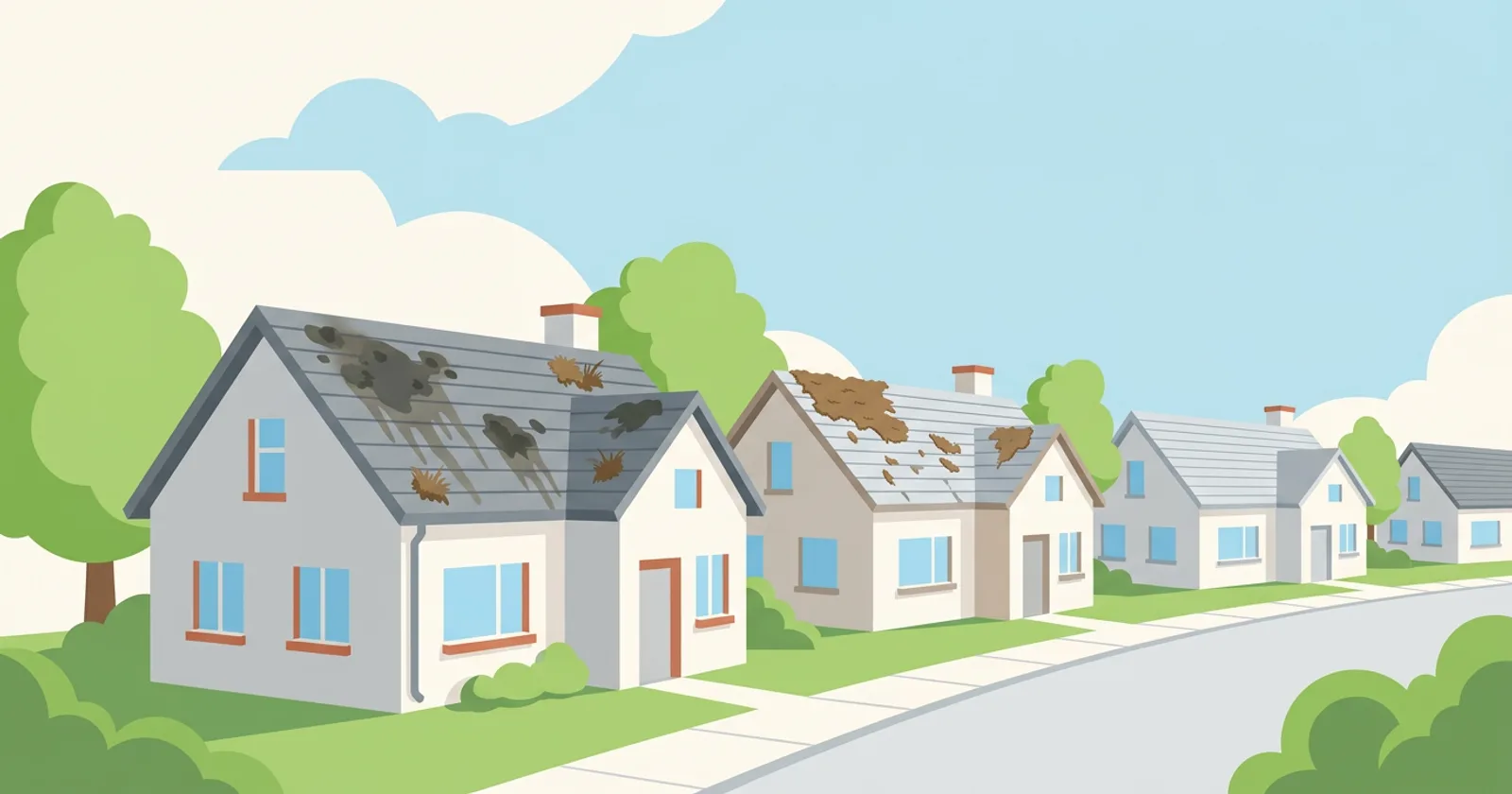
- Brown or dark streaks below thick moss, as runoff carries dead material down the slope. Last fall, a DIYer on a roofing forum said a roof looked worse after a 5% chlorine spray, and blamed runoff from the moss.
- Uneven color, because black algae streaks fade faster than raised lichen.
One Orlando-area washer says on its own site that the roof won’t look perfect the moment the crew finishes.
A realistic timeline
Every roof is different. Here’s what operators and makers say to expect.
| What you see | Typical time | Source |
|---|---|---|
| Black algae streaks fade | 2 to 4 weeks of sun and rain | Soft Wash Technologies (equipment maker) |
| Dead moss washes off | About two good rains | Soft Wash Technologies |
| Lichen releases | A month or more, sometimes 6 to 12 months | Soft Wash Technologies |
| Lichen flakes off | Over the next few weeks | Warthan’s Power Washing |
| No-rinse product results | Gradual: algae in weeks, moss and mold stains in months | Wet & Forget product page |
Heavy growth takes longest. One washer says you may find tan or white flecks on the ground or in gutters after the first storm. That’s dead growth working loose, not shingle granules. Plan on a gutter cleaning. One tile-roof homeowner said loose moss and lichen meant a gutter cleaning afterward.
Rinse or no rinse: what you paid for
This is where homeowners feel shortchanged. In late 2024, a homeowner in Sacramento, California, said a crew sprayed a tile roof with chlorine in 90 minutes and left. The roof looked the same, and the homeowner had expected a low-pressure rinse and some hand scrubbing.
Two kinds of products work in different ways:
- Bleach-based soft wash. The asphalt roofing industry group says to leave the bleach-and-water solution on 15 to 20 minutes, then gently rinse with water. One EPA-accepted sodium hypochlorite label gives roof directions too: after 30 minutes, rinse with a hose.
- No-rinse treatments. One maker’s outdoor cleaner says to spray a dry surface and not rinse. Its directions say results are gradual, not instant.
Neither one is a scam. But they’re different jobs, so the quote should say which one you’re buying. Before you sign, get these in writing:
- The product type, and whether the crew will rinse.
- The expected timeline for your roof’s moss or lichen.
- Whether a follow-up treatment is included, and when.
One Orlando-area washer says porous concrete tiles sometimes need a second application, and offers a follow-up visit. Our questions to ask a house washing company cover the rest of the call.
Why dry climates wait longer
“Let the rain finish it” depends on rain. Sacramento shows the problem. NOAA’s 1991–2020 normals give the city about 18.1 inches of rain a year. Only about 0.27 inches of that falls from June through August, while more than 10.5 inches falls from December through February.
A summer roof wash there could sit for months before a real rain. The same Orlando-area washer says long dry spells may call for a light rinse. If you live somewhere dry, ask for a rinse or a fall or winter booking.
Tile vs. shingle
- Asphalt shingles: no pressure washers, brushes or brooms, says the industry group. Scrubbing loosens granules. Don’t climb up and scrape.
- Concrete tile: more porous, so stains can hang on and may need a second pass. If a tile roof looks chalky or blotchy after a wash, ask the crew to come look before you assume damage. Our guide to pressure washing damage vs. problems that were already there helps you tell the difference.
Not every white mark is a problem. The same university guide notes lichens are usually not a problem and can be left alone. Droppings are a separate cleanup, covered in bird droppings on pavers, stucco and docks.
When to worry
Give it time, and don’t scrub. Call the company if:
- Nothing changed color within a few days.
- Patches still look the same after several soaking rains.
- You see bare, dark spots where granules seem to be missing.
If you’re still deciding whether to clean at all, start with is roof cleaning worth it. For prices, see our pressure washing cost guide. How we check our numbers: our methodology page. Panels on the roof need a different approach; see should you pressure wash solar panels.
Sources
- Asphalt Roofing Manufacturers Association, Algae Discoloration of Roofs: asphaltroofing.org/algae-discoloration
- U.S. EPA, accepted label amendment, Sodium Hypochlorite Solution 10.5% (EPA Reg. No. 37655-20002), roof and siding directions: www3.epa.gov/pesticides/chem_search/ppls/037655-20002-20110303.pdf
- Wet & Forget, Outdoor Spaces product page (directions and results): wetandforget.com/wet-and-forget-outdoor-spaces.html
- Soft Wash Technologies, Soft Wash Roof Cleaning (education page): softwashtechnologies.com/blogs/education/soft-wash-roof-cleaning
- Warthan’s Power Washing, Roof Cleaning in Central Virginia: warthanspowerwashing.com/pressure-washing-tips/roof-cleaning-in-central-virginia-how-soft-washing-removes-black-streaks-without-damage
- Ragin Cajun Soft Wash, Will Soft Washing Remove All Black Streaks From My Roof in One Treatment?: ragincajunsoftwash.com/will-soft-washing-remove-all-black-streaks-from-my-roof-in-one-treatment
- Oregon State University, Solve Pest Problems: Moss: solvepestproblems.oregonstate.edu/moss
- NOAA NCEI, 1991–2020 annual/seasonal climate normals, Sacramento Executive Airport (USW00023232): ncei.noaa.gov/data/normals-annualseasonal/1991-2020/access/USW00023232.csv
- Community discussion (r/Roofing, tile roof soft wash, Sacramento, Dec 2024): reddit.com/r/Roofing/comments/1hhac4h
- Community discussion (r/Roofing, soft-washed roof looks worse, Oct 2025): reddit.com/r/Roofing/comments/1oatl0c
- Community discussion (r/Roofing, tile roof spray-only job, Apr 2025): reddit.com/r/Roofing/comments/1k4ji71