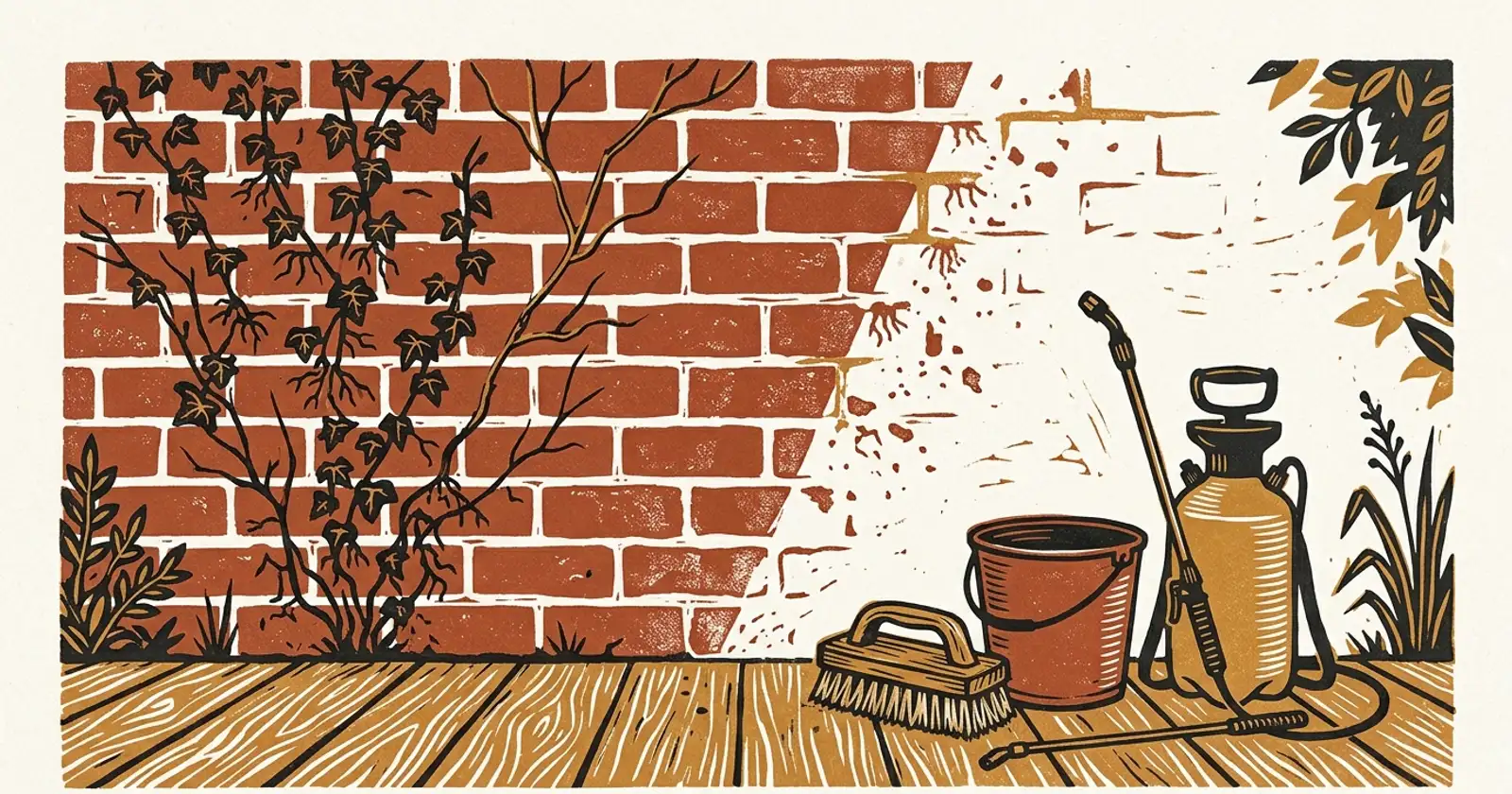
The question comes from homeowners who did the hard part already. In one home-improvement forum thread this May, an owner had pulled all the ivy off the front of a brick house, but the little pads and feet wouldn’t come off, and pressure washing did nothing. The vines had been cut about two years earlier and the pads had long since turned brown. Commenters suggested wire brushes and warned that brushing hard in one place can change the brick’s surface.
Why they stick, and why timing matters
Ivy climbs with aerial roots, and Historic England notes the young ones adhere tightly to the surface. The brick industry trade association’s brief on ivy calls the leftovers suckers embedded in the brickwork that held the vines, and says to cut the vines close to the wall rather than pull them, because pulling can damage brick or mortar. The suckers left behind should stay put until they dry up and turn dark; then a stiff fiber brush and some laundry detergent should remove them.
Its warning fits the forum case exactly: don’t wait too long. If the suckers rot and oxidize, they can become very hard and nearly impossible to remove without damaging the wall surface. Two or three weeks of drying is enough.
If ivy is still growing on another wall, the same brief suggests a test first: cut away a few square feet in an inconspicuous spot and see how far it has rooted into the brickwork. Where you keep it, trim it back from windows, gutters, eaves and woodwork.
Your options and what they cost
| Option | What it involves | Cost |
|---|---|---|
| Dry, then brush | Wait two to three weeks after cutting; stiff fiber brush and laundry detergent | A brush and detergent; your time |
| Scrape | Slide a thin blade or scraper under stems and lever up; wooden tools on fragile surfaces | A scraper; slow on a whole wall |
| Leave them | Surface aerial roots don’t need to be removed | $0 |
| A washer’s house wash | Cleans the brick around them; won’t reliably lift old, hardened pads | See house washing cost |
| Mortar repair | Repointing where roots got into joints | A mason’s quote |
Methods from the brick association’s brief and Historic England’s ivy guidance; the cost column is our reading. How we research: methodology.
Historic England, the government’s heritage adviser in England, says aerial roots on the surface of a building don’t need to be removed, while ivy rooting into the structure does. Where surfaces are fragile, it suggests prying stems and roots off with a thin blade or scraper, and using wooden implements instead of metal to avoid damage.
Skip the wire brush and acids. The brick association specifically warns against chemicals or acids on the suckers. Brushing hard in one spot, as forum commenters noted, can leave a patch that looks different from the rest of the wall.
Check the mortar once it’s off
The brick association lists the ways ivy can harm a wall: tendrils can dislodge mortar and masonry units over time, discolor brickwork, and keep moisture against the wall. It says repointing or other repairs may be necessary after removal. Historic England says ivy growing into eroded or recessed mortar joints should be removed completely. If you see loose or deeply eroded joints, get a mason’s quote before any washing.
For stains that do wash off brick, see black streaks under windows on a brick house. On an older home, the gentlest-method approach in washing a historic house applies here too.
Sources
Based on 3 sources · How we price
- Community discussion, r/HomeImprovement, ivy feet left on a brick house (May 2026): reddit.com/r/HomeImprovement/comments/1trnbgm
- Brick Industry Association, Brick Brief: Ivy on Brickwork (July 2005, PDF): gobrick.com/media/file/ivy-on-brickwork.pdf
- Historic England, Managing ivy growth: historicengland.org.uk/advice/technical-advice/monuments-and-sites/ivy-on-walls/managing-ivy-growth