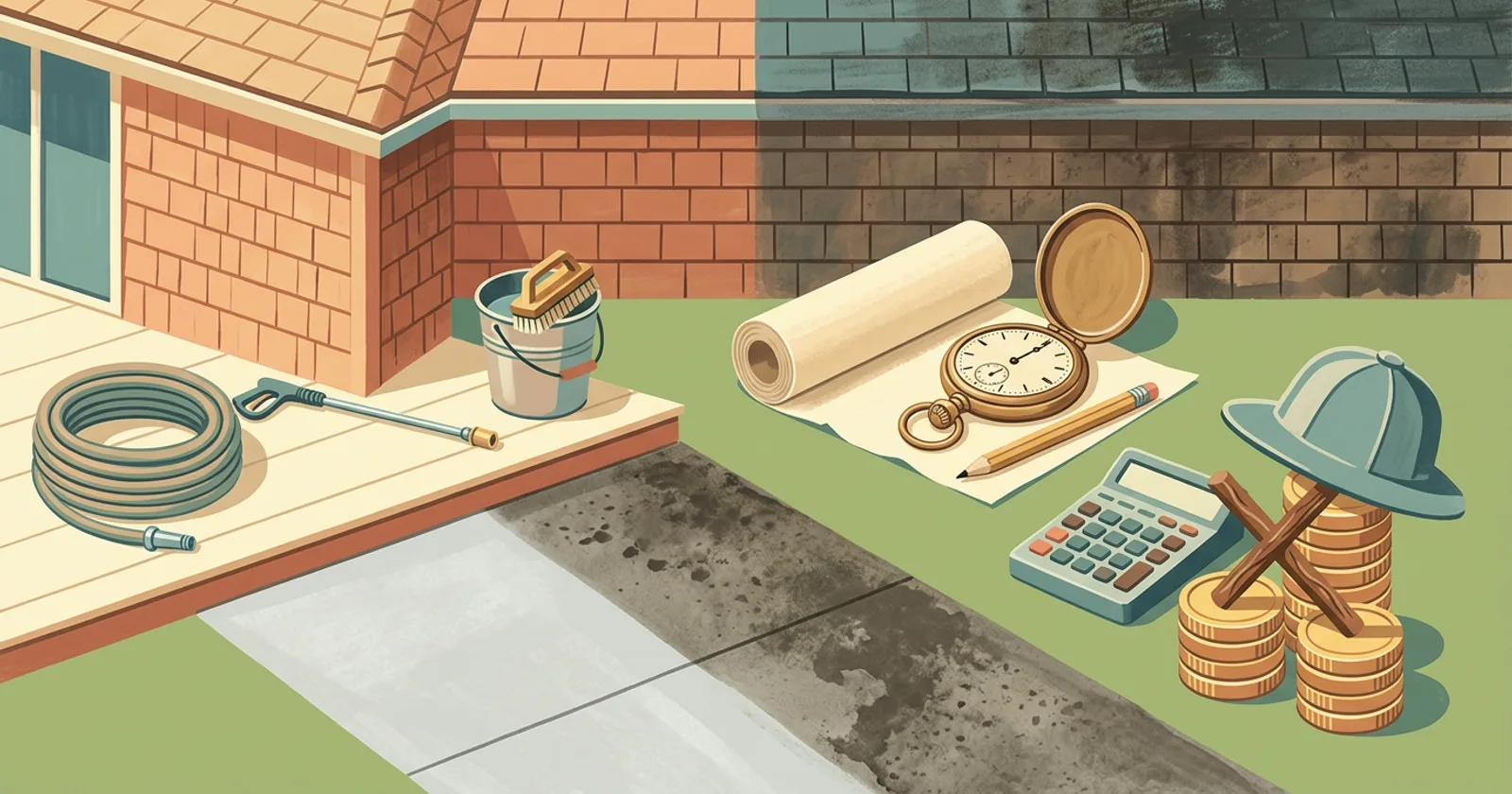
Ordinary trade advice runs far hotter. In a trade forum thread about an old brick driveway, one reply said to blow off loose dirt, surface clean at 2,500 psi or less and expect to spend about 70% of the time rinsing. That is a driveway, not a historic facade, and it is many times the Park Service’s starting point.
The rule and where it comes from
The Secretary of the Interior’s standards for historic preservation projects say surface cleaning shall be undertaken with the gentlest means possible, and that sandblasting and other methods that damage historic materials shall not be used. Two National Park Service briefs turn that sentence into practice.
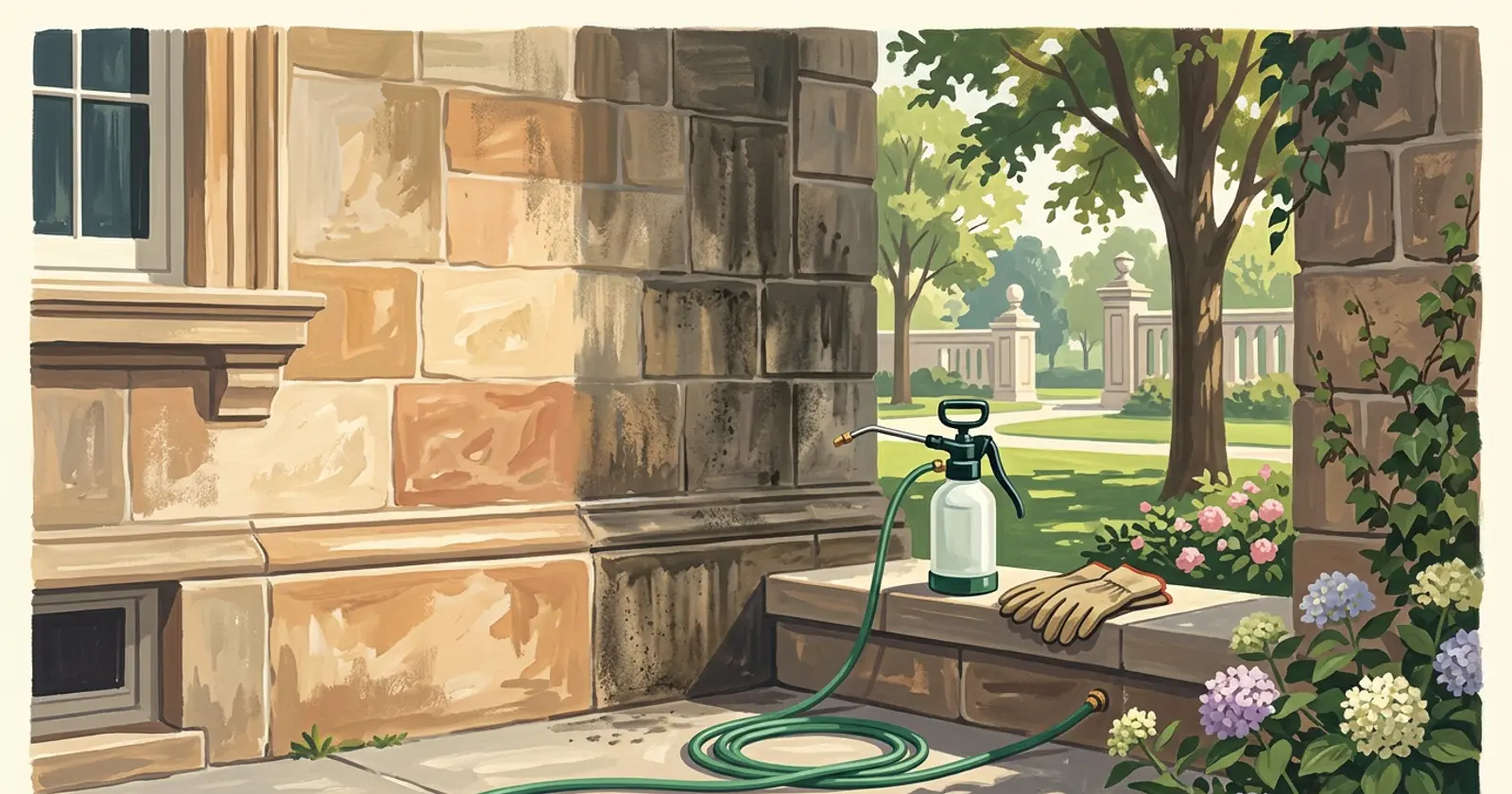
Preservation Brief 1 (cleaning masonry) says historic masonry is frequently cleaned because cleaning is equated with improvement, and that unless the work is guided by an architectural conservator it may cause irrevocable damage. Its method: start with very low pressure, 100 psi or below, even a garden hose, and progress as needed to no higher than 300 to 400 psi. Scrub stubborn spots with natural or synthetic bristle brushes, never metal, which abrades the surface and leaves particles that stain.
Preservation Brief 6 (abrasive cleaning) shows two brick rowhouses sharing a facade where only one was sandblasted: the blasted side is rough and pitted and lost much of its mortar. It adds that even water under pressure can be an abrasive substance.
| Method | Park Service view | Notes |
|---|---|---|
| Garden hose, bristle brush, non-ionic detergent | Recommended starting point | 100 psi or below to begin |
| Low- to medium-pressure water | Acceptable, with care | Generally no higher than 300 to 400 psi |
| Steam or hot pressurized water | Used by conservators on some stone | Chosen as the gentlest means for one marble building |
| Chemical cleaners | Only after testing | Identify the soiling first; some stains should be left |
| Sandblasting or grit blasting | Not acceptable | Strips the brick’s hard outer surface and removes mortar |
Sources: NPS Preservation Briefs 1 and 6.
Why old brick is different
Brief 1 notes that soft, incompletely fired brick from the 18th and early 19th centuries may have become very porous. Brief 6 says abrasive methods strip the hard outer protective surface of brick, leaving it open to rapid weathering, and in its rowhouse photo they also removed a considerable portion of the mortar. The repointing brief says new mortar must be as soft or softer, in compressive strength, than the historic mortar. Rough treatment hurts the joints as well as the brick.
Painted brick deserves a pause. Brief 1 says to ask why the building was painted: to protect soft brick, hide mismatched repairs or follow fashion? Its small test area photo shows a red brick patch that did not match the original beige brick, which may be a reason to keep the paint rather than strip it. Our guide to cleaning a headstone applies the same preservation logic to a smaller stone.
Test first, then wait
Brief 1 is firm about test patches. Run the proposed method on a small, inconspicuous area, and let it weather before judging. A full year would be ideal; if that is impossible, at least a month or two. For a building that matters, the delay is nothing against the damage a wrong method does.
Identify the stain before choosing a cleaner. Black streaks under windows, white haze and biological growth each call for different treatment; see black streaks on a brick house and white haze on brick and stone. Brief 1 says biological growth on a marble foundation can usually be removed with a low-pressure wash, perhaps a non-ionic detergent, and a bristle brush.
When the historic commission is involved
Local rules vary, so check yours. As one example, in Savannah, Georgia, the Historic District Board of Review’s application instructions say all exterior changes visible from the public right-of-way, including lanes, require a Certificate of Appropriateness. The planning commission’s guidance separates routine maintenance, the least work needed to preserve historic materials, with scraping, caulking and repainting as its example, from repairs and replacement. Where a wash falls is a staff question, and the board’s application packet directs questions to its preservation staff by email or phone.
Two practical rules follow. Put the question in writing and keep the answer. And if a wash will remove paint, change the color of the masonry or involve chemicals, treat it as a change, not maintenance, until staff tells you otherwise.
What to ask the washer
Use our phone and quote script, and add these:
- What pressure, at the tip, will you use on the masonry, and will you start with a hose?
- Will you test a patch and let it weather before the full wash?
- What cleaner, if any, and have you used it on lime mortar?
- Have you read NPS Preservation Brief 1? A washer who has will not be offended.
- Will you keep the surface cleaner off brick entirely and hand-rinse near joints?
For how we check facts and choose sources, see our methodology.
Sources
Based on 7 sources · How we price
- National Park Service, Preservation Brief 1: Assessing Cleaning and Water-Repellent Treatments for Historic Masonry Buildings (PDF): nps.gov/orgs/1739/upload/preservation-brief-01-cleaning-masonry.pdf
- National Park Service, Preservation Brief 6: Dangers of Abrasive Cleaning to Historic Buildings (PDF): nps.gov/orgs/1739/upload/preservation-brief-06-abrasive-cleaning.pdf
- National Park Service, Preservation Brief 2: Repointing Mortar Joints in Historic Masonry Buildings (PDF): nps.gov/orgs/1739/upload/preservation-brief-02-repointing.pdf
- Savannah Historic District Board of Review, Instructions for Certificate of Appropriateness Application (PDF): thempc.org/docs/apps/hdbr/2019/hdbrinst.pdf
- Chatham County-Savannah Metropolitan Planning Commission, In-Kind Repair and Replacement FAQ (PDF): thempc.org/docs/lit/hist/faq/inkind.pdf
- Chatham County-Savannah Metropolitan Planning Commission, 2026 Historic District Board of Review application (PDF): thempc.org/docs/apps/Hdbr/2026/HDBR2026Application.pdf
- Community discussion, washing an old brick driveway: pressurewashingresource.com/community/t/washing-old-brick-driveway-need-advice/39601