You walk out to the mailbox on a spring morning, coffee in hand. The snow has finally pulled back, and you glance at the siding by the garage. The color you remember now looks dull and gray-brown. Run a finger across it and it comes away gritty. That grit has been sitting there all winter.
Out here, a house wash isn’t a luxury. It’s a reset before the weather does the rest.
The three troublemakers: freeze-thaw, wildfire smoke and road grit
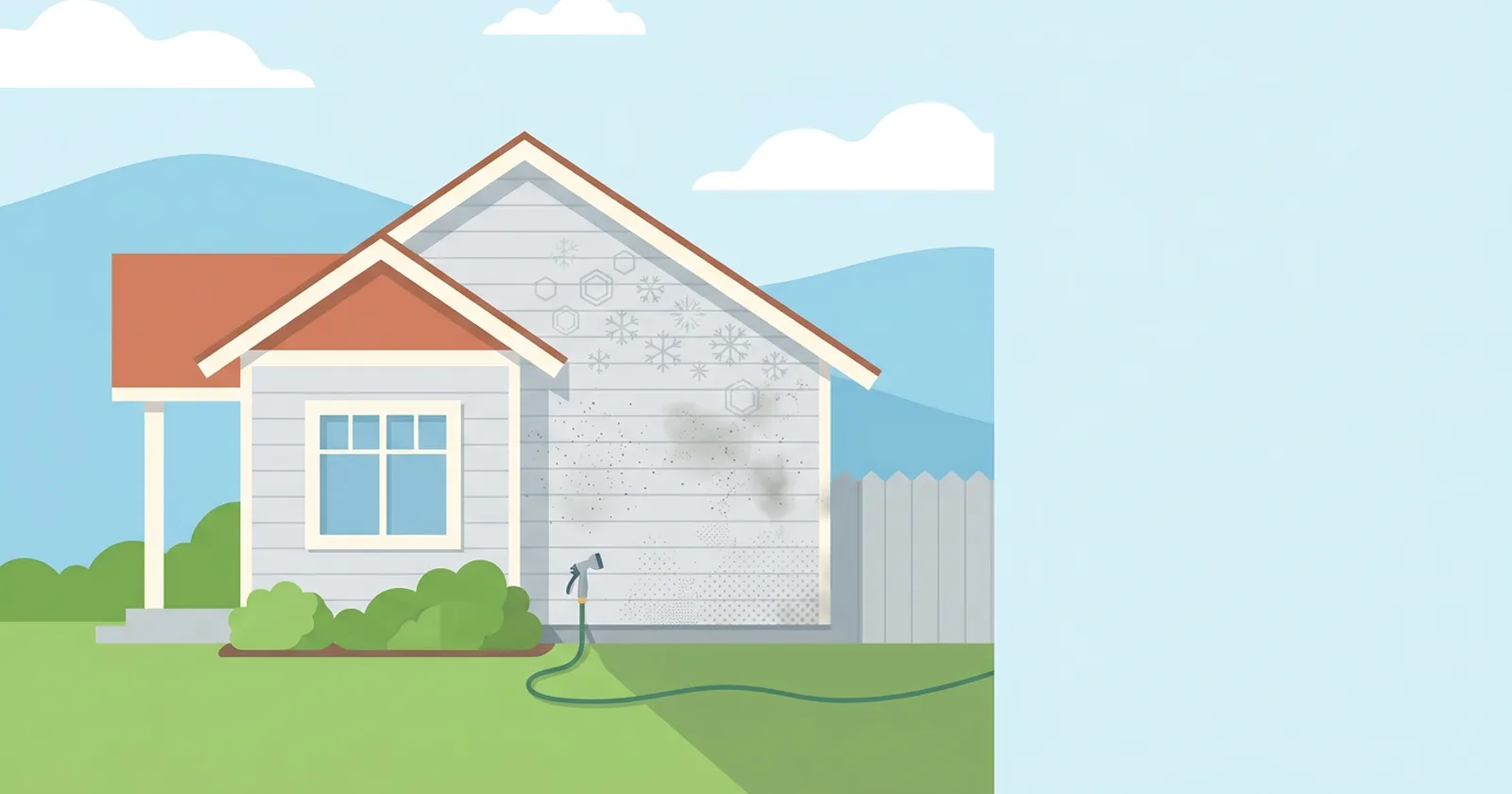
The freeze-thaw cycle
Montana spends a lot of the year right around freezing. NOAA’s 1991–2020 climate normals show Missoula averaging about 173 nights a year at or below 32°F, Great Falls about 168 and Billings about 142. On only around 40 of those days does the temperature stay below freezing all day.
The rest are freeze-thaw days: frozen at night, above freezing by afternoon. That works out to about 130 a year in Missoula, 125 in Great Falls and 102 in Billings.
That’s a lot of cycles for your siding to go through. Washing grime off before winter returns means less dirt sitting against the walls.
Wildfire smoke and ash
Montana DEQ says the state’s air quality is “occasionally affected by smoke from wildfires during the summer months.” The smoke doesn’t have to start nearby. In its August 12, 2026 forecast, DEQ said most of the surface smoke over Montana came from “massive wildfires burning in Oregon and Washington.”
The EPA describes ash as large and tiny particles of “dust, dirt, and soot.” Once it settles on siding, soffits and window ledges, that’s what you’re cleaning off.
How you clean ash matters. The EPA advises you to:
- avoid dry sweeping, and never use a leaf blower
- mist hard surfaces with water before cleaning, using as little water as you can
- avoid washing ash into storm drains
If a fire burned close to your home, ask your local authorities before you clean anything. For smoke conditions, check DEQ’s smoke forecasts or the AirNow Fire and Smoke Map. Any health questions belong with them too.
Road grit and traction sand
In winter, highway crews spread traction sand and road chemicals. The Montana Department of Transportation (MDT) says its traction sand is “crushed aggregate extracted from local gravel sources.” MDT also spreads magnesium chloride and sodium chloride, and it sometimes pre-wets sand with those chlorides so it sticks to snowpack.
If your house sits near a sanded road, check the lower walls and garage door each spring. If you find a sandy film, rinse it off gently.
The best time to wash a Montana home
The freeze data makes the timing clear. In April, Missoula still averages about 15 nights at or below freezing and Great Falls about 18. By May that drops to about 4 and 6, and in June it’s close to zero. September averages 2 nights or fewer at all three stations, and then October jumps back to 8 to 15.
That gives you two good windows:
- Late May through June. The winter sand comes off before summer smoke season.
- September. Summer ash and dust come off before freeze-thaw returns.
Follow the label on any cleaning product you use. Before the October freezes return, see how to winterize a pressure washer.
Soft washing vs. pressure washing
Think of pressure washing as a fire hose and soft washing as a garden shower with soap. On siding that’s been through years of Montana winters, the difference matters.
The vinyl siding group warns that aiming a stream upward can force water behind the siding panels. The fiber cement maker says care must be taken so the water stream doesn’t damage the surface. The siding makers’ own guidance leans gentle:
- Vinyl: The vinyl siding industry group says vinyl “only requires periodic cleaning with mild soap and water from a garden hose.” It warns that some makers don’t recommend power washing and others set limits on pressure and cleaners.
- Fiber cement: A fiber cement maker’s care guide calls a low-pressure water spray and a soft, nonmetal brush “most suitable” for its products. If you use a pressure washer, it says to use a wide fan tip, stay at least 6 feet back, and keep the pressure under 1500 psi. It also notes that damage from improper cleaning “may not be covered” by its warranty.
Soft washing is the low-pressure approach: a cleaning solution, then a gentle rinse. Anyone who puts a pressure washer on your house should know your siding’s limits. Common errors are listed in pressure washing mistakes homeowners make.
Make it a routine, not a rescue
You don’t wait for a toothache to start brushing. The same idea applies to your siding. That fiber cement maker recommends cleaning “as needed.” That makes your spring walk-around the real schedule. If the north wall looks gray, the lower courses look sandy or the soffits look sooty, it’s time. Humid regions face a different problem; see how Louisiana’s heat and humidity affect a house exterior.
What you’ll pay depends on the size of your house, the number of stories and the siding. Our house washing cost guide has published prices by square footage, and our pressure washing cost guide covers driveways and decks. Our methodology page explains how we check our numbers. Before booking a pro, run through these questions to ask a house washing company.
Next spring, when you walk back from the mailbox, you’ll see clean siding where that gray film used to be.
Sources
Checked on 2026-10-08:
- NOAA NCEI, U.S. Climate Normals 1991–2020, annual and monthly station files for Missoula (USW00024153), Great Falls (USW00024143) and Billings (USW00024033): ncei.noaa.gov/data/normals-annualseasonal/1991-2020/access and ncei.noaa.gov/data/normals-monthly/1991-2020/access
- Montana DEQ, Air Quality and Smoke: deq.mt.gov/air/Programs/airquality
- Montana DEQ, Smoke Forecast for August 12, 2026: deq.mt.gov/News/smokeforecasts-folder/smoke-forecast-08-12-2026
- US EPA, Protect Yourself from Ash: epa.gov/wildfires/protect-yourself-ash
- Montana Department of Transportation, Deicing, Plowing & Sanding: mdt.mt.gov/visionzero/roads/plowing-deicing.aspx
- Polymeric Exterior Products Association, cleaning and maintenance: polymericexteriors.org/why-polymeric/cleaning-and-maintenance
- James Hardie Technical Bulletin #20, Cleaning James Hardie Primed and ColorPlus Technology Siding (Nov. 2018): images.homedepot-static.com/catalog/pdfImages/e2/e2a8a8f2-bb30-4b6a-9cf3-f76c4a979c8a.pdf