When the water drops, the mud left behind looks like a job for high pressure. It usually isn’t the first job. Floodwater can carry sewage and chemicals, the power may still be live, and the claim you file next depends on photos you can’t take once everything is clean. Here is the order federal guidance points to, and where a washer fits in.
Step one: photos, before anything gets cleaner
FEMA’s flood insurance site is blunt: document everything before you start cleanup. It says to take clear pictures and videos of damaged items before cleaning, fixing or throwing them out, with wide shots and close-ups of walls, floors and furniture. It asks you to capture water levels on walls, furniture and appliances, and serial numbers on damaged electronics.
Two more points from the same page:
- Keep samples. Hold onto small samples of damaged materials for the adjuster, and save every receipt if you start repairs before your claim is settled.
- Mold coverage is limited. The same page notes that mold damage isn’t covered under standard National Flood Insurance Program policies, with exceptions such as when officials kept you out of the area. Ask your insurer early.
The NAIC adds one rule that matters for anyone with a washer in their truck: contact your insurance company to file a claim before you hire a contractor. Cleaning first can erase the evidence FEMA says to photograph, such as water levels on walls.
Is it safe to be out there yet?
The CDC’s cleanup guidance covers the hazards a washer can make worse:
- Contaminated water. The CDC says floodwater can contain human and livestock waste, hazardous chemicals and debris. You don’t want that sprayed around. If sewage is involved, it says to wear rubber boots, rubber gloves and goggles.
- Electricity. If circuits or equipment got wet, the CDC says to turn off power at the main breaker. If you’d have to stand in water to reach the panel, call an electrician. Never use an electric tool while standing in water.
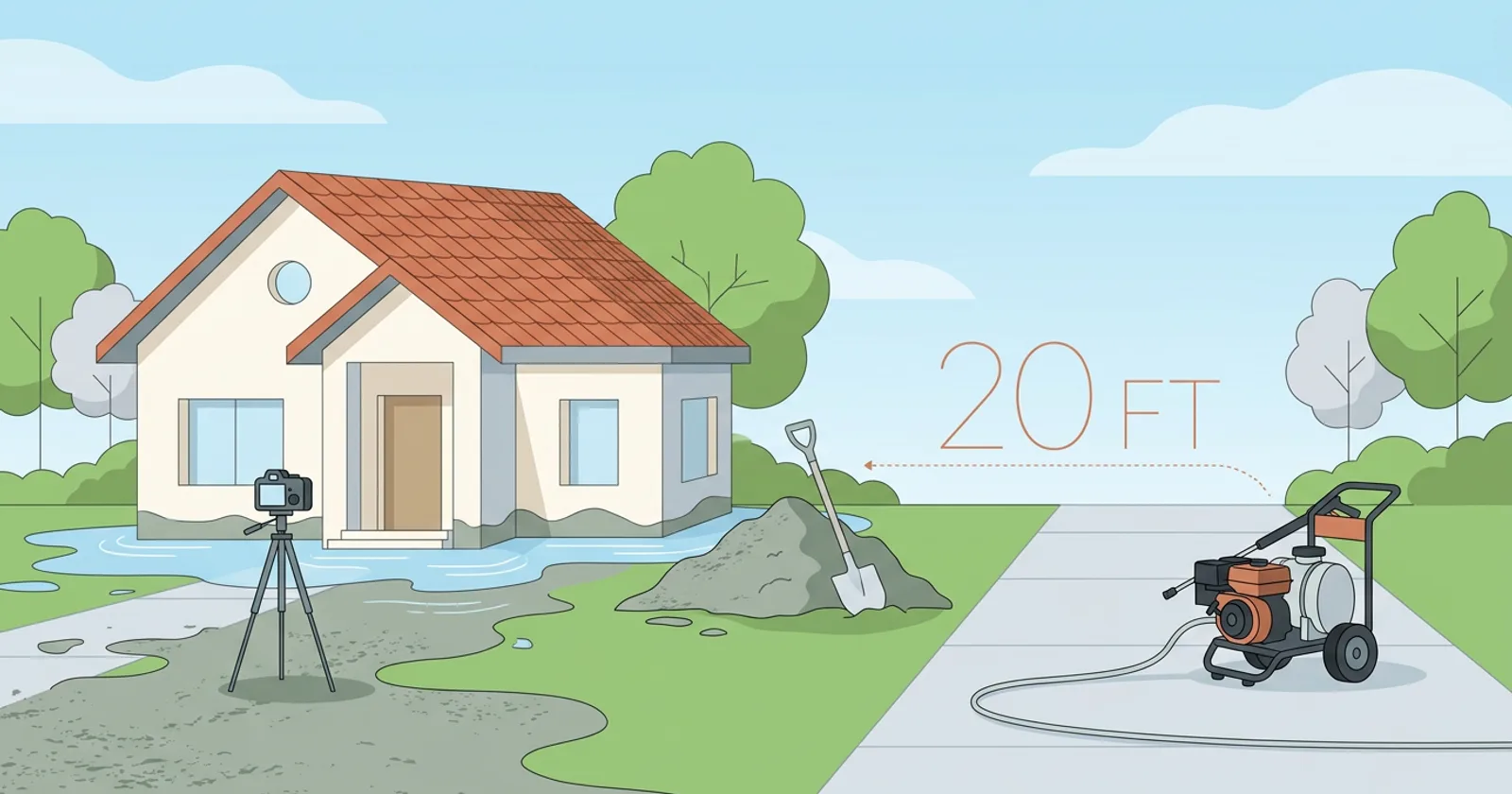
- Carbon monoxide. Never run a gas pressure washer in a home, basement or garage. The CDC’s pressure washer page says not to use one less than 20 feet from any window, door or vent.
- Damaged structures. The EPA says to assume a building is unsafe if you see sagging roofs, leaning walls or new cracks, until a qualified professional checks it.
Mud: clear it before you spray
The CDC’s pressure washer page says never try to push or move objects with the spray. That includes a driveway full of silt. One first-time washer described blasting mud into a corner and then having no way to pick it up. Clear the thick layer by shovel or broom first. The CDC describes a pressure washer as a tool for large, sturdy surfaces, so keep it for rinsing those.
The EPA’s flooded-homes guidance also warns that removing deep standing water too quickly may make walls and floors crack and collapse. Water that deep is not a washer job.
Mold: dry first, then clean
Both the CDC and EPA put the deadline at 24 to 48 hours: dry wet areas within that window to head off mold. The CDC says to open doors and windows, run fans blowing outward, and throw away what you can’t clean or dry quickly, like carpet and mattresses, and discard drywall contaminated by floodwater.
For cleaning up mold, the CDC’s recipe is 1 cup of household bleach per gallon of water, with the windows open. Never mix bleach with ammonia or any other cleaner. Wear goggles, gloves and an N-95 respirator. The EPA adds that you shouldn’t paint or caulk over mold. Clean it and dry the surface first.
Keep the pressure washer out of the house. The EPA says everything inside must be completely dry before you rebuild, so more water works against you. Outdoors, the washer is a later job. Once the mud is gone, our guide to telling wash damage from damage that was already there helps. Outdoors, covering cameras, outlets, AC units and EV chargers still applies.
| Stage | What to do | Where a washer fits |
|---|---|---|
| Water just receded | Stay out of floodwater; shut off power if wet | Not yet |
| Safe to enter | Photos, videos, serial numbers, samples (FEMA FloodSmart) | Not yet |
| Claim filed | Clear thick mud by shovel or broom | Not yet |
| First 24–48 hours | Dry out; remove porous items (CDC, EPA) | Not indoors |
| Surfaces dry | Bleach solution on mold (CDC) | Rinse large, sturdy outdoor surfaces; gas units 20+ ft from openings |
Hiring help without getting scammed
After Tropical Storm Helene in 2024, FEMA designated Buncombe County for individual assistance and opened a disaster recovery center in Asheville. As FEMA puts it in a fraud warning, out-of-town scam artists may be the first to arrive at your door after a flood.
FEMA’s contractor-fraud warning lists the signs: door-to-door pitches, high-pressure sales, demands for cash or full payment up front, and no written contract. It says FEMA doesn’t license or certify contractors and recommends someone local. The same site says to get several written estimates and to talk to your insurer before signing or paying.
Our questions to ask a house washing company work for flood cleanup too. For mistakes that cause new damage, see common pressure washing mistakes. For normal pricing once the emergency is over, check our house washing cost guide. Here’s how we check our sources.
Sources
- FEMA FloodSmart (National Flood Insurance Program), How to document flood damage: floodsmart.gov/document-damage-and-start-clean
- NAIC, How Can I Avoid Getting Scammed by a Contractor?: content.naic.org/article/how-can-i-avoid-getting-scammed-contractor
- FEMA, Beware of Contractor Fraud: Go Local, Do Your Research: fema.gov/press-release/20250128/beware-contractor-fraud-go-local-do-your-research
- FEMA, North Carolina Tropical Storm Helene (DR-4827-NC), designated areas: fema.gov/disaster/4827/designated-areas
- FEMA Media Library, Disaster Recovery Center open in Asheville: fema.gov/fema-media-library/assets/images/56141
- CDC, Guidelines for Cleaning Safely After a Disaster: cdc.gov/natural-disasters/safety/index.html
- CDC, Pressure Washer Safety: cdc.gov/natural-disasters/safety/pressure-washer-safety.html
- CDC, Safety Guidelines: Floodwater: cdc.gov/floods/safety/floodwater-after-a-disaster-or-emergency-safety.html
- EPA, Flooded Homes: Coming Home: epa.gov/flooded-homes/coming-home
- EPA, Flooded Homes: Doing It Yourself: epa.gov/flooded-homes/doing-it-yourself
- EPA, A Brief Guide to Mold, Moisture and Your Home: epa.gov/mold/brief-guide-mold-moisture-and-your-home
- Community discussion (mud and debris while washing): reddit.com/r/pressurewashing/comments/1hk8f9x